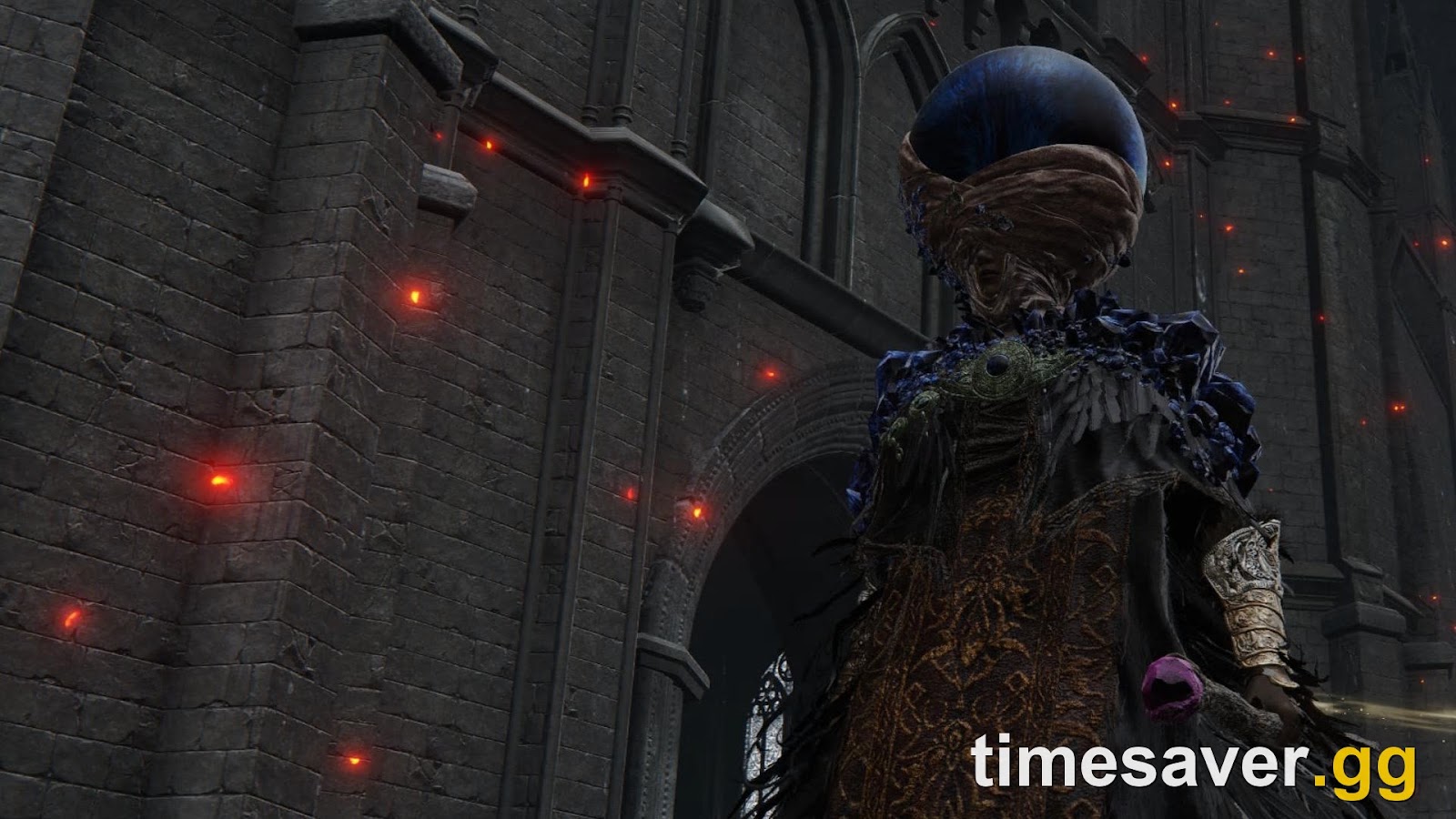
If you just unlocked the Scholar in Elden Ring Nightreign and your damage feels anemic, you are playing the wrong character — on purpose. The Scholar is a support force-multiplier from The Forsaken Hollows DLC, built to debuff Nightlords, buff your squad, and turn a bag of greases and consumables into the strongest finisher in the run. This guide covers how to unlock the Scholar, exactly what the Analyze skill and Communion Ultimate Art do, the relics worth chasing, and the playstyle that carries full teams deep into Deep of Night. All details verified against Fextralife's Nightreign wiki, Eldenpedia (wiki.gg) and the official Bandai Namco Forsaken Hollows notes — ELDEN RING NIGHTREIGN patch 1.03.5.
Quick answer: The Scholar is unlocked by defeating Gladius, Beast of Night (the Tricephalos expedition) and then speaking to the Iron Menial at Roundtable Hold. It is an Arcane-scaling (S, 50 at Level 1) support Nightfarer that prefers Thrusting Swords. Its skill Analyze debuffs an enemy or buffs the Scholar himself the longer you observe; its Ultimate Communion links nearby enemies so damage spreads between them while linked allies share healing; its passive Bagcraft doubles consumable stacks and lets each item category level up mid-run. Play it as a status/grease enabler and team buffer, not a solo DPS.
Key takeaways
- Who it is: one of two Nightfarers added in NIGHTREIGN: The Forsaken Hollows (released December 4, 2025, $15.00); the other is the Undertaker.
- How to unlock: defeat Gladius, Beast of Night (Tricephalos), then talk to the Iron Menial at Roundtable Hold. Requires owning the DLC.
- Stat identity: wildly lopsided — Arcane 50 at Level 1 (S scaling), with only 1 Strength and single-digit Vigor/Mind. It is a status and support character, not a bruiser.
- Skill — Analyze: a charge-up tool that applies tiered debuffs to an enemy (lower attack → extra stance damage taken) or self-buffs the Scholar (extra Stamina → a one-second damage-negating shield).
- Ultimate — Communion: threads nearby enemies together so a hit on one spreads to all, while linked allies share healing — and the Scholar is invulnerable during the cast.
- Playstyle: stack status effects (bleed/frost/poison/rot), carry greases, and let Bagcraft snowball your items; your best damage comes through your team, not your own weapon.
How do you unlock the Scholar in Nightreign?
| The Scholar is DLC-gated. You need The Forsaken Hollows (the $15.00 expansion that shipped on December 4, 2025 for PS4, PS5, Xbox Series X | S and Steam, and is bundled free with the Deluxe and Collector's editions). It is not part of the base Nightreign roster of eight. |
|---|
Once you own the DLC, the unlock is an in-game event rather than a purchase:
- Run and clear the Tricephalos expedition — the one that ends on Gladius, Beast of Night.
- Return to Roundtable Hold and speak to the Iron Menial, who relays a message that opens the two Forsaken Hollows Nightfarers.
- The Scholar and the Undertaker both become selectable.
This is the single most common entry question on the subreddit, and the answer is the same for both DLC characters: Gladius is the gate. If you have beaten Tricephalos and the Scholar still is not showing, confirm every party member who wants DLC characters actually owns the expansion — Forsaken Hollows content, including its Deep of Night additions, is only available when all party members own the DLC.
What are the Scholar's skills and abilities?
The Scholar's whole kit points one direction: make the fight easier for the people around you. Here is the verified breakdown.
Character Skill: Analyze
Fextralife lists the skill's in-game description as "Study your enemies. The longer you observe, the better your combat advantage." Eldenpedia's version of the same ability reads "See target with monocle and note findings which linger as spirit symbols to various effect." Both describe the same mechanic: you hold the skill to build analysis dials, and the longer the observation, the stronger the result.
| Analyze dial | Observing an enemy (debuff) | Observing himself (buff) |
|---|---|---|
| Levels 1–2 | Reduces the enemy's attack | Raises his own max Stamina and restores some Stamina |
| Level 3 | Doubles the effect (further attack reduction) | Doubles the Stamina effect |
| Full dial | Enemy takes extra stance damage on the next hit received | Grants a shield that negates the next instance of damage for about a second |
The practical read: a quick tap of Analyze is a soft debuff, but a full charge sets up a stance-breaking hit your Wylder or Executor teammate cashes in — or a one-second damage-negating shield when you need to survive a specific attack. Note the buff dial is self-targeted (the Scholar's own Stamina and shield), while the debuff is applied to the enemy you observe.
Ultimate Art: Communion
Communion is the payoff button. Fextralife quotes it as "Taboo Knowledge: Damage is shared by linked enemies and can heal threaded allies." Eldenpedia's fuller wording: "Scatter pages of taboo tome to thread enemies and damage simultaneously. Damage inflicted on threaded enemy affects other enemies. Also, can heal HP of threaded allies. Attacks received from threaded enemy also damage attacker."
In play it is an AoE that links every nearby enemy and ally:
- Linked enemies share a portion of the damage any single target takes — community testing puts the spread at roughly 20% — which turns a focused single-target burst into map-wide pressure against adds.
- Linked allies share healing effects, so one person's heal ripples across the squad.
- The Scholar is invulnerable while casting, so you can throw it out in the middle of a dangerous phase without eating a combo.
Passive: Bagcraft
Bagcraft is why the Scholar's consumables hit like weapons. Fextralife: "Store additional resources. Level up the power or effect of items by using them." Eldenpedia adds the detail that each item category levels independently, and that consumable stacks roughly double (for example 1→2, 2→4, 3→6). In Nightreign terms, items level up as you use them within an expedition — so the greases, pots and perfumes you'd normally treat as throwaways become scaling tools over a run, then reset each run.

What stats does the Scholar start with?
The Scholar is the most lopsided Nightfarer in the game. Its defining number is Arcane 50 at Level 1 with S scaling — the highest single starting attribute of any character — while almost everything else is bottom-tier.
| Resource / Stat | Value |
|---|---|
| HP | 220 |
| FP | 65 |
| Stamina | 54 |
| Arcane | 50 (S scaling) |
| Dexterity / Intelligence / Faith | C scaling |
| Strength | D (lowest — 1 at Lv.1) |
A few things fall out of that spread:
- Arcane is king. The Scholar is built to lean on Arcane-scaling weapons and the status buildup (bleed, poison, rot, frost) that Arcane feeds. This is exactly why players describe the character as a "status enabler."
- It is fragile. 220 starting HP and single-digit Vigor mean you cannot facetank. Positioning and the invulnerability on Communion are your defense.
- Thrusting Swords are the native fit. The Scholar starts with the Scholar's Thrusting Sword (and the Scholar's Urn vessel) and has a custom thrusting-sword moveset — thrusts, horizontal swipes and feints — that other Nightfarers do not get. Thrusting swords keep you at a safe poking range while you apply status.
How should you build and play the Scholar?
Think of the Scholar as a force multiplier, not a damage dealer. The strongest, most-repeated approach from high-level players is a status + grease package: apply a status ailment to the enemy, then convert it.
A player running the Scholar in the training arena shared a telling number on the subreddit: the default Scholar's Thrusting Sword R1 does 96 damage on the first hit — but with a grease buff active, hitting a frost / poisoned / rot enemy jumps to 286 damage. That is the Scholar's whole thesis in one stat line: your weapon is mediocre, your conditions are not.
Practical priorities:
- Carry greases and let Bagcraft scale them. Because consumables level up as you use them, front-load grease and status items early so they are stronger by the Night boss.
- Pick a status starting weapon. A frequently praised setup is a blood (bleed) blade plus a frost starting weapon — pure status, no Dexterity relics needed, because frost's stagger is a lifesaver on medium enemies and bleed/frost stack damage.
- Open fights with Analyze, close them with Communion. Charge Analyze for the Level 3 "takes extra damage" debuff before your team commits, and save Communion for ad-heavy phases or when the squad needs the shared heal.
- You are the support — commit to it. As one D5 Scholar player put it, "I prefer being a catering-to-the-Nightlord-party [role]" — the character shines hardest in a trio keeping everyone buffed, not soloing.
Best relics for the Scholar
Relics are where the Scholar's identity gets locked in. The character has two unique Scholar relics worth building around, plus general Night relics that suit a support:
- Cleansing Tear — unique Scholar relic.
- Note, My Dear Successor — unique Scholar relic.
- Night of the Fathom and Night of the Wise — strong general Night relics for a caster/support Scholar.
One hard-won tip straight from a Scholar player optimizing a grease build: duplicate relic effects do not always stack — "your grease deep relics (+2) don't stack, and neither do the regular +0's," so swapping a duplicate +2 for a +1 of a different effect raised their damage. Check your relic board for stacked duplicates before you assume more copies equal more power.
Because status and relic numbers in Deep of Night scale and are still being pinned down by the community, treat specific Deep-level figures as untested rather than gospel — but the support-Scholar archetype itself is proven: players report taking a Scholar support build to Deep of Night 5 successfully.

How does the Scholar compare to the other Nightfarers?
Nightreign's roster is fixed characters, not a build-from-scratch class system like base ELDEN RING — each Nightfarer has its own Character Skill and Ultimate Art. The current roster is ten: the eight base Nightfarers (Wylder, Guardian, Duchess, Recluse, Ironeye, Raider, Executor, Revenant) plus the two Forsaken Hollows additions, the Scholar and the Undertaker.
Where damage-forward characters like the Executor or Raider want to be in a Nightlord's face, the Scholar is the squad's enabler: debuffs that make everyone else's hits land harder, a heal-sharing Ultimate, and a passive that turns your item bag into a scaling engine. If your group already has front-line damage and keeps dying to attrition, the Scholar is the glue. If you are a solo-first player who wants raw kill speed, one of the base DPS Nightfarers will feel better — several players explicitly note they prefer the Scholar "when I don't like solo."
For the full character tier picture, see our companion guide: Best Nightfarers in Elden Ring Nightreign, Ranked.
FAQ
Is the Scholar free in Nightreign? No. The Scholar is part of The Forsaken Hollows DLC ($15.00, released December 4, 2025). You must own the expansion, and then unlock the character in-game by beating Gladius and speaking to the Iron Menial. It is included automatically for Deluxe and Collector's edition owners.
How do you unlock the Scholar? Defeat Gladius, Beast of Night on the Tricephalos expedition, then return to Roundtable Hold and talk to the Iron Menial. This unlocks both Forsaken Hollows Nightfarers (Scholar and Undertaker) at once.
Is the Scholar good? Yes, as a support. It is one of the strongest force-multipliers in co-op thanks to Analyze debuffs, Communion's shared damage and healing, and Bagcraft's item scaling. It is weak as a pure solo DPS because of its low Vigor and Strength, so its value depends on playstyle — team support is where it shines, and players have taken support builds to Deep of Night 5.
What stat does the Scholar use? Arcane — it starts with Arcane 50 (S scaling) at Level 1, the highest single starting stat of any Nightfarer. Build around Arcane-scaling weapons and status buildup (bleed, frost, poison, rot) rather than Strength.
What weapon should the Scholar use? Thrusting Swords are the native fit — the Scholar starts with the Scholar's Thrusting Sword and has a unique thrusting-sword moveset. For damage, a status weapon (bleed or frost) combined with grease massively outperforms raw hits: players measured a jump from 96 to 286 damage on a greased, status-afflicted target.
Can you play the Scholar solo? You can, but it is designed for groups. Its debuffs and heal-sharing Ultimate are built to amplify allies, and many players say they only pick it when playing with a party. Solo runs are viable with a status/grease build but slower than a dedicated DPS Nightfarer.
Facts in this guide were verified against Fextralife's ELDEN RING NIGHTREIGN wiki, Eldenpedia (eldenring.wiki.gg) and the official Bandai Namco Europe Forsaken Hollows notes. ELDEN RING NIGHTREIGN is a separate game from ELDEN RING, currently on patch 1.03.5 (2026-03-31). Deep of Night scaling figures are community-reported and still being tested.
Want more Nightreign and Elden Ring guides? We cover the full roster, Nightlord fights and base-game builds.