Quick Answer: Last Epoch crafting happens at the Forge (press F). Each craft costs Forging Potential — Exalted items have the most. Always pair your affix upgrades with a Glyph of Hope for a 25% chance to craft for free. Sealed affixes are created with the Glyph of Despair and open a fifth affix slot. Legendary items are crafted at the Eternity Cache inside the Temporal Sanctum dungeon: you need a Unique with at least 1 Legendary Potential (LP) plus an Exalted of the same base type with four affixes. This guide covers every piece of the system — from your first shard to end-of-Season 4 Legendary prep ahead of Season 5 on October 1, 2026.
Crafting is the dividing line between players who clear Monolith of Fate echoes and players who dominate them. In Last Epoch, good items are not just found — they are built. Every piece of gear in your character's endgame kit will have been touched by the Forge at least once, and the best items in the game are only achievable through the Legendary crafting system locked behind the Temporal Sanctum dungeon. With Season 5 "Rage of the Frostborn" arriving on October 1, 2026, the next two weeks are the perfect time to master the crafting loop so you hit the Season 5 reset knowing exactly what to build.
All mechanics in this guide apply to Season 4: Shattered Omens, patch 1.4.7 (released 2026-05-13), the current live version as of September 16, 2026. Season 5 launches with a full reset on October 1, 2026 at 16:00 UTC.
How to Access the Forge
Open the Forge at any time by pressing F on your keyboard. You do not need to be at a specific location — the Forge is available anywhere in the world. Once open, drag an item into the center slot or use Shift + Right Click to place it. From there you can:
- Upgrade an existing affix tier by clicking the up arrow next to that affix
- Add a new affix to an empty slot using the plus sign in the slot or the large plus in the center bottom
- Slot a Glyph into the scroll icon to modify how a craft behaves
- Slot a Rune into the hexagon icon to apply a special effect to the item
You can start crafting as early as Chapter 2, when affix shards begin dropping. There is no level gate and no prerequisite quest — just shards and Forging Potential.
What Is Forging Potential?
Forging Potential (FP) is the resource that makes an item craftable. Every item that can be crafted has a Forging Potential value shown in its tooltip. When that value reaches zero, no further crafting can be done on the item.
How much FP a craft costs depends on four factors, according to Maxroll.gg's verified guide:
- The tier of the affix being added or upgraded (higher tier = higher FP cost)
- Whether the craft results in a Critical Success (costs 0 FP and free)
- Whether a Glyph of Hope procs its 25% no-cost effect (costs 0 FP)
- A random roll within the affix's FP cost range if neither of the above triggers
As a practical example: upgrading a Tier 3 Minion Damage affix on a ring to Tier 4 costs anywhere from 1 to 18 FP per craft attempt. With a Glyph of Hope, you have a 25% chance to pay nothing.
Items do not have a fixed FP value — it varies by rarity and the area level where the item dropped. Higher rarity means more FP: Exalted > Rare > Magic > Common. This is why Exalted items are so valuable as crafting bases. An Exalted item from a high-corruption Monolith echo may drop with 80–150 FP, giving you many attempts to reach your desired affix combination.
Always prioritize Exalted bases when you find one with the right implicits — its extra FP alone makes it a better craft target than a Rare item with the same starting affixes.
Crafting Materials: Shards, Glyphs, and Runes
The Forge uses three categories of material: Shards, Glyphs, and Runes.
Shards
Shards are affix fragments that you add to or upgrade on gear. Each shard corresponds to a specific stat. You need at least one shard per affix upgrade — one shard per tier. Shards drop from most enemies and can be extracted with a Rune of Shattering when you destroy unwanted gear.
Glyphs
Glyphs are placed alongside shards to change how a craft behaves. The core five (as of patch 1.4.7):
| Glyph | Effect |
|---|---|
| Glyph of Hope | 25% chance for the craft to consume 0 Forging Potential — use on every upgrade |
| Glyph of Chaos | Changes the affix type while upgrading its tier — useful for rerolling unwanted affixes |
| Glyph of Order | Maintains the roll range when upgrading a tier — ensures you keep a high roll |
| Glyph of Despair | Chance to seal an affix (move it to a fifth slot, freeing the original slot) |
| Glyph of Envy | Changes the item's base type — used to get the right Exalted base |
The Glyph of Despair is particularly powerful and is covered in its own section below.
Runes
Runes apply one-time effects to an item. The most important ones:
| Rune | Effect |
|---|---|
| Rune of Shattering | Destroys the item; converts its affixes into 1 to N shards |
| Rune of Refinement | Rerolls the value of every affix on the item within its current tiers |
| Rune of Removal | Randomly removes one affix and returns its tiers as shards |
| Rune of Discovery | Fills all open affix slots with Tier 1 affixes — no FP cost |
| Rune of Ascendance | Converts a Common/Magic/Rare item into a Unique of the same type |
| Rune of Creation | Duplicates the item; sets both copies to 0 FP |
| Rune of Havoc | Shuffles affix tiers across affixes — needs at least one Exalted affix |
| Rune of Redemption | Rerolls an Exalted affix's type without changing its tier or roll |
| Rune of Evolution | Upgrades a Tier 7 affix into a Tier 8 Primordial Sealed affix |
How to Craft Effectively: Tips and Strategy
The Forge rewards a thoughtful approach. These strategies come directly from the Maxroll.gg crafting guide and community experience in Season 4:
Always use a Glyph of Hope when upgrading affixes. The 25% chance to craft for zero FP is the single highest-value habit in the game. If you are out of Glyphs of Hope, wait for them to drop rather than burning FP blindly. They are common in endgame and will accumulate.
Use Rune of Discovery in the campaign for free stats. This rune fills empty affix slots at no FP cost. If one drops during the campaign, use it on a piece of gear that has empty slots.
Upgrade lower-tier affixes first to fish for Critical Success on expensive ones. A Critical Success gives you a free craft plus a free upgrade on a random other affix. By upgrading cheaper Tier 1–2 affixes before working on your high-tier targets, you increase the chance of a free crit hitting your expensive affixes, saving FP.
Use Rune of Removal to farm specific shards, not Rune of Shattering. Rune of Removal removes exactly one affix and returns exactly (tier × 1) shards of that affix. Rune of Shattering destroys the whole item and converts a random 1 to N affixes into shards — much less targeted. Keep using Rune of Removal on a junk item until you get the shard you need.
Use Rune of Havoc to make rare affixes Exalted. If you need a Tier 7 rare affix (such as plus to a skill level) on your Legendary base, craft that affix onto an Exalted item, then use Rune of Havoc to shuffle it into the Exalted tier. This is the most reliable way to craft an Exalted item with a specific rare affix before Legendary merging.
Sealed Affixes: What They Are and When to Use Glyph of Despair
A sealed affix is an affix that has been moved to a fifth affix slot (items normally have four). When an affix is sealed:
- It occupies the fifth slot and frees the slot it came from
- That freed slot can be crafted with a completely new affix
- The sealed affix itself cannot be upgraded or changed any further
- It still provides its full stat bonus — sealing just makes the affix permanent and immovable
Sealed affixes are most useful when you have an item that is almost perfect but has one weak or mismatched affix. Rather than gambling on Glyph of Chaos (which might miss) or destroying the item outright, you seal the bad affix out of an important slot. You lose the slot to improvement, but you gain a clean open slot for whatever you actually want.
The Glyph of Despair creates sealed affixes. It is a rare glyph. The proc chance is not 100% — it has a chance to seal, not a guarantee. Per community testing, sealing is more likely to succeed on:
- Affixes at lower tiers (Tier 1–3 seal more reliably than Tier 6–7)
- Items with all four affix slots filled
- Exalted items (which have higher FP and more successful proc conditions)
As noted by experienced r/LastEpoch players in Season 4: "Triple T7, Sealed affix and open Prefix. 58 forging potential" — a top-end craft that uses a sealed affix to get a free prefix slot on an otherwise complete item is one of the most powerful results the system produces.
Important: Exalted items can have a sealed affix, but that sealed affix cannot be transferred to a Legendary during Temporal Sanctum crafting. Keep this in mind when preparing Exalted bases for Legendary merging.
How to Craft Legendary Items in Last Epoch
Legendary items are the endgame of the crafting system. A Legendary is a Unique item that has had one or more additional affixes added to it from an Exalted item. The process uses the Eternity Cache inside the Temporal Sanctum dungeon.
What You Need
To craft a Legendary you need two things:
- A Unique item with at least 1 Legendary Potential (LP) — LP 1 transfers 1 affix, LP 2 transfers 2, LP 3 transfers 3, LP 4 transfers all four. Higher LP = more powerful Legendary.
- An Exalted item of the same base type with four affixes — if your LP Unique is a pair of gloves, you need an Exalted pair of gloves with four affixes. The Exalted item's Forging Potential does not matter — an Exalted at 0 FP works identically.
One important detail: if any affix transferred to the Legendary is class-specific, the Legendary becomes class-restricted. Plan accordingly when choosing your Exalted.
How the Eternity Cache Works
The Temporal Sanctum is an endgame dungeon. You need a Temporal Sanctum Key to enter (these drop commonly from Timeline Bosses in the Monolith of Fate). To craft a Legendary:
- Run the Temporal Sanctum and defeat the boss, Chronomancer Julra
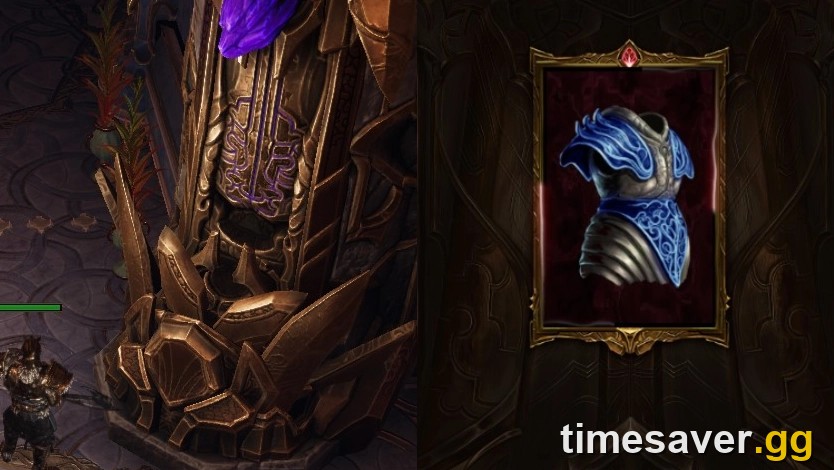
- Enter the room after Julra and find the Eternity Cache — a large stone structure
- Make sure you are in the Divine Era (use Temporal Shift to switch if needed)
- Open the Eternity Cache and place your LP Unique and your Exalted (same base, four affixes) inside
- Press Seal Cache and then use Temporal Shift to switch to the Ruined Era
- Open the cache again — your Legendary is inside
This can be done once per dungeon run. You need a new Temporal Sanctum Key for each Legendary you craft. Use a Portal Charm to skip straight to the final room if you want to batch-craft multiple Legendaries in fewer minutes.
Run Tier 2 or higher to guarantee one specific affix transfer. At Tier 2+, you can choose which one affix is guaranteed to transfer from the Exalted to the Legendary before the random rolls fill the remaining LP slots.
Finding LP Uniques and Exalted Items
Per Maxroll.gg's verified guide on legendary item sources:
- Circle of Fortune Rank 8 doubles the chance that dropped Uniques have Legendary Potential — the single strongest passive LP boost
- Merchant's Guild lets you buy LP Uniques directly from other players at the Bazaar using gold
- Higher-corruption Monolith echoes improve LP chance slightly
- Farm a boss that drops the specific Unique you want — boss-specific Uniques guarantee the right item type every time
- Rune of Ascendance converts any Rare/Magic/Common item into a random Unique of the same base type — a crafted source of LP uniques
- If you have a 0-LP Unique, the Nemesis System can attempt to reforge it with LP
For Exalted items, target Monolith echo reward nodes that give Exalted items of the type you need. You need to be in area level 90+ for Tier 7 affixes to drop on Exalted items — this means empowered Monolith timelines.
Season 5 Crafting Tips: What to Prepare Before Rage of the Frostborn
Season 5: Rage of the Frostborn launches on October 1, 2026 at 16:00 UTC — 15 days from today. Season characters start fresh at Level 1, so any items or gold you hold on your current Season 4 character will not carry over. What carries over is your knowledge.
Here is how to use the remaining Season 4 time to master crafting for Day 1 of Season 5:
1. Understand the Temporal Sanctum flow now. Run 3–5 Temporal Sanctum runs in Season 4 to internalize the Eternity Cache steps. Fumbling the Temporal Shift timing in a Day 1 race wastes runs.
2. Build a shard stockpile strategy. In Season 4, use Rune of Shattering on all junk rares to train the habit of converting dead gear into useful shards. On Season 5 Day 1, your shard volume will determine how fast you can push your campaign gear.
3. Practice the Glyph of Hope habit. Never craft a tier upgrade without a Glyph of Hope slotted if you have them. Getting this into muscle memory saves FP and matters enormously in early Season 5 when bases are hard to replace.
4. The Merchant's Guild faction rework in Season 5 will improve the buying flow at the Bazaar. If you plan to play MG in Season 5, being comfortable with LP unique evaluation (knowing what LP 1 vs LP 2 vs LP 4 on a specific unique is worth) gives you a real head start. MG players can skip farming entirely and buy their LP uniques with gold in the first week when item prices are lowest.
Want a head start on Season 5 from Day 1?
Last Epoch Leveling — campaign and Monolith push to reach endgame fast
Last Epoch Merchant's Guild — faction rank boost for early Bazaar access
Last Epoch Gold — gold reserve ready to buy LP uniques on Day 1
Frequently Asked Questions
Can I craft on a Unique or Set item? Only Common, Magic, Rare, and Exalted items can be crafted on in the Forge. Uniques and Set items cannot be crafted on directly. To modify a Unique, you use the Legendary crafting system (Eternity Cache) or Weaver's Will mechanics.
What happens when Forging Potential reaches zero? The item becomes permanently uncraftable. You can still equip and use it, but no further crafting can ever be done on it. Choose a new base and start over.
Does Forging Potential matter for Legendary crafting at the Eternity Cache? No. The Exalted item used in Legendary crafting can have 0 Forging Potential and the process works identically. Only the number of affixes on the Exalted (must be four) matters, not the FP.
Can I transfer a sealed affix from my Exalted to the Legendary? No. Sealed affixes on the Exalted cannot be transferred to the Legendary during Eternity Cache crafting. If your Exalted has a sealed affix, it will not count toward the four transferable affixes.
What is the difference between Glyph of Chaos and Rune of Redemption? Glyph of Chaos changes an affix to something different while also upgrading the tier — useful when you want to change a lower-tier affix and upgrade it at the same time. Rune of Redemption rerolls only an Exalted affix's type, but keeps the tier and roll value intact — useful when you have a high-tier Exalted affix in the wrong stat and want to change the stat without losing the tier quality.
What is a Critical Success? A Critical Success happens randomly on any affix upgrade or addition craft. When it triggers, the craft costs zero FP and zero shards, and also adds one free tier to any random affix below Tier 5. You cannot control where the bonus tier lands, so complete intentional crafts before upgrading low-tier affixes you do not want randomly boosted.