If you've spent any real time in NBA 2K27's City this season, you already know the feeling: you queue The REC, load in, and either the game boots you before tip-off, freezes you out at halftime, or slaps you with a cooldown the moment you back out of a blowout. On September 30 a mandatory update landed — the r/NBA2k thread was literally titled "Update Required Sep 30," and the top comment was "They changed matchmaking AGAIN." Getting kicked, and the penalty that comes with leaving, is the single most-argued-about topic in the community right now. This guide explains exactly why it happens, what counts as a bannable offence versus a normal cooldown, and how to leave a bad game without torching your account.
Quick answer: why do I keep getting kicked from Rec in NBA 2K27?
You get kicked from Rec for one of four reasons: (1) a required game update went live and your client is out of sync, (2) a genuine server disconnect or error code dropped your session, (3) you left or quit a game and picked up a matchmaking cooldown, or (4) you triggered 2K's anti-abuse system by repeatedly quitting, throwing games, or manipulating matchmaking — which 2K's Player Code of Conduct explicitly lists as a bannable violation. The first two are technical and fixable in minutes. The last two are behavioural, and they're where players accidentally walk themselves into a temporary — or permanent — ban.
The distinction matters, because the community lumps all four together as "2K kicked me," and then panics that a routine cooldown is a ban. It usually isn't. But the line between "cooldown" and "ban" is real, it's written down, and it's worth knowing before your next Rec session.
⚡ TL;DR — getting kicked & matchmaking bans in NBA 2K27
- A "required update" is the #1 false alarm. Many "servers down / I got kicked" reports are actually a silent mandatory patch — like the September 30, 2026 update. Restart and install it.
- Server errors are separate. Error codes (EFEAB30C, CE-108255-1, etc.) mean a connection drop, not a ban. Fix your connection, don't ragequit.
- Leaving a game gives you a matchmaking cooldown, not a ban. It's a timed lockout to protect the other players in the lobby.
- Repeatedly quitting, throwing games, or "manipulating matchmaking" IS bannable — 2K's Player Code of Conduct names all three directly.
- Consequences escalate: warning → temporary suspension → account ban. 2K says temporary bans can't be shortened or removed — they expire on their own.
- To leave cleanly: play it out when you can; if you must go, expect the cooldown, and never rage-quit in a pattern.
Reason 1: "Update Required" — the kick that isn't a ban
Start here, because it's the most common and the most misread. NBA 2K27 pushes mandatory client updates, and when one goes live you can be dropped or blocked from matchmaking until you install it. This is exactly what happened on September 30, 2026: a required update went out, players got kicked mid-session, and the community immediately assumed the servers were down.
They mostly weren't. As 2K's own support history shows, many early "servers down" waves were actually silent required updates — the game can't tell you cleanly that a patch is waiting, so it just stops letting you queue. The fix is boring but reliable: fully close NBA 2K27, restart it, and let the update download and install. On console, that sometimes means backing out to the dashboard and re-launching so the store check fires. Once you're on the current version, matchmaking opens back up.
If you're getting kicked and you haven't restarted since the last patch window, this is almost certainly your problem — not a ban, not a server outage, and definitely not something to rage about in the lobby.
Reason 2: server errors and disconnects (error codes, not bans)
The second bucket is genuine connection failure. NBA 2K27 is an always-online experience for City modes, and when your session drops you'll see an error code rather than a ban notice. 2K27's live error-code set includes handshake and connection failures like EFEAB30C / 4B538E50, E162A9A8, 727E66AC, and PlayStation's CE-108255-1 — all of which point at a connection or server-sync problem, not a disciplinary action.
Crucially, there is no public 2K server-status dashboard — outages are confirmed only via @2KSupport and support.nba2k.com. So when you get dropped, the honest first move is to check your own connection: wired over Wi-Fi if you can, restart your router, and confirm your NAT type isn't blocking peer connections. If it's a real outage, waiting is the only fix; if it's your line, you can actually do something about it. Either way, a disconnect is a disconnect — it doesn't count against you the way a deliberate quit does.
For the full list of codes and step-by-step fixes, see our NBA 2K27 error codes and server fixes guide.

Reason 3: the matchmaking cooldown — what actually happens when you leave
Here's where behaviour starts to matter. When you quit or back out of an online game — especially a Rec game in progress — NBA 2K27 hits you with a matchmaking cooldown: a timed lockout that stops you re-queueing for a set period. This is not a ban. It's a lobby-protection mechanic, and every team-based online game has some version of it.
The logic is straightforward: when you leave a Rec game, you abandon four teammates to a 4-on-5 (or force the game to sub in an AI), which wrecks the experience for real players who did nothing wrong. The cooldown is the cost of that. Leave once and it's short; leave repeatedly in a session and the system leans on you harder.
This is the mechanic behind the biggest ongoing debate in the community — the "sell vs. quit" question. In a recent r/NBA2k thread with over 150 comments, a player asked the obvious thing: "why sell instead of quitting out?" — pointing out that time might be better spent just re-queuing. The answer is the cooldown. Selling (playing out a loss) keeps you eligible to queue instantly; quitting saves you the last few minutes but starts the lockout clock and, if it becomes a pattern, escalates toward something worse. That trade-off is the whole reason experienced players grind out losses instead of dashboarding.
Reason 4: the actual bannable line — quitting, throwing, and manipulating matchmaking
This is the part players get wrong, and it's the part that can cost you an account. A single cooldown is routine. But 2K's Player Code of Conduct — the same framework that governs cheating and boosting — explicitly prohibits a set of matchmaking-related behaviours. Per 2K's support articles on fair play, the banned list includes "intentionally losing/'throwing' or manipulating matchmaking," alongside boosting (coordinating to fix online outcomes), using software for an unfair advantage, and hacking.
Read that again, because it's the crux: manipulating matchmaking is named as a violation. Chronic quitting to dodge tough lobbies, coordinating to throw games, or gaming the queue to farm easier opponents isn't just a cooldown offence — it's Code-of-Conduct territory.
And the consequences ladder is public. 2K describes it as: warning → temporary suspension → account ban / loss of access to modes or features / restricted online services. Two details you should internalise:
- Temporary bans cannot be shortened or removed. They expire automatically — pleading with support won't speed it up.
- Severe or repeated infractions can trigger an immediate permanent ban, and boosters specifically can lose all earned REP on top of the ban.
To be clear about what this means in practice: leaving the occasional bad game is fine and will only ever cost you a cooldown. What crosses the line is a pattern — habitual quitting, deliberate throwing, or anything that looks like you're working the matchmaking system rather than just playing. If your account matters to you (and if you've grinded REP toward 99 OVR, it does), don't give the system a pattern to flag.
If you're worried a ban was unfair — say you got grouped with a cheater or a thrower — the right move is to report them, not to retaliate in-game. Our ban wave explainer covers what actually gets accounts banned, and the how to report cheaters guide walks through the in-game Socials → Report/Block flow step by step.
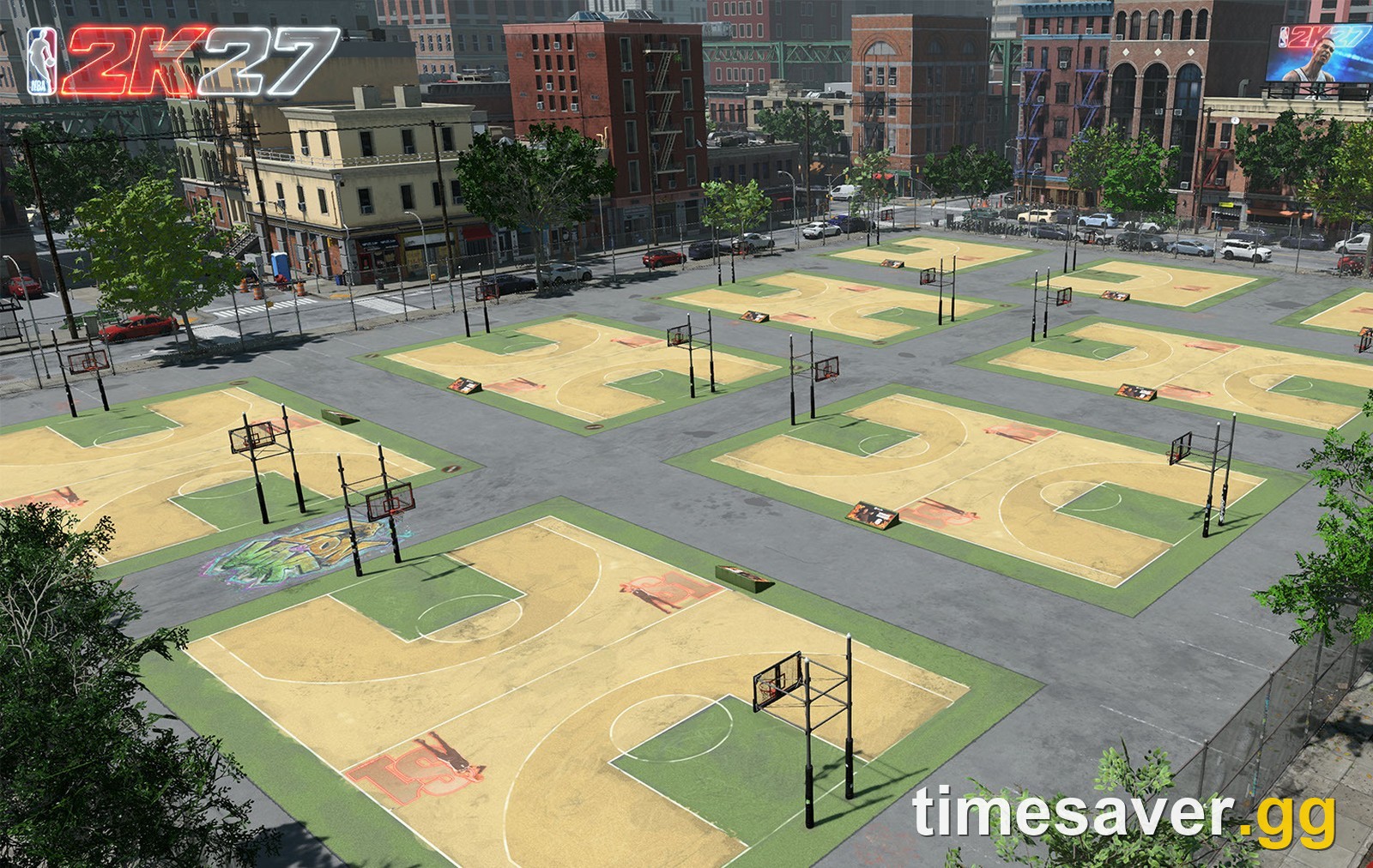
How to leave an NBA 2K27 game without wrecking your account
You can't always finish a game — real life happens, and sometimes a lobby is genuinely unplayable. Here's how to exit with the least damage:
- Prefer to play it out. "Selling" a loss keeps you queue-eligible immediately and never counts against you. If the game's nearly over, just finish it.
- Accept the cooldown when you do leave. A single exit costs you a timed lockout, nothing more. Wait it out; don't try to force-queue around it.
- Never quit in a pattern. One leave is a cooldown; ten leaves in a night is a behaviour flag. Spread out, and don't dashboard every close game.
- Don't throw games, ever. Deliberately tanking to manipulate rewards or matchmaking is a Code-of-Conduct violation, not a cooldown offence.
- Rule out the technical causes first. Before you assume you're "banned," restart to catch a required update and check your connection for error codes. Nine times out of ten, that's the real culprit.
- If you truly disconnect, that's not on you — genuine drops read as errors, not deliberate quits. Fix your line so it stops happening.
Do those six things and the matchmaking system essentially leaves you alone. The players who get burned are the ones who treat quitting as a habit and then act shocked when the cooldowns stack into a suspension.
Does getting kicked cost me REP or progress?
Mostly no — with one behavioural exception. A required-update kick or a genuine server disconnect doesn't punish your REP; you just lose the unfinished game. A normal cooldown from leaving costs you queue time, not REP directly. The exception is the disciplinary path: if your quitting or throwing escalates to a suspension or ban, boosters and abusers can lose earned REP on top of losing access. So the day-to-day kicks are annoying but harmless; it's only the pattern of abuse that touches your progression. If you're grinding a mode where every game counts, that's one more reason to sell losses rather than quit them — and if efficient earning is your goal, the daily Rivals rewards loop is a cleaner grind than farming Rec.
Frequently asked questions
Is a matchmaking cooldown the same as a ban in NBA 2K27? No. A cooldown is a short, automatic lockout for leaving an online game — it protects the other players in the lobby and expires quickly. A ban is a disciplinary action under the Player Code of Conduct, comes in temporary or permanent forms, and follows behaviour like throwing games or manipulating matchmaking. Don't confuse the two.
Why did NBA 2K27 kick everyone on September 30, 2026? A mandatory game update went live. Required patches can drop you from your session and block matchmaking until you install them, and the community widely read it as a matchmaking change ("they changed matchmaking AGAIN"). The fix is to fully restart the game so the update downloads.
Can I get banned just for quitting one Rec game? No. A single quit only earns a matchmaking cooldown. What's bannable is a pattern — habitual quitting, intentionally throwing games, or manipulating matchmaking — all of which 2K's Player Code of Conduct lists as violations.
How long is the NBA 2K27 matchmaking cooldown? 2K doesn't publish an exact, fixed duration, and it can scale with repeated leaving in a short window. Treat it as a short timed lockout for a one-off exit that gets more punishing the more you abuse it. If you're locked out for a long stretch, you may be looking at a suspension rather than a cooldown.
Should I sell (play out the loss) or quit out? Sell, in almost every case. Playing out a loss keeps you eligible to re-queue immediately and never risks a flag, while quitting starts a cooldown and — if it becomes a habit — pushes you toward the disciplinary ladder. The few minutes you save by quitting aren't worth the lockout or the risk.
Are error codes like CE-108255-1 a ban? No. Error codes are connection or server-sync failures — a dropped session, not a disciplinary action. Fix your connection (wired if possible, restart your router, check NAT), confirm there isn't a live outage via @2KSupport, and re-queue.
Can 2K remove a temporary ban if I appeal? No. 2K states that temporary bans cannot be shortened or removed — they expire automatically. Appealing won't speed it up, so the only real strategy is not to earn one in the first place.
Bottom line
Most of the time you get "kicked" from Rec in NBA 2K27, you weren't banned — you missed a required update or your connection dropped, and both are fixable in a couple of minutes. Leaving a game costs you a cooldown, which is a nuisance, not a punishment. The genuine danger is behavioural: 2K's Player Code of Conduct treats quitting patterns, throwing, and matchmaking manipulation as violations that escalate from warnings to permanent bans, and temporary bans can't be lifted early. Play your games out when you can, take the occasional cooldown on the chin, and keep the pattern clean — do that and the matchmaking system will never be your problem.
Want more NBA 2K27 guides? Browse our full NBA 2K27 coverage for builds, badge tokens, error fixes and City-mode breakdowns.