Quick Answer (TL;DR)
Grand Expedition is the biggest single Expedition you can run in PoE2 — one giant dig site you open from a Logbook, with no map monsters, just rows of explosives, Remnants and reward chests. In patch 0.5.3 it became one of the strongest currency farms in the game: weapon/armour junk chests were deleted, the maximum number of Remnants now scales with your Waystone Tier (peaking at Tier 15+), and you now place 15 explosives instead of 20 so each placement matters more. The play: run Tier 15+ maps, save your Logbooks for Dannig, blow your explosives so the reward Remnants detonate into the monster packs, and prioritise the new currency / Unique / Waystone chests. Convert the artifacts and drops through the Currency Exchange into Divine and Exalted Orbs (Divine floats ~100–130 Exalted right now — check poe.ninja for the live rate). For more detail, see our expedition atlas tree poe2 guide.
Expedition has quietly become the engine room of the Return of the Ancients economy, and the 0.5.3 patch (released June 18, 2026) pushed Grand Expedition even harder as a dedicated currency printer. If you've been running standard map Expeditions and wondering why some players seem to pull a Divine an hour out of them, the answer is almost always Logbooks run as Grand Expeditions with the right setup.
This guide covers exactly what Grand Expedition is, what changed in 0.5.3, how the explosive-and-Remnant loop actually works, the four vendors that turn your artifacts into currency, and the precise strategy to maximise currency per run. Everything here is verified against the official 0.5.3 patch notes and the Path of Exile 2 site.

PoE2 - Divine & Exalted Orbs
Skip the grind — get Divine & Exalted Orbs
What Is a Grand Expedition in PoE2?
There are two flavours of Expedition in PoE2:
- Map Expeditions — the encounter that spawns inside a regular Atlas map. You get a limited set of explosives (increased through the Atlas passive tree), unearth a small dig, and detonate.
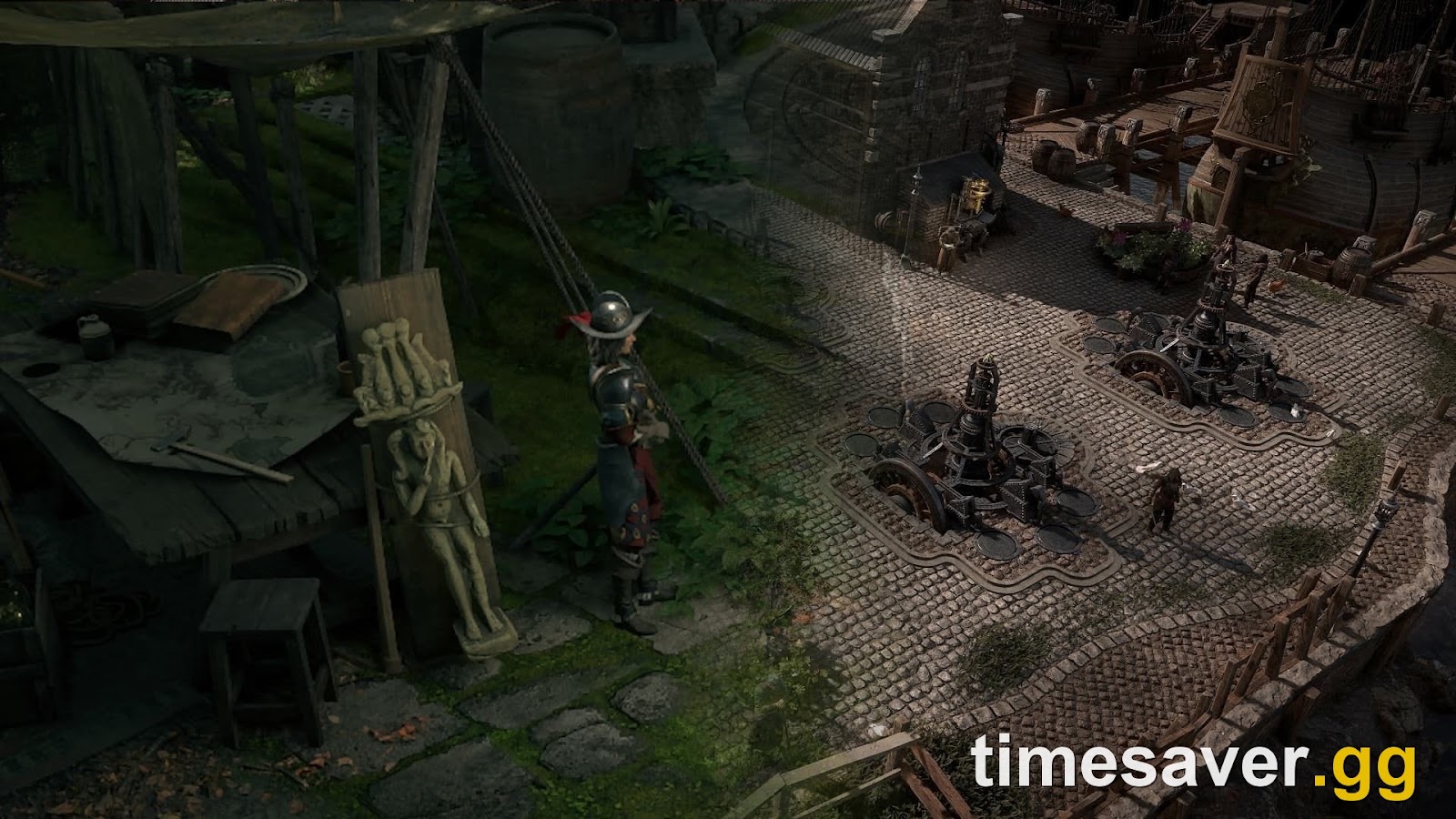
- Grand Expedition (Logbook Expedition) — a separate, much larger excavation area you open by handing a Logbook to Dannig. There are no inherent map monsters wandering around; the whole zone is one giant Expedition built entirely from explosives, Remnants, Runic Monsters and chests. This is where the serious currency lives.
Because a Grand Expedition is the maximum-size dig, it stacks far more Remnants and reward chests than any single map encounter — which is why it's the format you build your farm around once you can sustain Logbooks.
What Changed for Grand Expedition in 0.5.3?
Patch 0.5.3 is the reason Grand Expedition jumped back to the top of the farming tier list. Straight from the official 0.5.3 patch notes:
"You can now place 15 Explosives (from 20) in a Grand Expedition to reduce the length of the encounter, combined with the higher value chests and increased number of Remnants your decisions will also be more important." — GGG, PoE2 0.5.3 patch notes
Here's what that actually means for your loot:
- No more junk chests. "All the basic Weapon and Armour chests have been removed. Now you should find an abundance of Chests which drop Currency, Unique Items and Waystones." Every chest is now a reward chest.
- More Remnants the higher you push. "The maximum number of Remnants in a Grand Expedition now increases per Waystone Tier, with the highest number of Remnants possible to be found in Tier 15+ Maps." Running low-tier Logbooks now leaves currency on the table.
- New chest types. There are now mystery chests (regular items at very high Rarity) and trinket chests (also high-Rarity), on top of the currency/Unique/Waystone chests.
- Fewer explosives, harder choices. You drop from 20 to 15 explosives, so chaining the right Remnants into the right packs matters more than ever.
- Better Runic Monsters. "The Runic Modifiers on Monsters granted by Runic Inscriptions now improve the rewards of the Monsters more significantly."
- Guaranteed Logbook source. "Styrn, Fallen Knight of Aldur in the Tomb of the Fallen Knight now always drops an Expedition Logbook" — a reliable way to keep your Logbook stock topped up.
Net effect: fewer explosives but denser, higher-value targets, and a hard incentive to run your Logbooks at the highest Waystone tier you can clear.
How Does Grand Expedition Work? (Step by Step)
The loop is the same as a map Expedition, just bigger:
- Open the Logbook. Speak to Dannig, choose show Expedition map, and slot your Logbook to generate the Grand Expedition area.
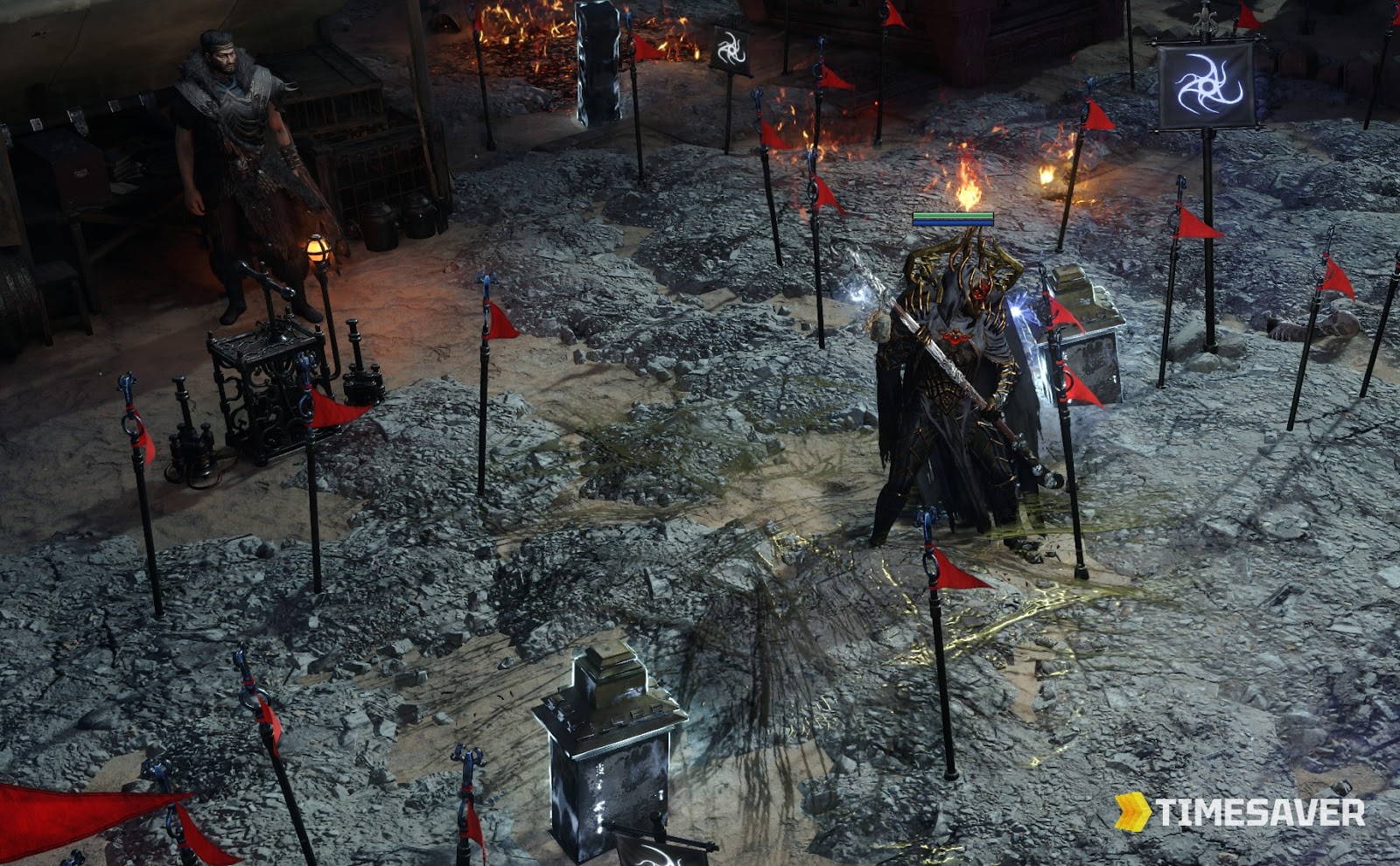
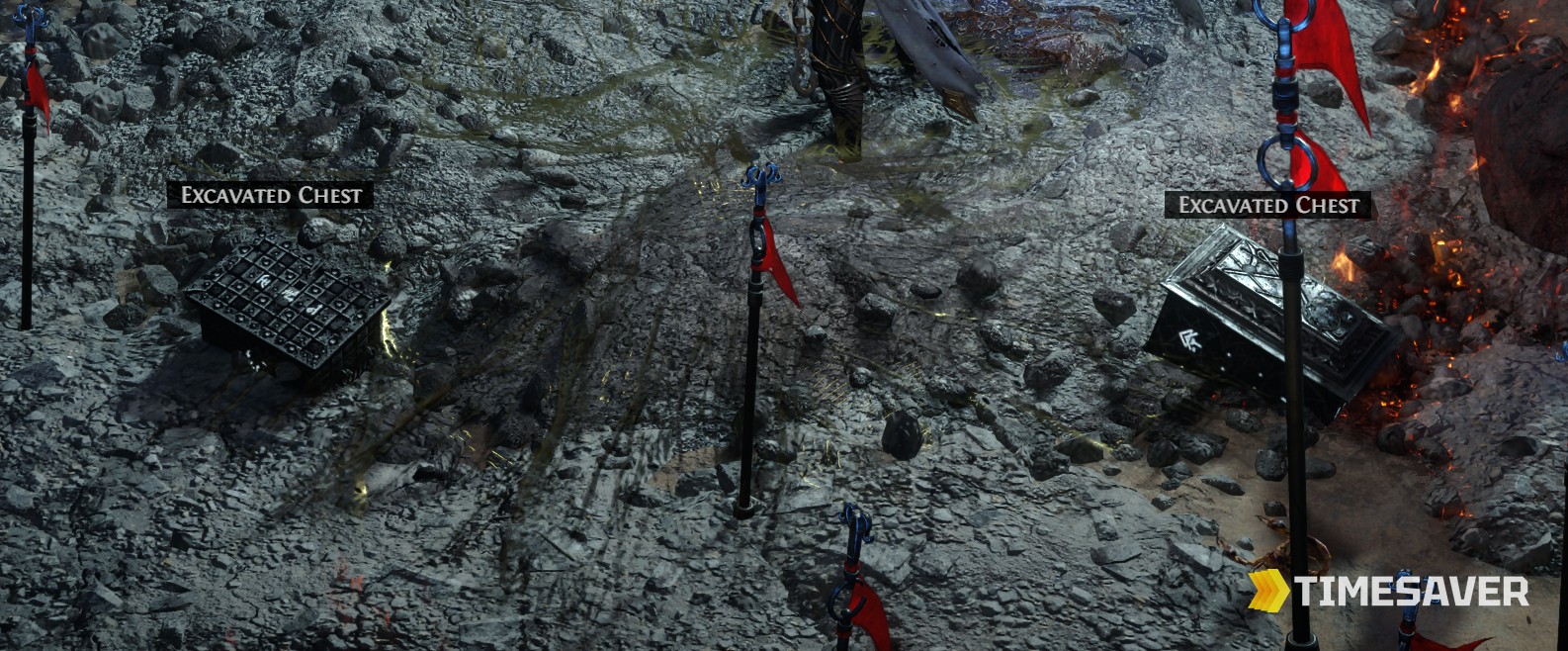
- Read the field before you place anything. The zone is full of Remnants (floating tombstones), Runic Monster markers (red flagpoles), and chests. You only get 15 explosives — plan your line.
- Lay your fuse line. Place explosives so they form a chain that detonates sequentially. Each blast unearths whatever sits inside the green radius — Remnants, Runic Monsters and chests.
- Chain the good Remnants into the packs. This is the whole skill of Expedition (more below).
- Detonate. Hit the detonator next to Dannig. Runic Monsters spawn in waves, drop artifacts and items, and the chests pop.
- Collect and convert. Grab the loot, then take your artifacts to the four vendors to turn them into usable currency.
How Should You Place Explosives and Use Remnants?
Remnants are the most important reward source in the encounter, and the rule that governs them is exact. Per the PoE Wiki: "All Unearthed Remnants that are affected by the explosion will only apply its modifiers to the Runic Monsters that spawn after the Remnants explode."
In plain terms: a Remnant's bonus only applies to monsters that spawn after that Remnant blows up. So you want your fuse to detonate reward Remnants first, then roll into the Runic Monster markers — that way the "increased artifacts / increased currency / increased pack size" modifiers all land on the packs you're about to fight.
A few practical rules:
- Each Remnant carries good and bad modifiers, shown as runes — a minimum of 3 and up to 10. More runes = more loot potential but more waves and more danger. Click an un-detonated Remnant to preview and pick its outcome.
- Prioritise Remnants that boost artifacts/currency and pack size; skip the ones that add brutal monster damage if your build can't handle the extra waves.
- Spend your 15 explosives on density, not distance. Since 0.5.3 cut the count from 20, you can't cover the whole field — concentrate on the cluster with the most reward Remnants and chests chained together.
- Push Waystone tier. Because the Remnant cap scales to Tier 15+, a Grand Expedition run from a high-tier Logbook simply spawns more Remnants to chain.

PoE2 - Items
Skip the grind — get Items
Expedition Vendors: Turning Artifacts Into Currency
Runic Monsters drop artifacts — a parallel currency you spend at four faction vendors. You unlock each by encountering them in Expeditions, after which they live in your hideout:
- Dannig (Knights of the Sun → Sun Artifacts) — your Expedition hub; decodes Logbooks and exchanges artifacts.
- Tujen (Black Scythe Mercenaries → Black Scythe Artifacts) — haggle for raw currency, rings, amulets and belts. This is your main currency tap.
- Rog (Order of the Chalice → Order Artifacts) — crafts armour and shields step by step.
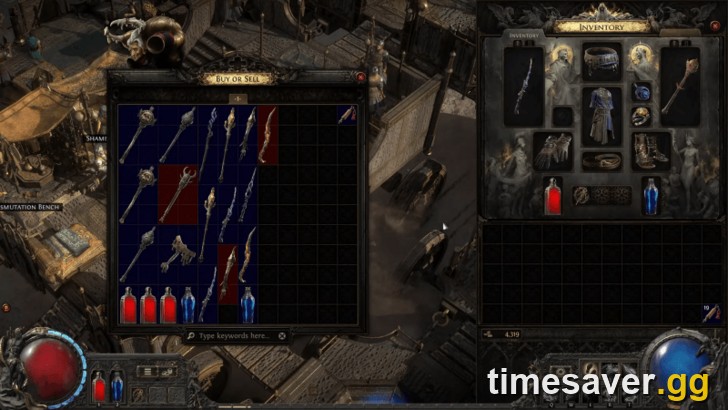
- Gwennen (Druids of the Broken Circle → Broken Circle Artifacts) — gambles unidentified weapons (the lottery for big Uniques).
Exotic Coinage is the premium multi-vendor currency (spendable with Gwennen, Tujen and Rog) — save it for the highest-value rolls. For pure currency farming, Tujen haggling is where most of your Divine-equivalent value comes from, so weight your Remnant choices toward Black Scythe artifacts when you can.
Best Grand Expedition Farming Strategy (0.5.3)
Putting it together into a repeatable farm:
- Sustain Logbooks. Run Expeditions inside Tier 10+ maps — Runic Monsters there can drop Logbooks — and farm Styrn, Fallen Knight of Aldur for a guaranteed drop. Bank a stack before you start a session.
- Run Logbooks at max tier. Always open Grand Expeditions from the highest Waystone tier you can comfortably clear (aim Tier 15+) to hit the new Remnant cap.
- Build your Atlas tree into Expedition. Allocate the Expedition notables/keystones for extra explosives, more Remnants and better artifact rewards — the Atlas tree multiplies every run.
- Chain reward Remnants into Runic packs, prioritising artifact/currency and pack-size mods.
- Open every chest — since 0.5.3 they're all currency, Uniques, Waystones, or high-Rarity mystery/trinket chests.
- Convert efficiently. Haggle currency from Tujen, sell drops, and use the Currency Exchange (no whisper, no trading with a live player) to roll everything up into Exalted and Divine Orbs.
Done well, a juiced Grand Expedition is one of the densest currency drops in Return of the Ancients — the reason 0.5.2 and 0.5.3 both leaned reward buffs into it.
Want to skip the grind and just stock the currency?
- PoE2 Divine Orbs — instant delivery · trusted · best rate
- PoE2 Exalted Orbs — fast & secure
- PoE2 Currency (all orbs) — divine · chaos · exalted · more
- PoE2 Leveling & Boss Carries — skip the grind · pro players
Frequently Asked Questions
What is a Grand Expedition in PoE2? A Grand Expedition is the largest type of Expedition — a standalone excavation area you open by giving a Logbook to Dannig. Unlike a map Expedition, it has no wandering monsters; the entire zone is one big dig made of explosives, Remnants, Runic Monsters and reward chests, which is why it drops far more currency than a single map encounter.
How many explosives do you get in a Grand Expedition after 0.5.3? You now place 15 explosives, reduced from 20 in patch 0.5.3. The trade-off is that chests are all high value (currency, Uniques, Waystones) and there are more Remnants, so each placement is more impactful even though you have fewer of them.
Why should I run high Waystone tiers for Expedition now? Because 0.5.3 made the maximum number of Remnants scale with Waystone Tier, peaking at Tier 15+. More Remnants means more reward modifiers you can chain into Runic Monster packs, so a high-tier Logbook is simply worth more currency than a low-tier one.
How do Remnants work? Each Remnant is a tombstone with good and bad modifiers shown as 3–10 runes. Its bonuses only apply to Runic Monsters that spawn after it explodes, so you chain your fuse to detonate reward Remnants first, then roll into the monster markers. More runes mean more loot but more (and harder) waves.
Where does Expedition currency come from? Runic Monsters drop artifacts, which you spend at four vendors: Tujen (haggle for currency — your main tap), Gwennen (gamble weapons), Rog (craft armour/shields) and Dannig (Logbook hub). Convert everything through the Currency Exchange into Exalted and Divine Orbs.
How do I get more Logbooks? Runic Monsters in Tier 10+ maps can drop Logbooks, and as of 0.5.3, Styrn, Fallen Knight of Aldur in the Tomb of the Fallen Knight always drops one — making him the most reliable way to keep your Grand Expedition stock topped up.
What is an Aldur's Saga and how does it boost a Logbook run? Aldur's Saga is an Omen that, while active in your inventory, forces the next Expedition Logbook you open to add special modifiers to the Grand Expedition areas it reveals — guaranteeing higher-slot Verisium Remnants for a single Logbook run. It's the single biggest individual yield multiplier for a Logbook. See our Aldur's Saga guide for where to farm it, how to sustain a stack, and whether it's worth the grind.