If you've just reinstalled Path of Exile 2 after months — or a full year — away, you logged into a different game. The whole r/PathOfExile2 front page this week is returning players asking the same thing: what actually changed, and where do I even start? You're not behind because you're bad; you're behind because GGG rewrote the endgame twice while you were gone. This guide is the fast catch-up: what's new in the current 0.5.4 "Runes of Aldur" build, what to ignore, and exactly where the time sinks are so you can skip them.

PoE2 - Divine & Exalted Orbs
Skip the grind — get Divine & Exalted Orbs
Quick answer: what a returning player needs to know
TL;DR — Path of Exile 2 in mid-2026 (patch 0.5.4):
- The headline overhaul is "Return of the Ancients," billed by GGG as the largest and final major update of Early Access. The live challenge league is Runes of Aldur — PoE2's first league with Challenges.
- Cruel difficulty is gone (removed back in 0.3.0). You play Acts 1–4 plus three Interludes once, then unlock the endgame Atlas at around level 65.
- The Atlas, league mechanics, and pinnacle bosses were all reworked. New top pinnacle = The Arbiter of Divinity. Expedition, Breach, Delirium, and Ritual all have new questlines and new currency.
- The economy is still orb-based barter, no gold. Exalted Orbs are now a cheap crafting staple; Divine Orbs are the premium denomination (~100–130 Exalted — always check poe.ninja).
- Fastest catch-up: start a fresh character (don't fight your stale one), rush the campaign, and convert currency through the Currency Exchange instead of grinding drops.
Hundreds of thousands of players are online right now — the Return of the Ancients launch peaked at roughly 421,596 concurrent on Steam in early June 2026, the biggest surge since the 578,569 all-time EA-launch peak in December 2024. The point: you're returning into a busy, liquid economy, which is good news for catching up fast.
What's changed in Path of Exile 2 since you last played?
The single biggest thing to internalize: the endgame you remember is gone. "Return of the Ancients" (launched late May 2026) rebuilt the Atlas and every major league mechanic. If you left during the original Early Access endgame, treat your old map knowledge as outdated.
Here's the high-level diff:
| System | What you remember | What it is now (0.5.4) |
|---|---|---|
| Difficulty | Campaign, then Cruel, then maps | No Cruel — campaign once, then straight to the Atlas |
| Atlas | Fixed-ish skill tree, points hard to fully earn | New Atlas Passive Tree — it's now possible to earn every point |
| Top pinnacle | Arbiter of Ash | Arbiter of Divinity (Arbiter of Ash is still a target, just no longer #1) |
| Expedition | Side mechanic | Grand Expedition — a leaned-into currency farm with its own atlas tree |
| Breach / Delirium / Ritual | Basic versions | Full reworks with new questlines, bosses, and league currency |
| Trade | Whisper-only, clunky | Currency Exchange order book for orbs (no whispering) + web trade for items |
The current build is patch 0.5.4, which GGG shipped on June 24–25, 2026 as the final major Runes of Aldur patch. It's stable and well-documented, so guides dated "0.5.4" are the ones to trust — anything written for 0.5.0 or earlier (especially older Atlas-tree and Breach guides) is stale.
Do you need to start a new character?
For almost everyone: yes, roll fresh. Here's why it's the faster path, not the slower one:
- The campaign was retuned and Cruel was removed, so a clean run is shorter than it used to be and re-teaches you the current systems naturally.
- Skill gems, the passive tree, and ascendancy trials have all shifted. Re-leveling a character whose build was valid a year ago means relearning everything while fighting a confused, half-broken build — slower than starting clean.
- A fresh character on the live trade league plugs you straight into the current economy. Your old standard-league stash is still there if you want it, but the action (and the liquid market) is on the league.
If your old character is recent (a couple of patches back) and you just want to map, you can dust it off — but new returnees coming back after 6+ months should start over. It genuinely costs you less time.
How does the campaign work now?
The current Early Access campaign is Act 1, Act 2, Act 3, Act 4, plus three narrative Interludes — The Curse of Holten, The Stolen Barya, and Doryani's Contingency — that bridge Act 4 into the endgame. (GGG's stated plan for full release is 6 Acts with no Interludes, but that's not live yet.)
Key facts for a returner:
- Cruel is dead. You do not replay Acts 1–3 on a harder difficulty anymore — that was removed in patch 0.3.0. Some wiki pages still have stale "Act 3 on Cruel" text; ignore it.
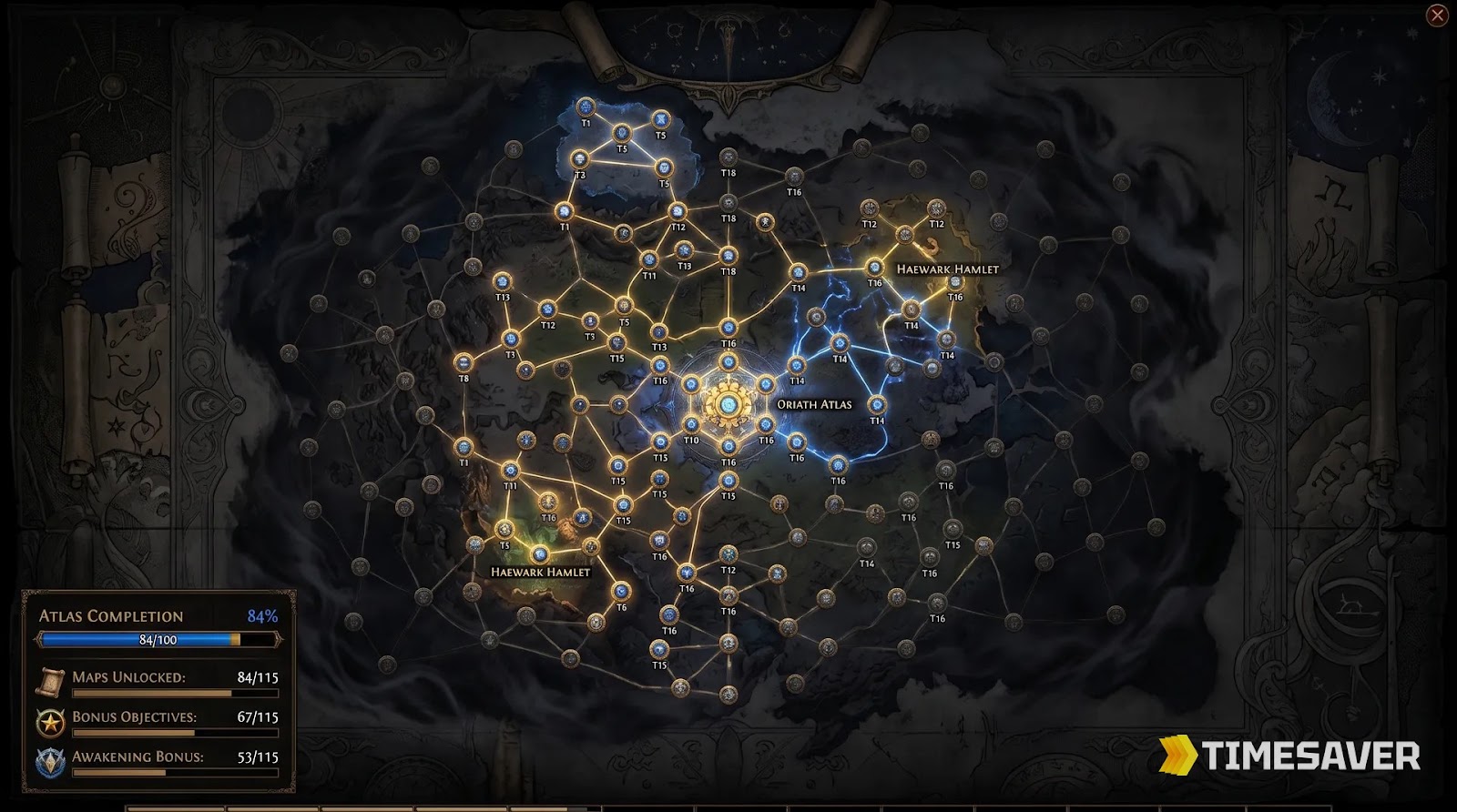
- The map device / endgame Atlas unlocks at the Ziggurat Refuge hub at around level 65, after the Interludes.
- Ascendancy is separate from the campaign — you earn it through the Trials (Trial of the Sekhemas, Trial of Chaos), so don't expect the campaign to hand it to you.
Rough time-to-maps: an experienced, twink-geared player solos the campaign in about 6–8 hours; a genuinely new or very rusty player should expect 15–25 hours or more. If you'd rather not eat that wall a second time, a self-play campaign carry runs roughly two hours — more on that below.
What is the current endgame?
Once you unlock the Atlas, the loop is: run maps (opened with Waystones, PoE2's map-tier items), boost them with Tablets and Atlas passives ("juicing"), farm a league mechanic for currency, and push toward pinnacle bosses. Every pinnacle now has a Quest version (first kill) and an Infinite Farm version (repeatable).
The reworked mechanics and their pinnacles:
- Expedition (Grand Expedition): the 0.5 currency engine. Blow up Remnants, kill Runic Monsters, sell artifacts to four vendors (Dannig, Rog, Tujen, Gwennen). Pinnacle: Olroth, Origin of the Fall.
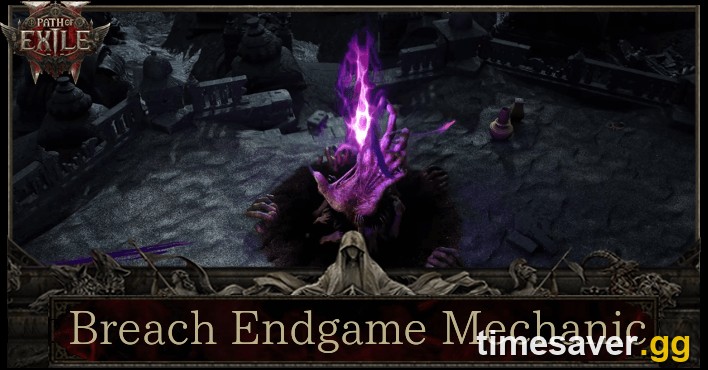
- Breach ("Waking the Dreamer"): dense monster waves for splinters and Wombgifts. Pinnacle: Xesht.
- Delirium ("The Raven & The Hare"): the highest-ceiling farm, but build-gated. The Simulacrum was cut from 15 waves to 7 in 0.5. Pinnacle: Tangmazu, the Raven Trickster.
- Ritual ("Rite of the Nameless"): King in the Mists is no longer the pinnacle — the new one is Bodach.
- Citadels → Arbiter of Ash → Arbiter of Divinity: collect three Crisis Fragments from the three Citadels to fight Arbiter of Ash; the new top pinnacle, Arbiter of Divinity, is unlocked through the Origin Tower system.
You do not need to do all of these. Pick one mechanic you enjoy, take its Atlas nodes (you can now earn every point), and farm it. Breadth is the trap that makes returners feel "behind."
PoE2 - Items
Skip the grind — get Items
Currency catch-up: which orbs matter and how trade works now
PoE2 has no gold — the economy is orb barter, and this is where returners lose the most time by farming the wrong thing. The orbs that actually move:
- Exalted Orb — adds a random modifier to a rare item. In 0.5 these are cheap and common, the baseline crafting and trade currency. You'll have stacks.
- Divine Orb — rerolls the numeric values of an item's existing mods (it never adds or removes mods). This is the premium denomination, floating around 100–130 Exalted — but rates move daily, so price-check on poe.ninja before you trade, never trust a static number.
- Chaos Orb — in PoE2 it removes one mod and adds a new one (a targeted-ish reforge), which is not how PoE1's Chaos worked. Mid-tier value.
- Mirror of Kalandra — duplicates an item. The jackpot; you'll rarely see one.
Two things changed about how you trade, and they matter:
- The Currency Exchange. This is an order-book market for stackable currency — set what you have versus what you want, and it fills automatically with no whisper and no meeting another player. It is the correct, fast tool for converting orbs (e.g. turning a pile of Exalted into Divines). If you're still whisper-trading currency the old way, stop.
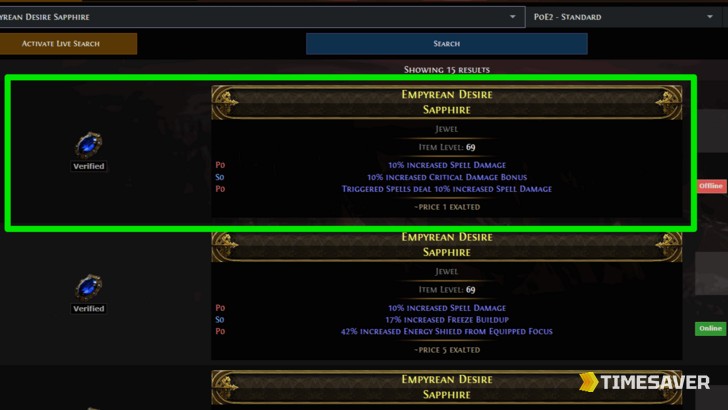
- Item trade is still manual. There's no auction house by design. For items, search the official web trade site, Direct Whisper the seller, get a party invite, and trade in their hideout. To sell, you need a Premium stash tab set to public so the trade site indexes it. Price-check any item with Shift+Alt+Click — but only in town or your hideout, not while mapping (it was added in 0.5.0).
If you'd rather not rebuild a currency stash from zero, topping up directly is the shortcut a lot of returners use — PoE2 Divine Orbs and PoE2 Exalted Orbs deliver instantly, or grab the full range on the PoE2 currency page.
What 0.5.4 changes should returning players know about?
A few 0.5.4 tweaks specifically help people coming back to alts and old gear:
- Skill-granting uniques now scale down to your level. Per GGG's official 0.5.4 patch notes:
"Unique Items that grant Skills now use the lowest level of the Skill that you meet the requirements of when equipped, scaling up to the maximum described level."
This means you can equip a skill-granting unique far earlier than before — a huge twinking buff for gearing a fresh character with an item you mule over from your old one. To update an old pre-patch copy to the new behavior, use a Divine Orb on it.
- The new Atlas Passive Tree lets you earn every point over time, so you no longer have to perfectly min-max which mechanic to spec — you'll get to all of it.
- New currency and bosses (Liquid Verisium from Grand Expedition, the Orb of Sacrifice from Atziri, the Red Queen) exist but are endgame-deep — file them under "later," not "now."
Fastest ways to catch up
In priority order for a returner who wants to be mapping this weekend:
- Roll a fresh league character and rush the campaign — don't nurse a stale build.
- Pick one league mechanic and take its Atlas nodes. Ignore the other four until you're comfortable.
- Convert currency through the Currency Exchange, not by grinding raw Divine drops — you farm value (juiced maps) and trade up.
- Skip the parts you hate. The campaign re-grind and the early gear wall are the two biggest time sinks; a self-play campaign carry or boss carry gets you to maps in roughly two hours instead of fifteen-plus, with full XP and loot on your own account.
The honest summary: PoE2 in 0.5.4 is more welcoming to returners than the version you left — shorter campaign, an Atlas you can fully complete, and a frictionless currency market. The only real tax is relearning the reworked endgame, and that's a few evenings, not a few weeks.
FAQ
Is Path of Exile 2 still in Early Access in 2026? Yes. PoE2 launched into Early Access in December 2024 and is still in EA as of mid-2026. "Return of the Ancients" (the current 0.5.x cycle) is billed as the largest and final major update of the Early Access period, but the 1.0 full release — with the planned six-act campaign — is not out yet.
What is the current Path of Exile 2 patch and league? The live build is patch 0.5.4, released June 24–25, 2026, and the challenge league is Runes of Aldur — notable as PoE2's first league to include Challenges.
Should I start a new character or keep my old one? If you've been gone more than a few months, start fresh on the current trade league. The campaign was retuned, Cruel was removed, and skill/tree systems changed enough that re-leveling a clean character is faster than untangling a year-old build. Your old characters and stash stay on Standard if you want them.
Do I have to grind currency from scratch? Not necessarily. The Currency Exchange makes converting orbs effortless, so even a modest farm compounds quickly. If you want to skip the early grind entirely, you can top up PoE2 currency directly — Exalted for crafting, Divine for big trades.
How long does the campaign take now? Experienced players run it in about 6–8 hours; returning or new players should plan for 15–25 hours or more. The endgame Atlas opens at around level 65. A self-play campaign carry cuts that to roughly two hours.
What's the new top pinnacle boss? The Arbiter of Divinity, added in the 0.5 "Return of the Ancients" update via the Origin Tower system. The older Arbiter of Ash (gated behind three Crisis Fragments from the three Citadels) is still a valid fight, just no longer the single hardest boss.