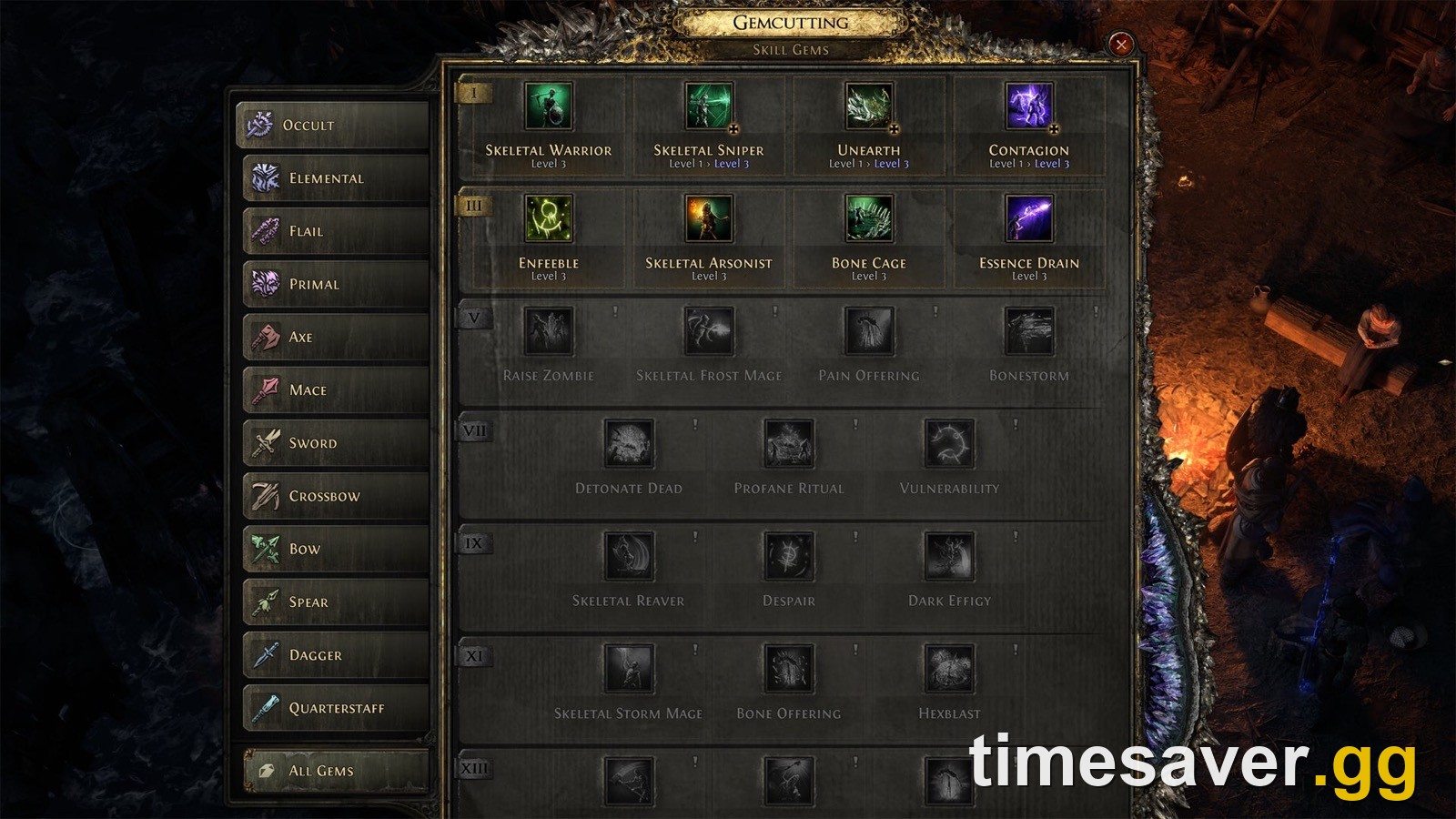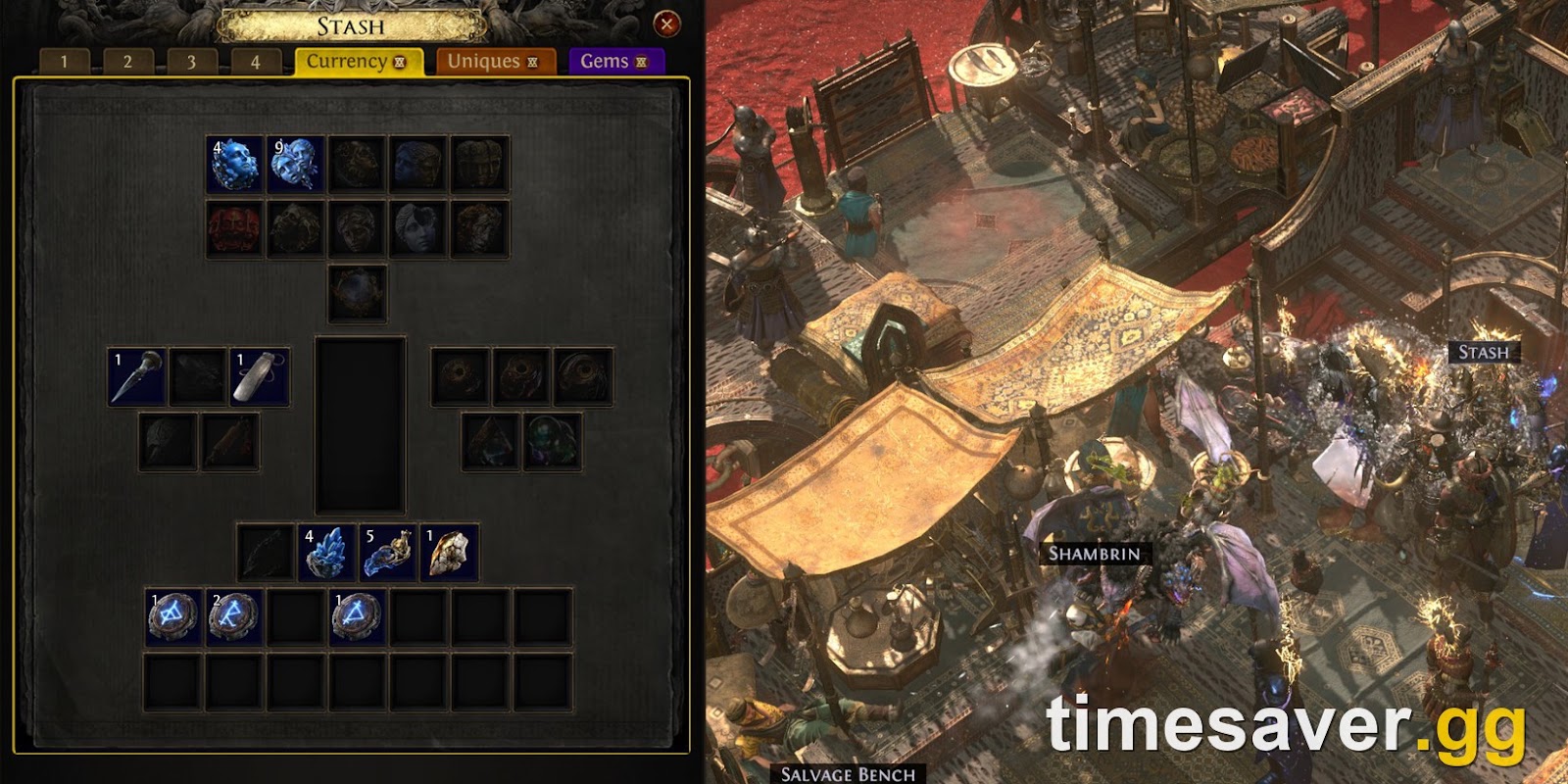
Profit crafting in Path of Exile 2 means buying a cheap base item, adding or improving its modifiers with currency, and selling the finished item for more than your inputs cost. The single most important skill is not the crafting itself — it is knowing what will sell. Master that, price your inputs against the live economy, and a good session in Runes of Aldur (patch 0.5.x) can net you multiple Divine Orbs per hour without ever leaving your hideout.
Quick answer (TLDR): profit crafting wins only when your finished item sells for more than (base + currency spent) — so craft what sells and price it live before you start.
- Goal: finished item sell price > (base cost + currency spent). Everything else is detail.
- Rule #1: craft item types that actually sell. Check demand on poe.ninja / poe2scout before you spend a single orb.
- Safe order: Transmutation → Augmentation → Regal early; save Divine and Vaal for last, after every mod is finalised.
- Live currency anchor (2026-07-29, Runes of Aldur SC): 1 Divine Orb ≈ 419 Exalted ≈ 8.8 Chaos. Verify live — Exalted keeps inflating.
- Fastest ramp: flip deterministic Essence/Rune crafts for volume; reserve Exalted-slamming and Chaos-spamming for high-value slots only.
Need the currency to fund a craft right now instead of grinding for it? Skip the farm with PoE2 Divine Orbs and Exalted Orbs — instant delivery, best rate.

PoE2 - Divine & Exalted Orbs
Skip the grind — get Divine & Exalted Orbs
What Is Profit Crafting in PoE2?
Profit crafting is the loop of turning cheap materials into a more valuable item and selling the difference. Unlike gearing your own character (where you keep whatever you make), profit crafting is a business: you only win when the sale price beats the total input cost.
That input cost has two parts:
- The base — the un-crafted item you start from (a good white/blue base, a fractured base, or a rare with the right open affixes).
- The currency — the orbs you spend to add, remove, or improve modifiers.
Because Path of Exile 2's economy shifts daily, the same craft can be wildly profitable one week and a money-loser the next. That is why every experienced crafter opens a price site first. As one r/PathOfExile2 crafter put it in the current profit-crafting discussion: the actual crafting is often the easy part — knowing what will sell is the real edge, and price tools "make this very easy."
Which Currency Orbs Do You Craft With?
PoE2 crafting currency works differently from PoE1 — do not assume the old behaviour. Here is exactly what each core orb does in 0.5, plus its live value so you can cost a craft:
| Orb | What it does in PoE2 | Stack | Live value (2026-07-29, SC) |
|---|---|---|---|
| Orb of Transmutation | Normal → Magic (1 mod) | — | trivial (~0.00008 Div) |
| Orb of Augmentation | Adds a mod to a Magic item | — | trivial |
| Regal Orb | Magic → Rare, adds one mod | — | ~0.006 Div |
| Exalted Orb | Adds one random modifier to a Rare (up to its cap) | 20 | ~1/419 Div (~0.0024) |
| Chaos Orb | Removes a random mod and adds a new random mod (targeted single-slot swap) | 20 | ~0.11 Div (~48 Ex) |
| Greater / Perfect Chaos | Same swap, but the new mod rolls from a higher tier pool | 20 | Greater ~0.33 Div; Perfect much higher |
| Divine Orb | Re-rolls the numeric values of existing mods (never adds/removes) | 10 | 1 Div (base unit) |
| Orb of Annulment | Removes one random modifier (works on Magic and Rare) | 20 | ~0.46 Div (~194 Ex) |
| Vaal Orb | Corrupts: unpredictable outcome, item can no longer be modified | 20 | ~3.6 Ex |
The two facts that trip up PoE1 veterans: the Exalted Orb adds a mod (it is the common crafting orb, not a jackpot), and the Chaos Orb is a precise one-in-one-out swap, not a full-item reroll. That precision is exactly why Chaos is a profit-crafting workhorse — you can fix a single bad affix on an otherwise-perfect rare.
What Is the Safe Crafting Order?
Bricking an item (locking in a bad result you can't undo) is how profit crafts turn into losses. Follow the sequence that protects every slot:
- Transmutation / Augmentation / Regal to build the item up from Normal or Magic and lock in your first guaranteed mods.
- Exalted Orbs to fill remaining open affix slots with new random mods.
- Chaos / Annulment (+ Omens) to swap or remove a single unwanted mod once the rest of the item is good.
- Divine Orb LAST — only after every modifier is finalised — to max out the numeric rolls.
- Vaal Orb only if you are gambling for a corruption bonus, because after a Vaal the item can never be modified again.
Two targeting tools make step 3 far safer: Omen of Sinistral Annulment (removes only a prefix) and Omen of Dextral Annulment (removes only a suffix). Pairing an Omen with an Annulment turns a coin-flip removal into a controlled one — worth the extra cost on any item you have already sunk Divines into.
Best Profit-Crafting Methods (Low Risk to High Reward)
There is no single "best" craft — profitability depends entirely on current demand. But these approaches, ordered from safest to swingiest, are where the reliable money lives in 0.5:
1. Deterministic Essence / Rune crafts (best for beginners)
Guaranteed-mod crafts (Essences, Rune/Soul Core socketing) have low variance: you know the outcome before you spend. Margins per item are smaller, but you win consistently, and volume adds up. This is the safest way to grow a first stack of Divines.
2. Regal + Exalt a strong Magic base
Buy a Magic base that already carries one or two high-value prefixes, Regal it to Rare, then Exalt the open slots. If the slams hit desirable suffixes, you have a sellable rare for a fraction of a finished item's price.
3. Chaos-spam a near-perfect rare
When a rare is one bad mod away from great, Chaos Orbs (or Greater/Perfect Chaos for higher-tier pulls) swap that single affix. Because you are only replacing one slot, the downside is capped — ideal for high-value weapon and armour bases.
4. Exalt-slam premium bases (high risk, high reward)
Fill the open affixes of an expensive multi-mod base with Exalted Orbs. When it hits, top-slot gear (belts, amulets, high-DPS weapons) can sell for tens of Divines; when it misses, you eat the base cost. Only slam bases you can afford to lose.
5. Chance-orb gambling with Omens (lottery tier)
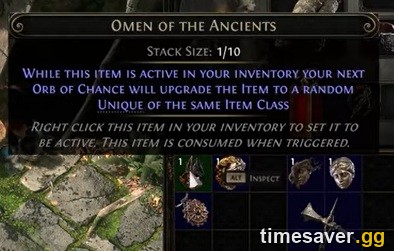
For cheap, high-variance flips, an Orb of Chance unpredictably turns a Normal item into a Unique of that base type — or destroys it. An Omen of the Ancients removes that gamble: per the PoE2 Wiki, while it's active "your next Orb of Chance will upgrade the Item to a random Unique of the same Item Class." Buy the right Normal base type (one that has a valuable unique tied to it), apply the Omen, and a handful of cheap orbs can occasionally hand you a sellable unique. Treat it as a lottery — fun in bulk, never your main income.
Whatever tier you pick, remember the second lesson from the crafting community: saving currency mid-craft is a skill in itself. Two crafters can reach the same result spending 100 Divines or 1,000 — knowing when to stop, sell, and re-buy a fresh base is what separates a profitable crafter from a gambler. Set a hard budget per item before you start, and the moment a craft turns "good enough to sell," list it rather than chasing a perfect roll that rarely pays for the extra Divines.

PoE2 - Items
Skip the grind — get Items
Common Profit-Crafting Mistakes to Avoid
- Crafting blind. Never spend orbs on an item type you haven't price-checked this week. A perfect roll on a base nobody buys is a total loss.
- Chasing perfection. The jump from a good item to a "god-tier" one often costs more in Divines than the price difference at sale. Sell the good item and start a new base.
- Holding Exalted as savings. Exalted inflates through the league (see the divine ratio below) — bank your profit in Divines so it holds value while you craft.
- Divining too early. A Divine Orb only re-rolls numeric values, so using it before your mods are locked in wastes the most expensive step. It is always the last orb you touch.

How Do You Know What Will Sell?
This is the whole game. Before crafting anything:
- Open poe.ninja / poe2scout and check which item types and mod combinations are in demand this week. Prices move daily in Runes of Aldur.
- Price your inputs in a single unit. Convert every orb to Exalted or Divine so you can see your true break-even. At today's rate — 1 Divine ≈ 419 Exalted ≈ 8.8 Chaos — a craft that eats 4 Chaos and a Regal is costing you well under half a Divine, so the finished item only needs to clear that.
- Only craft mod combos that already have buyers. A "perfect" item nobody wants is worth nothing; a mediocre item on a high-demand base sells instantly.
- Watch the Exalted:Divine ratio. Exalted inflates through a league (roughly 709 Ex per Divine on July 7 → ~419 Ex on July 29). Hold your profit as Divines, not Exalted, so it doesn't melt while you craft.
GGG explicitly loosened the Divine faucet this patch — the 0.5 "Return of the Ancients" notes state that "Divine Orbs are now more common." More Divines in circulation means more buyers funding big crafts, but also a softer per-Divine value, which is exactly why pricing live matters.
Fund Your Next Craft Instantly
Crafting for profit still needs seed currency, and grinding it can take hours. If you would rather start crafting now:
Get PoE2 crafting currency delivered instantly, at the best rate:
- PoE2 Divine Orbs — instant delivery · trusted · best rate
- PoE2 Exalted Orbs — fast & secure
- PoE2 Currency (all orbs) — divine · chaos · exalted · more
- PoE2 Leveling & Boss Carries — skip the grind · pro players
Frequently Asked Questions
Is crafting actually profitable in PoE2? Yes, but only if you craft item types that already have buyers and you price your inputs against the live economy first. Deterministic crafts (Essence, Rune socketing) profit consistently; gambling slams profit big but inconsistently. The crafting itself is easy — the profit comes from market knowledge.
What is the best currency to make money crafting? There is no single best orb — it depends on the craft. Exalted Orbs add mods to build a rare, Chaos Orbs swap a single bad mod on a near-perfect item, and the Divine Orb is a finisher that only re-rolls numeric values. Use each for its job and save Divine and Vaal for last.
How do I not brick my item? Follow the safe order: Transmutation/Augmentation/Regal first, Exalted to fill slots, Chaos/Annulment (with Sinistral/Dextral Omens for targeted removal) to fix one mod, and Divine only after everything is finalised. Never Vaal an item you still want to modify — corruption is permanent.
How much is a Divine Orb worth right now? As of 2026-07-29 in Runes of Aldur (softcore), roughly 419 Exalted ≈ 8.8 Chaos per Divine. That ratio drifts daily as Exalted inflates, so always verify live on poe2scout or poe.ninja before costing a craft.
Where do I check what sells? poe.ninja and poe2scout show live demand and prices for item bases and mod combinations. Check them before every crafting session — a craft that was profitable last week can be a loss this week.
Should I just buy currency instead of farming it? If your time is better spent crafting and flipping than grinding maps for seed currency, buying Divine or Exalted Orbs to fund the craft is a valid shortcut — just make sure your expected sale price still clears the total cost.