The Mirror of Kalandra is the most valuable item in Path of Exile. It duplicates a piece of gear exactly — and because the best crafted items in the game can't be bought at any price, a mirror is worth more than any single orb stack you'll ever hold. It's also so rare that most players will clear thousands of maps and never see one drop. This guide covers exactly how a mirror enters the economy, the realistic ways to get one, and why the "mirror service" exists at all.
Applies to: Path of Exile 3.29 "Curse of the Allflame" (launched 24 July 2026; latest patch 3.29.3b, 4 September 2026). 3.29 did not change how the Mirror of Kalandra or Mirror Shards drop — the acquisition routes below are the current ones. Last verified 2 October 2026.
Short on currency for the build? You can buy PoE Divine Orbs from Timesaver on any league or Standard, delivered in a private trade.

Path of Exile - Power Leveling
Get leveled to 100 without the grind
Quick answer: how do you get a Mirror of Kalandra in PoE?
There are three ways a Mirror of Kalandra enters your stash: it drops as a raw currency item (astronomically rare), you collect 20 Mirror Shards and combine them, or you trade for one. There is no reliable farm — no map, boss, or strategy that "targets" mirrors the way you'd target Divine Orbs. A mirror is a tail-end lottery outcome of simply playing a lot of high-tier content. Mirror Shards are the one semi-farmable piece: they come from Harbinger encounters, certain endgame safehouses, and specific Delirious map strategies, and 20 shards stack into a full Mirror of Kalandra (confirmed on poedb). Most players who "own" a mirror didn't drop it — they bought it, or they used a mirror service to copy an item without owning the mirror themselves.
If you want to skip the lottery entirely, you can buy a Mirror of Kalandra with instant delivery rather than grinding for one that may never drop.
What does a Mirror of Kalandra actually do?
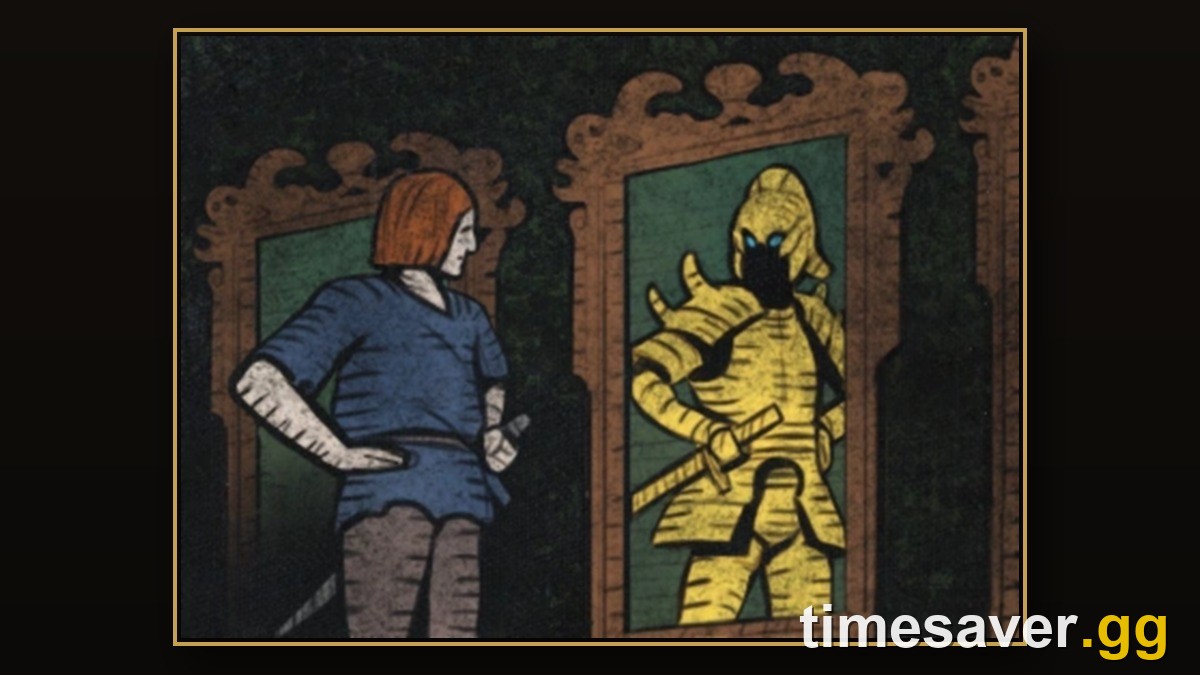
Before chasing one, understand why it's worth chasing. The Mirror of Kalandra's in-game description is simple: "Creates a mirrored copy of an item." In practice that means it produces a perfect, identical duplicate of a non-unique, non-corrupted piece of equipment — same mods, same rolls, same everything. The copy is flagged as Mirrored, so it can never be modified again, but it's otherwise a flawless clone.
That one line is why the mirror sits at the top of the economy. The most expensive items in PoE aren't uniques you can shop for — they're perfectly crafted rares that took a player hundreds of Divine Orbs and dozens of metacrafting steps to make. Those items are effectively one-of-a-kind. A mirror lets their owner sell copies without ever giving up the original. That's the whole market: mirror-worthy items are the apex of PoE crafting, and the mirror is the only tool that can reproduce one.
How rare is the Mirror of Kalandra? (the drop odds)
A raw Mirror of Kalandra is the rarest currency item in the game. It has no fixed drop location — it can technically drop from any monster that drops currency, which is exactly what makes it so hard to find. Community drop-data projects have long estimated the mirror at roughly 1 in several million currency-drop events, placing it on the order of ~1000× rarer than an Exalted Orb and dramatically rarer than a Divine. GGG has never published an official per-drop number, so treat any exact figure as a community estimate, not a guarantee.
The practical takeaway: you cannot plan around a raw mirror drop. Players who clear tens of thousands of high-tier maps per league may see one, or none. Anyone telling you to "farm map X for mirrors" is selling you a story — the only thing that raises your odds is sheer volume of high-quantity, high-tier map clears, and even then the expected return is effectively zero for the vast majority of players. The realistic paths are shards and trading, below.
Mirror Shards: the one semi-farmable route
The closest thing to "farming" a mirror is collecting Mirror Shards. Per poedb, a Mirror Shard is a stackable currency with a stack size of 20, and the tooltip states plainly: "A stack of 20 shards becomes a Mirror of Kalandra." Collect twenty and they fuse into a full mirror automatically. Shards drop at a far higher rate than a whole mirror, which makes them the only incremental path.

Where Mirror Shards come from:
- Harbinger encounters. Harbingers are spectral bosses that spawn in maps (and in the dedicated Harbinger map/atlas strategy) and drop Harbinger currency shards, including the rare Mirror Shard. Stacking Harbinger-focused content on your Atlas is the single most common deliberate shard-farming approach.
- Endgame safehouses and encounters. Certain high-investment endgame activities — safehouse-style rewards and specific league-boss drops — can include Mirror Shards in their reward pools. These are low-probability tail rewards, not a steady drip.
- Delirious high-tier maps. Running maps under heavy Delirium (the fog that increases monster density and reward quantity) multiplies every drop, including the tiny chance at shards. It's a currency-quantity strategy, not a mirror-targeting one.
Be honest with yourself about the math: even a dedicated Harbinger farm produces shards slowly and inconsistently, and gathering a full set of 20 is a multi-hundred-hour proposition for most players. Shards are "farmable" only in the sense that they're more obtainable than a whole mirror — not that they're quick. Because of that, most shards get sold individually on the trade market rather than hoarded; you can buy and sell shards and other PoE currency to convert progress into whatever you actually need.
The House of Mirrors divination card
There is a divination-card route, too. House of Mirrors is a divination card whose full set rewards a Mirror of Kalandra. Per the card's in-game data and our own PoE divination card farming guide, the set size is 9 cards — turn in nine House of Mirrors cards at Navali to receive a mirror.
The catch is that House of Mirrors is itself an extremely rare card historically tied to limited, high-end content rather than an open farmable map pool — so it is not a reliable target-farm either. In practice, most people encounter House of Mirrors cards on the trade market, where nine of them cost roughly the same as a mirror anyway. Treat the card as another rare path into the mirror economy, not a shortcut around it.

Path of Exile - Divine Orbs
Get up to 1,000 Divine Orbs in 10 minutes
What is a "mirror service" and why does it exist?
Here's the part most new players miss: you don't need to own a mirror to benefit from one. A mirror service is a trade where the owner of a mirror-tier item mirrors it for you — you receive a perfect Mirrored copy, and you pay a mirror fee (plus, in older-style deals, posting collateral that's returned afterward). The mirror owner keeps the original and their mirror; you walk away with a flawless copy of a best-in-slot item.
This exists because of the maths above. A single mirror can copy an item many times over its life, so the owner of a god-tier crafted item effectively rents out perfection. For a player, a mirror service is almost always cheaper and faster than either dropping a mirror or buying one outright — you pay only the fee for the specific item you want, not the full price of a mirror. If you want a finished, mirror-tier piece handed to you without touching the lottery, our PoE boosting & services cover exactly this kind of endgame gear delivery.
Did 3.29 "Curse of the Allflame" change any of this?
No. The 3.29 league added Allflame crafting, Ducats, and a socket-colour overhaul (all covered in our PoE crafting guide), but it did not alter how the Mirror of Kalandra or Mirror Shards drop, nor the House of Mirrors set size. Harbinger shards, raw drops, and the divination card all behave exactly as they did pre-league. The only league-relevant angle is that the extra reward quantity from a well-rolled Atlas and Delirious maps marginally increases every drop — mirror shards included — but the odds remain a tail-end lottery.
One accuracy note for anyone cross-referencing PoE 2: this is Path of Exile (PoE 1). PoE 2 has its own, different Mirror of Kalandra behaviour. Don't conflate drop sources or mechanics between the two games.
The realistic plan for owning a mirror
Ranked by what actually works for a normal player:
- Mirror service. Want a specific best-in-slot item? Pay a mirror fee for a copy. Cheapest route to mirror-tier gear.
- Trade for a whole mirror. If you genuinely need the currency item (to mirror your own crafted piece, or to resell), buy it. Always verify the current rate on poe.ninja — the mirror's price in Divine Orbs floats throughout a league.
- Farm Mirror Shards. Stack Harbinger content and run Delirious high-tier maps if you enjoy the grind, selling shards as you go. Accept that completing a 20-shard set is a long-haul project.
- Hope for a raw drop. Not a plan. A bonus if it ever happens.
For most players the honest answer is that you'll interact with mirrors through services and trading, not drops. The lottery is real, but it's a lottery — build your league around content you enjoy, convert currency efficiently, and let the mirror economy work for you instead of chasing a number with effectively zero expected value.
FAQ
How do you get a Mirror of Kalandra in Path of Exile? Three ways: it drops as a raw currency item (astronomically rare, no fixed location), you collect 20 Mirror Shards and they automatically combine into a mirror, or you trade for one. There is no map or boss that reliably "farms" mirrors — raw drops are a tail-end lottery, so most owners buy one or use a mirror service.
How rare is the Mirror of Kalandra? It's the rarest currency item in the game — community drop-data estimates put it on the order of 1 in several million currency-drop events, roughly 1000× rarer than an Exalted Orb. GGG has never published an official number, so treat any exact rate as a community estimate.
How many Mirror Shards make a Mirror of Kalandra? 20. Per poedb, a Mirror Shard stacks to 20, and a full stack of 20 shards automatically becomes a Mirror of Kalandra.
Where do Mirror Shards drop in PoE? Mainly from Harbinger encounters (their signature shard reward), plus certain endgame safehouse/boss reward pools and high-Delirium maps. A Harbinger-focused Atlas is the most common deliberate shard-farming setup, but shards are still slow and inconsistent.
What is a PoE mirror service? A trade where the owner of a mirror-tier item uses their mirror to create a perfect Mirrored copy for you in exchange for a mirror fee. You get a best-in-slot copy without owning a mirror yourself — usually the cheapest and fastest route to mirror-tier gear.
Can you still farm the House of Mirrors card in 3.29? You can acquire it, but not reliably farm it. House of Mirrors is a 9-card divination set that rewards a Mirror of Kalandra; it's extremely rare and historically tied to limited high-end content, so most players buy the cards on trade rather than farming them.
Did 3.29 change the Mirror of Kalandra drop rate? No. 3.29 "Curse of the Allflame" left mirror and Mirror Shard drops, and the House of Mirrors set size, unchanged. Always verify the current mirror price in Divine Orbs on poe.ninja, as it moves throughout the league.