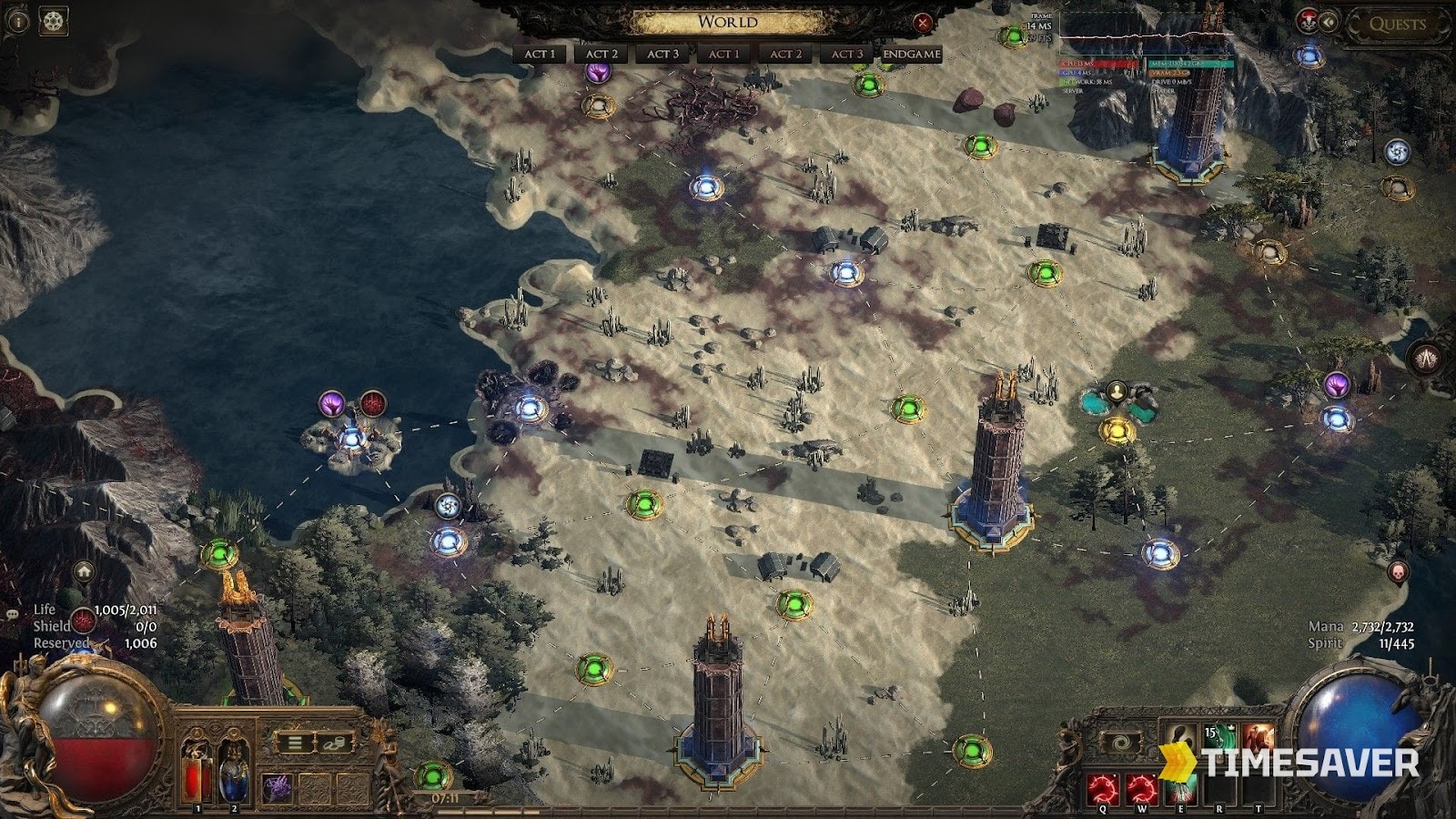
Map juicing is the single biggest lever on your currency-per-hour in Path of Exile 2. Two players running the same build and the same map can walk away with a 10x income gap — and the difference is almost never the build. It's how they juiced the map before they clicked "open." This guide breaks down the exact 0.5.4 juicing stack, in the right order, so every Waystone you burn prints the most Divine Orbs it possibly can.

PoE2 - Divine & Exalted Orbs
Skip the grind — get Divine & Exalted Orbs
Quick answer: how do you juice maps in PoE2?
To juice a map in PoE2 (0.5.4 Return of the Ancients, Runes of Aldur league) you layer four multipliers in this order:
- Sustain first — spec Atlas passives so Waystones pay for themselves (you can't juice if you run out of maps).
- Roll the Waystone — push it to 5–6 mods for +Quantity, +Rarity, and Pack Size.
- Stack the Towers — slot mechanic Precursor Tablets into overlapping Towers so several maps get hit at once.
- Specialize one mechanic — commit your Atlas tree and Masters to Expedition, Abyss, or Ritual instead of spreading thin.
Do all four and a single juiced T15–T16 map can return 2.6–4+ Divine Orbs in value; focused Expedition strategies have pulled 100+ Divines over a farming session. Skip them and you're leaving most of that on the floor.
Key takeaways
- Sustain before greed. Waystone drop nodes (Pathkeepers, Top of the World) keep the engine running; density nodes only matter if you can afford to keep mapping.
- Mod count = drop chance. A 4-mod map is ~55% to drop a Waystone from the boss, a 5-mod ~80%, a 6-mod is guaranteed.
- Towers are free multipliers. One Precursor Tablet irradiates 5–10 maps in range — overlap Towers to double- and triple-dip.
- One mechanic, done well beats five mechanics done badly. Expedition and Abyss are the current income kings.
- Juicing costs currency up front (~180 Exalted in tablets for a real Abyss setup). That investment is exactly what turns a map into a Divine printer.
What is map juicing in PoE2?
"Juicing" means loading a map with as many reward multipliers as possible before you enter it, so a single run drops far more loot and currency than a base map. In PoE2's reworked 0.5 Atlas, those multipliers come from four systems that stack on top of each other: your Atlas passive tree, the Waystone you slot, the Precursor Towers around the map, and the league mechanic (Breach, Expedition, Ritual, Abyss, Delirium) you choose to spawn inside it.
The reason juicing matters so much is compounding. Each layer is a percentage multiplier on the last, so adding a 40% Waystone plus a tower buff plus a specialized Atlas tree doesn't add — it multiplies. That's how you get the 10x gap between a raw white map and a fully juiced one.
The correct juicing order (0.5.4)
Order matters. Most players juice backwards — they chase density before they can sustain maps, run dry, and stall. Do it in this sequence.
Step 1 — Build Waystone sustain first
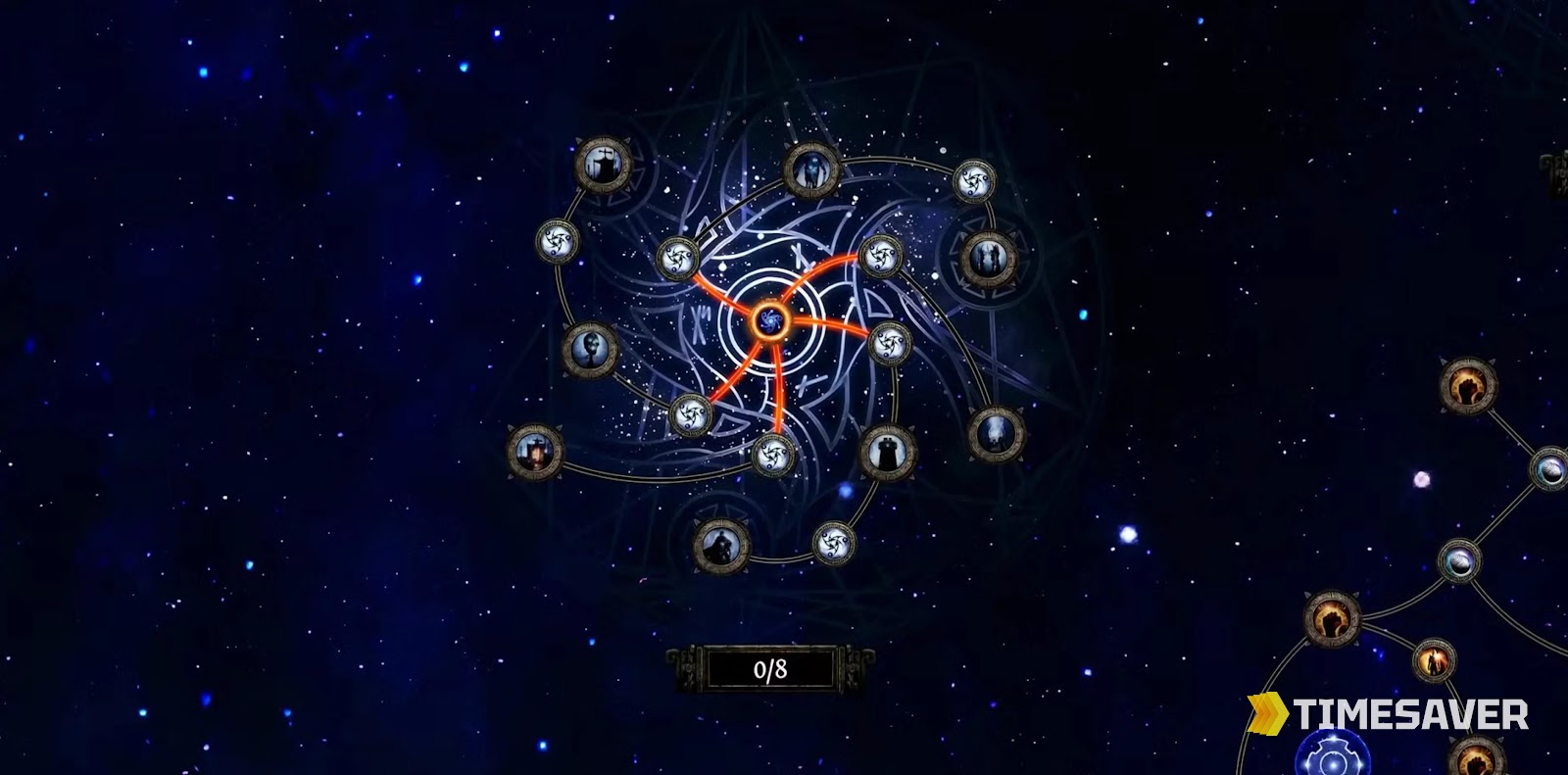
Before you touch a single mechanic node, make your maps self-sustaining on the Atlas tree. The core sustain nodes in 0.5.4 are:
- Pathkeepers — 15% increased Quantity of Waystones.
- Top of the World (a.k.a. Atop the World) — increased chance for the Map Boss to drop an additional Waystone.
- Eons of Contamination — a further Waystone drop-chance boost.
Together, Pathkeepers + Top of the World + Eons of Contamination is the reliable sustain core most mappers path to first once they hit Tier 6+ Waystones.
Grab these first. If you run out of high-tier Waystones you stop mapping, and a farmer who isn't mapping earns nothing. Sustain is the boring node cluster nobody screenshots — and it's the one that decides whether your session lasts 20 maps or 200.
Step 2 — Roll the Waystone itself
Your Waystone is a mini currency-strategy in its own right. The number of mods on it directly controls how likely the boss is to drop your next map:
| Waystone mods | Boss Waystone drop chance |
|---|---|
| 4 mods | ~55% |
| 5 mods | ~80% |
| 6 mods | Guaranteed |
Push Waystones to 5–6 mods and prioritize +% Increased Rarity of Items Found, +% Increased Quantity, and Monster Pack Size. Use an Exalted Orb / Chaos Orb to add and swap mods; the currency you spend rolling a good Waystone comes back many times over in drops.
Step 3 — Stack Towers with Precursor Tablets
This is the step that separates casual mappers from currency farmers. Precursor Tablets are consumables you slot into a completed Precursor (Lost) Tower on the Atlas. Each tablet "irradiates" 5–10 Maps in Range with its modifiers and is consumed on placement. Tablet types match the mechanics — Breach, Ritual, Expedition, and Delirium Precursor Tablets — and each can carry up to two extra mods (more monsters, more rare packs, more mechanic frequency).
The pro move is overlap: position your farming maps so they sit inside the radius of two or three Towers at once, then load each Tower with the same mechanic tablet. A map covered by three overlapping Expedition Towers spawns dramatically more Expedition per run than a single tablet ever could. Roll good mods onto tablets before slotting them, exactly like Waystones.
Step 4 — Specialize one mechanic
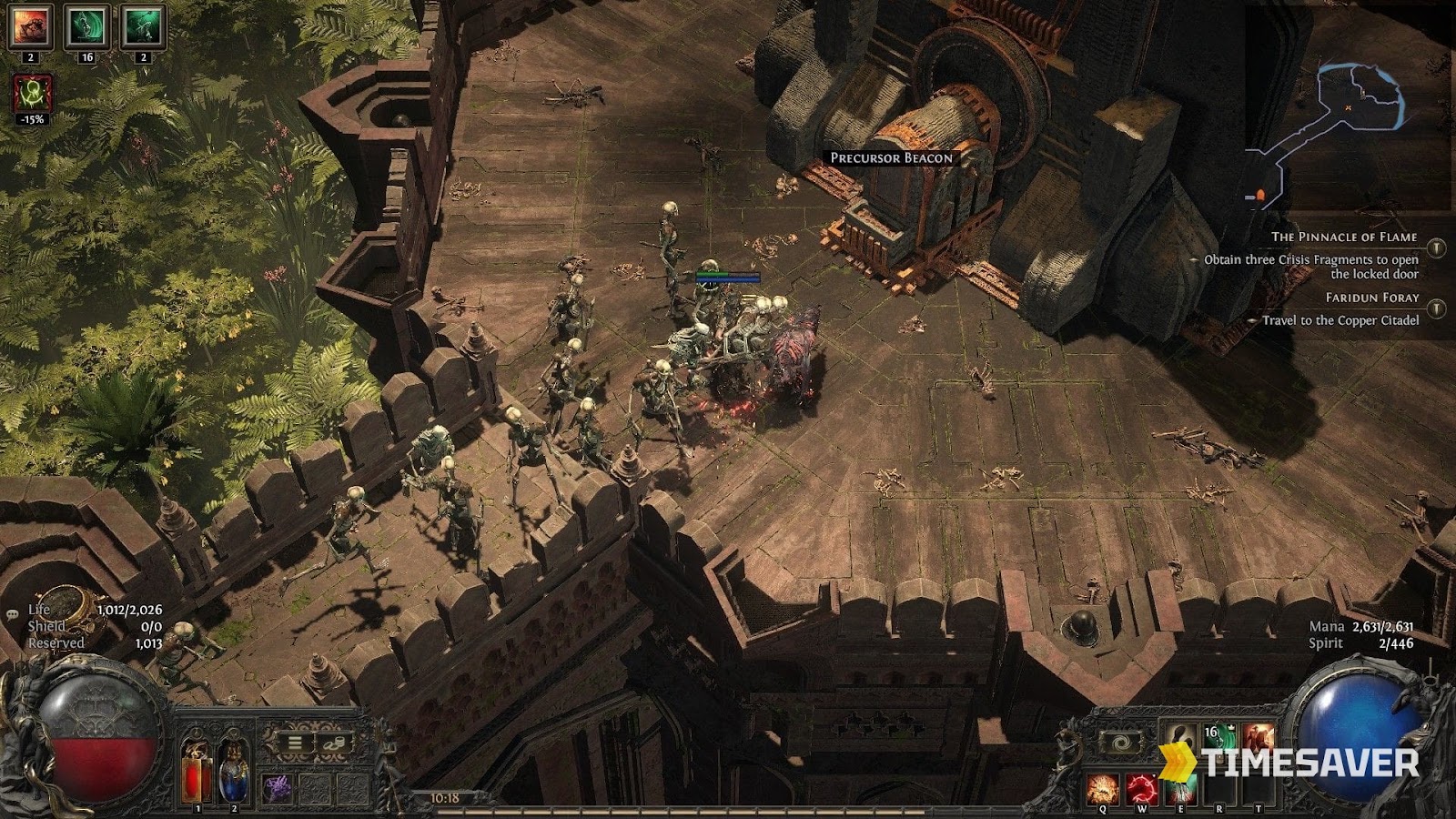
Do not try to farm everything. Commit your Atlas tree, your tablets, and the Masters of the Atlas to a single mechanic and go deep. A focused Expedition or Abyss tree out-earns a scattered "little bit of everything" tree by a wide margin, because every node is pulling in the same direction.
Which Atlas mechanic pays best right now?
Here's how the top 0.5.4 farming strategies compare. Numbers are directional — your clear speed, build, and tablet investment move them a lot.
| Mechanic | Approx. income | Why it works | Key Atlas nodes |
|---|---|---|---|
| Expedition | 100+ Divines / focused session | Verisium & Liquid Verisium remnants drop raw Divines, alloys, runes | "Feeling Lucky?" node + Grand Expedition questline points |
| Abyss | ~2.6–4 Divines / map | Proliferated pits multiply monster density; pairs with Omens & Strongboxes | Abyss density / Proliferation cluster |
| Ritual | High (spiky) | Chains bosses across maps; Fracturing Orbs worth ~3.5–5 Divines each | Ritual reward & boss-chaining nodes |
| Breach | Steady | Raw monster density = raw currency and splinters | Breach density cluster |
| Delirium | Steady–high | Layered rewards scale with map clear speed | Delirium reward nodes |
If you're fresh into the Runes of Aldur economy with little to invest, start Expedition — Logbooks and remnants self-fund, so you don't need to buy tablets to get rolling. Once you have a bankroll (~180–300 Exalted liquid), transition to Abyss for more consistent, dividend-style returns.
How much currency can juicing actually make?
Real, player-reported figures from 0.5:
- Abyss, low-budget: ~81 Divines across 20 maps with roughly a 180-Exalted tablet investment — about 2.6–4 Divines per map.
- Expedition, focused: 100+ Divines pulled over a farming session, with remnants dropping raw Divines even on lightly juiced maps.
- Ritual: individual Fracturing Orbs worth 3.5–5 Divines each, and Ritual chaining can stack several per session.
For scale on those Divines: in the Runes of Aldur economy a Divine Orb trades for roughly 100–130 Exalted Orbs — the exact rate floats daily, so always confirm on poe.ninja before a big trade.
The 0.5.4 patch also made Expedition materially better. Per Grinding Gear Games' official notes, "An Expedition Atlas Passive Skill Tree was added, with Atlas Passive Points earned by defeating each Boss in The Grand Expedition questline" — dedicated Expedition points mean your juicing tree goes deeper than ever before.

PoE2 - Items
Skip the grind — get Items
Common juicing mistakes to avoid
- Juicing density before sustain. You get 5 huge maps, run dry, and grind white maps for an hour to recover. Sustain first, always.
- Spreading across mechanics. A half-Breach, half-Ritual tree is worse than either one fully specced. Pick one.
- Under-rolling Waystones. Running 3-mod Waystones to "save currency" costs you far more in lost drops and lost Waystone sustain than a proper roll ever would.
- Ignoring Tower overlap. Single-Tower tablets are fine; overlapping Towers on the same maps is where the real multiplier lives.
- No upfront investment. Juicing is a currency loop — you spend Exalted on tablets and Waystones to make Divines. If your wallet is empty, the engine can't start.
Buying vs farming: the fastest way to a juicing bankroll
Juicing is a flywheel that needs fuel. The players pulling 100+ Divines didn't start from zero — they seeded the loop with an early stack of Exalted for tablets and Waystone rolls, then reinvested profits. If you'd rather skip the slow early grind and jump straight to a juiced, profitable Atlas, buying your starting currency (or a boss/leveling carry to reach maps faster) is the shortcut.
Get juicing-ready faster with timesaver.gg:
- PoE2 Exalted Orbs — the fuel for tablet & Waystone rolls · fast & secure
- PoE2 Divine Orbs — premium currency, instant delivery · best rate
- PoE2 Currency (all orbs) — divine · chaos · exalted · more
- PoE2 Leveling & Boss Carries — skip the grind to endgame with pro players
Where to go next
Once your juicing stack is running, go deep on the mechanic you specialized in:
FAQ
What does "juicing" a map mean in PoE2? Juicing means stacking reward multipliers on a map before you open it — Atlas passives, a high-mod Waystone, Precursor Tablets in nearby Towers, and a specialized league mechanic — so a single run drops far more loot and currency than a base map. Because each layer multiplies the others, a fully juiced map can out-earn a raw map by roughly 10x.
What should I juice first as a new endgame player? Waystone sustain. Spec Pathkeepers, Valuable Paths, Top of the World, and Eons of Contamination on your Atlas tree so maps pay for themselves, then start Expedition — its Logbooks and remnants self-fund, so you can build a bankroll without spending on tablets. Move to Abyss once you have ~180–300 Exalted to invest.
How many mods should my Waystone have? As many as you can afford to roll — mod count controls Waystone sustain. A 4-mod map is about 55% to drop a Waystone from the boss, a 5-mod about 80%, and a 6-mod map is guaranteed to drop one. Prioritize Increased Rarity, Increased Quantity, and Pack Size.
How do Precursor Towers and Tablets work? You slot a Precursor Tablet (Breach, Expedition, Ritual, or Delirium) into a completed Precursor Tower on the Atlas. The tablet is consumed and irradiates 5–10 maps in range with its modifiers. Overlapping two or three Towers over the same maps stacks the effect, which is the biggest single juicing multiplier available.
How much currency can I make juicing maps? Reported 0.5 figures range from ~2.6–4 Divine Orbs per map on a low-budget Abyss setup (about 81 Divines over 20 maps for ~180 Exalted invested) up to 100+ Divines over a focused Expedition session. Your build's clear speed and how heavily you juice move these numbers a lot.
Is map juicing worth it if I'm poor? Yes — start with a self-funding mechanic. Expedition doesn't require tablet investment to profit, so you can juice lightly, build a stack of Exalted, and reinvest into bigger tablet and Waystone rolls. If you want to skip the slow start, buying a small currency stack to seed the loop is the fastest route to a profitable Atlas.