Dead by Daylight's matchmaking rating is the most argued-about number in the game and the only one you are never allowed to see. That would be tolerable if it had stayed still. It did not: on 25 August 2026 Behaviour Interactive changed how MMR is calculated, gave the change two sentences in a patch-note Features list, and never once mentioned it in the Public Test Build notes three weeks earlier.
Everything below is pinned to Patch 10.2.0, the live build Behaviour shipped on 6 October 2026, and was re-verified against Behaviour's own patch notes and Player Support documentation on 11 October 2026.
Quick answer: how does DBD MMR work right now?
- MMR is a hidden skill rating. It goes up when you do well and down when you do poorly, and Behaviour deliberately does not display it anywhere in the game or on its own stats site.
- Killers have a separate rating for every single Killer. Survivors have one shared rating across all Survivor characters.
- Patch 10.1.0 changed the formula. MMR no longer counts only kills and escapes — it now reads a wider set of in-trial actions, the way the Emblem system does.
- The monthly Grade reset does not reset your MMR. Those are two completely different systems and only one of them is visible.
- There is no official MMR checker. Behaviour's own Official Stats Tracker shows match history and lifetime stats, and does not show a rating.
- The only MMR figure Behaviour has ever published is the high-MMR threshold: 1,800, which covered roughly 18% of the playerbase at the time it was measured.
- Behaviour has never published an MMR cap, a soft cap, a decay rule, or the size of a win or loss. Anyone quoting those numbers is guessing.
What is MMR in Dead by Daylight?
MMR — matchmaking rating, the number behind Skill-Based Matchmaking — is Behaviour's attempt to put you in trials against people of roughly your own ability. Behaviour's Player Support article Ranks, Grades, Skill Rating, and Skill-Based Matchmaking describes it in plain terms:
"Skill-Based Matchmaking (SBMM) is a new type of matchmaking that uses a hidden skill rating instead of ranks to create matches that are more fair. This rating increases when you do well and decreases when you do poorly."
Two structural details in that same article explain most of the confusion players have about their own matches:
"Each Killer has their own rating, meaning you'll likely run into tougher matches with a Killer you're good with, but slightly easier ones when you're playing a Killer up for the first time."
"Survivors will share a single skill rating."
That asymmetry is the most useful thing to understand about DBD matchmaking. A Killer main with 3,000 hours on Nurse and zero on Trapper carries two ratings that may sit at opposite ends of the ladder, and the game treats those as two different players. A Survivor has no such escape hatch — swapping from Meg to Feng changes nothing about who you are matched against.
One flag before you cite that support article: it was last updated on 12 April 2024. It is the only first-party explainer Behaviour maintains, and it predates the 2026 formula change below by over two years.
What did Patch 10.1.0 change about DBD MMR?
This is the part almost no guide covers, and it is genuinely the biggest change to the system since Skill-Based Matchmaking launched. Patch 10.1.0, the Chorus of Sin chapter published on 25 August 2026, carries an entry in its Features list titled simply "MMR Update":
"The way MMR is calculated has now changed, it will no longer count only Kills and Escapes. Similar to Emblems it will now consider more actions within a trial."
That is the complete text — two sentences, no dev blog, no stream segment, no follow-up article.
Here is the detail that makes it a story rather than a footnote. The 10.1.0 PTB patch notes, published on 4 August 2026, contain the string "MMR" zero times. The change appeared for the first time in the live 10.1.0 notes three weeks later. Whatever was tested on the PTB, this was not part of it — so nobody had a test window to react to it before it hit live servers.
In practice: before 10.1.0 your rating moved on the binary outcome, so a Killer who hooked everyone twice and lost at the gates was treated like one who got looped for five gens. After 10.1.0 the system reads the same broad performance categories the Emblem system already scores — chases, generator pressure, hook plays, objective progress — rather than the scoreboard alone.
Two cautions, because the honest version is more useful than the confident one. Behaviour has not published which actions are counted, how they are weighted, or how large the resulting swing is. Nor has it stated that existing ratings were recalculated or re-seeded when the formula went live. A guide that hands you a weighting table for this invented it.
How do you check your MMR in Dead by Daylight?
You cannot, and that is a design decision rather than a missing feature. Behaviour states the reasoning directly:
"For every player that wants to see their Skill Rating, there is another player who hates the feeling of being measured and judged. As we attempt to find an ideal balance, our current default is to not display our players' Skill Ratings."

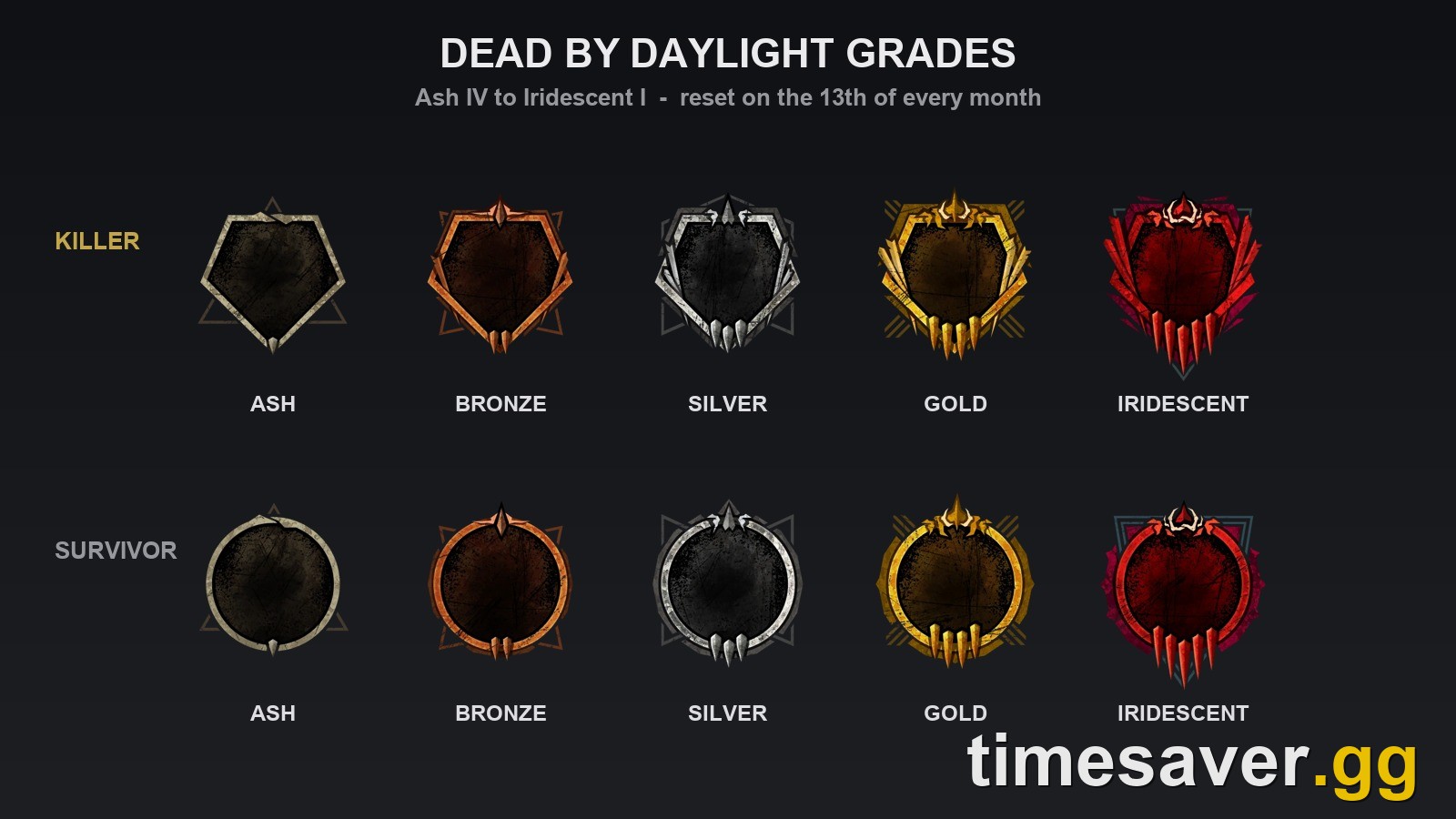
The tally screen above is the entire feedback loop the game gives you: four emblems, a pip movement, a Grade badge. None of the three is your MMR.
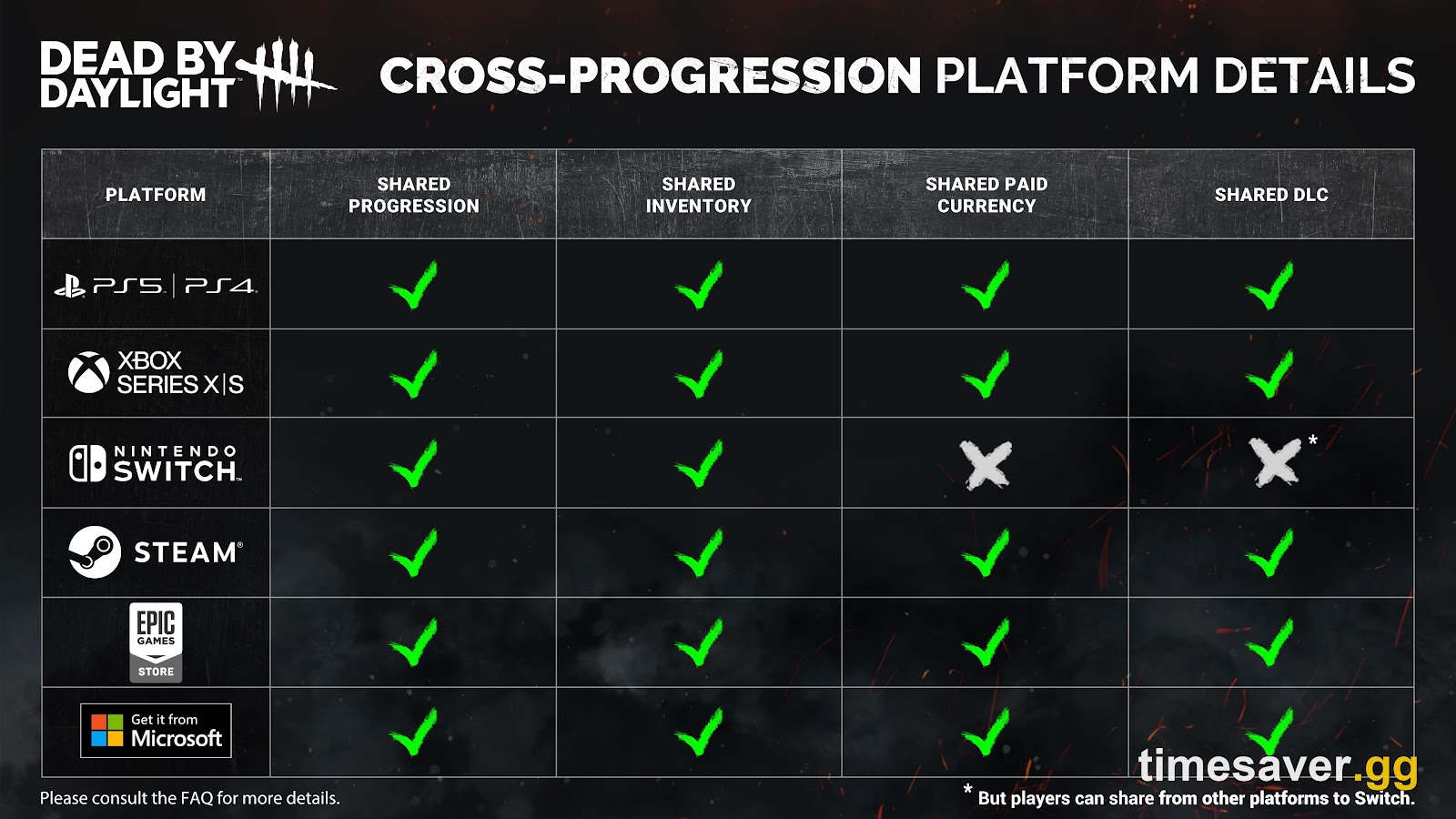
What you can see is your match record, through Behaviour's Official Stats Tracker. It needs a Behaviour Account — the same one that drives cross-progression — and per Behaviour's support article it works like this:
| Stats Tracker behaviour | Detail |
|---|---|
| All-time stats start date | 1 September 2020 — nothing before that is counted |
| Match history window | From 17 June 2025, minus 90 days |
| Stats refresh | Once every 24 hours |
| Match history refresh | Immediately after each match |
| Modes counted | Regular 1v4 only, with seasonal events aggregated |
| Modes not counted | Custom games; limited-time modes such as 2v8 and Chaos Shuffle are "under investigation" |
| First sync after linking | Up to 24 hours |
| Does it show MMR? | No |
Third-party sites that advertise a "DBD MMR checker" have no access to a rating Behaviour does not expose. What they can do is infer skill from public match data, which is a different thing wearing the same name.
Does the Grade reset reset your MMR?
No, and this is the most common misconception in the game. The two systems are unrelated and only one of them is visible. Behaviour's support article is explicit:
"When the Grade Reset happens on the 13th of each month, all players will be reset to Ash IV for both Killer and Survivor, regardless of their previous Grade, but their SBMM rating will be unchanged."
The next reset lands on Tuesday 13 October 2026. Your Grade badge drops to Ash IV, you collect a Bloodpoint payout scaled to the Grade you reached, and your matchmaking is untouched. If lobbies feel different in the days after a reset, the cause is not the reset — it is who else is queuing. Our full breakdown of Grades, pips and the reward ladder covers the visible half of this.
What MMR numbers has Behaviour actually published?
Exactly one threshold, and it only ever appears as a footnote on stats posts. In its March 2026 stats update, published 27 March 2026, Behaviour wrote:
"Please note that 'High MMR' in these stats refers to those with an MMR rating of 1800 or higher, which counts for approximately 18% of the playerbase at the time of pulling these numbers."
That is the only hard MMR figure in existence. It tells you three things: ratings sit on a scale where 1,800 is a meaningful landmark, roughly one player in five is above it, and Behaviour segments its own balance data by it.

The same post splits Killer pick rates across those two bands, from data pulled between 1 September 2025 and 28 February 2026. The Ghoul led high MMR at 8.1% of picks; The Huntress led broad MMR at 5.7% — in Behaviour's words, "Ghoul taking the spot for high MMR and Huntress remaining an oldie but a goldie amongst broad MMR."

Kill rates separate harder. Krasue topped high MMR at 67.1%, while The Lich topped broad MMR at 65.5%, which Behaviour summarised as "leading the carnage in high MMR is the terrifying Krasue, while broad MMR is being tormented by The Lich."
Two things to keep straight when quoting those numbers. They cover a six-month window ending February 2026, so they predate both the 10.1.0 formula change and the 10.2.0 perk pass. And a kill rate is not a power ranking — it blends a Killer's strength with the skill of the players who pick it. For current form, our Killer tier list is the editorial read, and it is labelled as one.
How do Abandon, Surrender and End Trial affect MMR?
Patch 10.2.0, shipped 6 October 2026, is the first time Behaviour has published explicit MMR outcomes for leaving a trial early. From the 10.2.0 patch notes:
| Option | Who can use it | MMR outcome |
|---|---|---|
| Abandon | Survivor or Killer | Counts as an MMR draw |
| Surrender | Survivor | Counts as an MMR loss |
| End Trial | Killer | Outcome depends on the total match results |
Behaviour's stated intent for the trio: "Options to leave result in clearer outcomes for both roles". Our full guide to the three options and their conditions covers when each one actually becomes available, which is where most of the confusion sits.
Note what is still missing even here: Behaviour published the direction of the MMR result, never its size. A draw and a loss are categorically different outcomes, but how far either moves your number is undocumented.
Is there an MMR soft cap or MMR decay in DBD?
Behaviour has published nothing on either. No cap, no soft cap, no decay rule, no inactivity reset. Both are community theories built from observed lobby quality — which is also shaped by queue population, time of day, region and party size, making it a poor instrument for reverse-engineering a hidden formula. The same goes for the "my MMR got reset" claim that resurfaces monthly: the only thing that provably resets on a schedule is your Grade, on the 13th, and Behaviour has stated in writing that the reset leaves SBMM untouched.
Which modes and actions sit outside ranked matchmaking?
- Custom games are excluded from the Official Stats Tracker entirely, per Behaviour's support documentation.
- 2v8 hides Emblems from the tally screen, and per the community wiki they do not feed your Grade, so playing 2v8 exclusively means your Grade never moves. Behaviour has not published whether 2v8 results feed the standard MMR pool — treat any claim either way as unverified. Our 2v8 mode guide covers the ruleset.
- Disconnecting triggers the Disconnection Penalty, a matchmaking lockout. Behaviour does not publish the duration ladder, only that penalties "start off small enough that the occasional outage should not be noticeable", and that "we do not accept appeals for disconnection penalties."
- Limited-time modes such as Chaos Shuffle are not yet counted in tracked stats; Behaviour says it "will investigate future support" for them.
Why do lobbies feel so uneven right now?
Because the formula changed under everyone at once and nothing in the game told them. A rating system that reads a wider set of actions re-sorts players who were previously classified on kills and escapes alone, and re-sorting takes games — a rating built on 4Ks does not land in the same bracket as one built on sustained chase pressure. Across r/deadbydaylight the pattern since 10.1.0 is a split of exactly that shape: "the killers I verse are definitely WAY worse" from one player, sitting next to "I went against the comp team on an escape streak" from another, often in the same session.
The complaint is real; the explanation usually offered for it is not. There was no MMR reset. There was a calculation change on 25 August 2026, and Behaviour has never said how long the system takes to settle after one.
FAQ
Can I see my MMR in Dead by Daylight? No. Behaviour keeps the skill rating hidden on purpose and does not display it in-game or on its Official Stats Tracker. The tracker shows lifetime stats and recent match history, not a rating.
Does the monthly reset on the 13th reset my MMR? No. Behaviour's support documentation states that the Grade reset sets everyone to Ash IV "but their SBMM rating will be unchanged". Grades and MMR are separate systems.
Did DBD change MMR in 2026? Yes. Patch 10.1.0 on 25 August 2026 changed the calculation so that it "will no longer count only Kills and Escapes" and instead considers more in-trial actions, similar to Emblems. The change does not appear anywhere in the 10.1.0 PTB notes.
Does every Killer have its own MMR? Yes. Behaviour states that each Killer carries its own rating, which is why a first-time Killer tends to draw easier lobbies than your main. Survivors share one rating across all Survivor characters.
What counts as high MMR in DBD? The only published threshold is 1,800. Behaviour used it to define "High MMR" in its 2026 stats posts and said it covered approximately 18% of the playerbase when those numbers were pulled.
Is there an MMR soft cap or does MMR decay if I stop playing? Behaviour has never published a cap, a soft cap or a decay rule. Both are community theories, not documented mechanics.
Does leaving a match hurt my MMR? It depends which option you used. Under Patch 10.2.0, Abandon counts as an MMR draw, Surrender counts as an MMR loss, and End Trial resolves based on total match results. A genuine disconnect additionally triggers a matchmaking lockout.
More Dead by Daylight guides
Want the visible half of the progression picture? These cover the systems you can actually see moving, all current to Patch 10.2.0.