The fastest way to a full stash in Delta Force isn't looting more — it's selling smarter. The Auction House lets you turn extracted gear into Tekniq Alloy, the currency that pays for everything in Operations. But half the loot players list would earn more sold straight to a vendor, and the items that actually move for real Alloy aren't always the ones that look expensive.
This guide covers exactly how the Auction House works in Season Reorientation (live September 8 – November 9, 2026), which items to flip, which to dump, and a simple rule for deciding in under five seconds.
Quick answer: what should you sell on the Auction House?
TL;DR — List blue-rarity and above gear, weapon attachments, and high-demand crafting materials on the Auction House (priced in Tekniq Alloy). Vendor grey/green junk and anything only a few hundred Alloy above merchant price — the House takes a cut, so tiny margins vanish. Red-rarity items and rare mods are your real money-makers, sometimes worth hundreds of thousands of Alloy each. Never list Ahsarah Cards — the game blocks them. And you cannot convert Alloy or items into real money; this is an in-game economy only.
How does the Delta Force Auction House actually work?
Delta Force runs a genuine, first-party, player-to-player Auction House — a system Team Jade names directly in its own patch notes (both the "Market" and "Auction House" functions are listed together when they get disabled during season-flip maintenance). You loot gear in Operations, extract with it, then list it for other players to buy. Everything is denominated in Tekniq Alloy, the in-fiction local currency of Ahsarah.
This is closer to Escape from Tarkov's flea market than to a Fortnite-style store, and it's the single biggest reason the Delta Force economy has depth: your loot has a market price set by other players, not just a fixed vendor buy-back.
Two things trip up new players:
- It is currency-mediated, not free-form trading. You are not swapping items directly with a friend. You list an item, it sells for Alloy, you get Alloy. Some item classes are barred outright — for example, Ahsarah Card series cards cannot be listed on the Auction House (that's spelled out in the official notes). If the list button is greyed out, the item is simply not eligible.
- It is not a cash-out. Tekniq Alloy stays inside Operations. There is no first-party way to turn Alloy or looted gear into real money, and the game does not support it. Treat every number in this guide as in-game Alloy, full stop.
The House also takes a listing cut on completed sales, which matters more than it sounds — it's the whole reason low-margin flips aren't worth your time.
Auction House vs. vendor: when should you just sell to the merchant?
Here's the mental model that saves you the most Alloy:
Vendor (merchant) = instant, flat price, no cut, no waiting. Auction House = higher ceiling, but a cut on sale and no guarantee it moves fast.
So the decision comes down to margin over vendor price:
The 5-second rule: If the Auction House price is only a couple hundred Alloy above what the merchant pays, vendor it. The House's cut eats that margin and you've tied up a listing slot for nothing. Only list when the Auction price clears vendor by a meaningful gap — a good rule of thumb is at least several thousand Alloy of headroom.
This isn't theory. In a widely-upvoted r/DeltaForceGlobal thread titled "To sell or not to sell?", an experienced player put it plainly:
"Compare the auction price vs the vendor price. A lot of items are only a couple hundred alloy apart, so it's not worth the auction cut. I broke 20 million just playing a few days a week by only listing the stuff with real margin."
The takeaway: volume-vendor the small stuff, auction only the outliers. Chasing every listing is how players burn an hour of menu time for a few thousand Alloy.
Which items sell for the most Tekniq Alloy?
Rarity is the fastest proxy for value, and it scales hard:
- Grey / green (common): Vendor almost always. The Auction margin rarely beats the House cut.
- Blue-rarity (rare): This is the workhorse tier. Blue gear and useful mods commonly move for roughly 10,000–15,000 Alloy per inventory square, which makes them your steady, reliable income — high enough to auction, common enough to find every raid.
- Purple (epic): Strong sellers, especially armor, high-tier helmets, and sought-after attachments. Check the live price before listing; demand swings by patch.
- Red-rarity (top tier): The jackpot. A single red item can be worth a couple hundred thousand Alloy or more. These are the extractions that fund a week of raids in one trip. Crown-marked safes and high-value containers are where red items most often turn up, so prioritize opening those before you're overweight.
Beyond raw gear, three categories punch above their weight:
- Weapon attachments. Rare scopes, suppressors, and grips are compact (few inventory squares) and in constant demand because every player is building loadouts. Great Alloy-per-square ratio.
- Crafting materials. Anything feeding the Black Site production benches — think components for the Workbench, Armor Bench, Cyber Warfare, and Pharmacy modules — has real buyer demand. This opens a craft-and-flip loop (below).
- Keys and keycards. Limited-use access items for locked rooms sell well when the map's meta loot is hot. Their value tracks whatever high-tier room they open.
The craft-and-flip loop: turning cheap materials into Alloy
The Auction House isn't just for dumping loot — it's a two-way engine. Because you can buy materials there too, you can run a craft-and-flip:
- Note the sell price of a finished craftable (an armor piece, a med item, a component) on the House.
- Check the buy price of the raw materials that craft it.
- If the finished item clears the material cost plus the House cut, buy the mats, craft it at your Black Site, and relist the output.
This rewards knowing your Black Site. Upgrading production benches unlocks better recipes and higher-margin outputs, which is why deciding what to upgrade first directly changes your flipping ceiling. (See the sibling guides linked below for Black Site priority and Tekniq Alloy farming.)
The catch: material prices move with the season. During big Alloy-influx events — like the current 2nd Anniversary giveaways flooding the economy with Delta Tickets and login rewards — buyer demand and prices both shift, so re-check live numbers rather than trusting last week's spread.
Where should you farm the loot you'll flip?

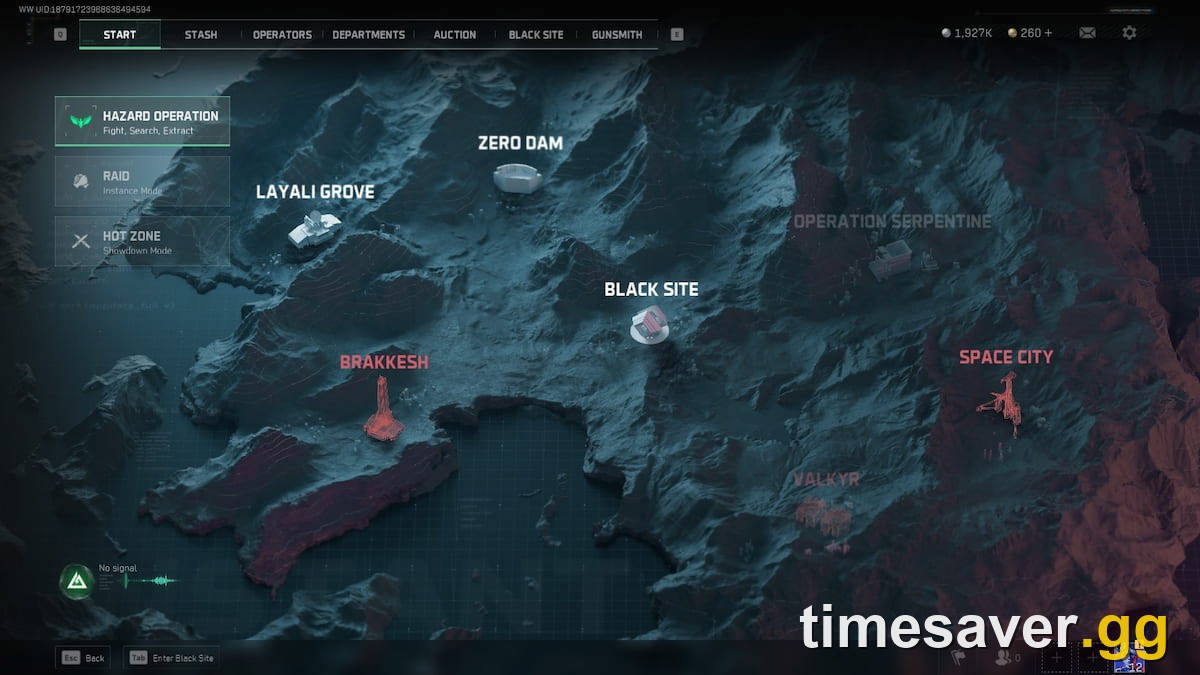
You can only sell what you extract, and richer maps mean richer listings. High-value Operations zones — Zero Dam, Space City, Brakkesh, and the AZ3 Nuclear Plant on Normal — carry the density of blue-and-above loot that makes auctioning worthwhile. AZ3 Normal alone costs 112,500 Tekniq Alloy just to enter, which tells you how much the game expects you to pull out of it.
The workflow that compounds:
- Route through crown-marked safes and high-tier containers first (best red-item odds).
- Grab compact high-value items — attachments, keys, meds — before bulky low-value gear.
- Upgrade your Safe Box so you keep more of a run on death; secured slots protect exactly the items you'd have auctioned.
- Extract, sort at base: vendor the junk, list the outliers, buy craft mats if a flip is live.
A note on buying Alloy or "coins" from third parties
Because Tekniq Alloy runs the whole Operations economy, a grey market of sellers advertises cheap Alloy and Delta Coins. Understand two facts before you go near it:
- Delta Coins are purchase-only, in-client. They are the hard premium currency, bought through the official store — there is no way to earn them for free in-game, and any site promising "free Delta Coins" or a generator is not legitimate. Season events give Delta Tickets and Anniversary Tokens, never Delta Coins.
- Team Jade runs the most aggressive anti-RMT enforcement of any game in this genre. The studio publishes weekly penalty bulletins — a single recent week logged 864 ten-year account bans and over 16,600 device blocks — and enforces at the hardware and IP level. Buying currency or gear from a third party puts your account squarely in the path of that system.
The safe, sustainable Alloy engine is the one described above: loot efficiently, flip the outliers, craft the margins. It's slower than a top-up, but it's the only version that survives an enforcement wave.
Delta Force Auction House FAQ
Can you sell items for real money in Delta Force? No. The Auction House is an in-game system priced entirely in Tekniq Alloy. There is no first-party way to convert Alloy or looted items into real currency, and doing so through third parties risks a ban.
What's the difference between the Auction House and vendors? Vendors pay a flat, instant price with no cut. The Auction House lets other players buy your item, usually for more — but it takes a cut on the sale and isn't instant. List high-margin items on the House; vendor everything else.
Why can't I list some items on the Auction House? Certain item classes are blocked. Ahsarah Cards, for example, cannot be listed on the Auction House per the official notes. If an item can't be listed, it's not eligible — vendor it or use it.
What sells for the most Tekniq Alloy? Red-rarity items lead, sometimes worth a couple hundred thousand Alloy each. Below that, blue-rarity gear (~10,000–15,000 Alloy per inventory square), rare weapon attachments, and Black Site crafting materials are the reliable earners.
Should I always use the Auction House? No. If an item's Auction price is only a few hundred Alloy above the vendor price, sell it to the merchant — the House cut wipes out thin margins. Reserve the Auction House for items with real headroom.
Are Delta Coins the same as Tekniq Alloy? No. Delta Coins are the purchase-only premium currency (store cosmetics, passes, draws). Tekniq Alloy is the Operations currency you loot, earn, and spend on the Auction House. You cannot buy Delta Coins with Alloy or earn Coins in-game.
More Delta Force guides:
- Delta Force Tekniq Alloy Guide: How to Get Alloy Fast in Operations
- Delta Force Black Site Upgrade Guide: Priority Order & Deconstruction
- Delta Force Zero Dam Guide: Best Loot, Extraction Strategy & Exits
- Delta Force Safe Box Guide: How to Upgrade to the 3×3 Ultimate
- Delta Force Delta Coins vs Delta Tickets: The Difference & How to Get Each
Prices and mechanics reflect Season Reorientation as of September 28, 2026. Auction House values are player-set and fluctuate — always check live in-game prices before listing.