The short version: you don't get scammed buying Classic Era gold because the whole thing is a scam — you get scammed because you picked the wrong seller, paid with the wrong method, and took delivery the wrong way. Buying gold is against Blizzard's rules (more on that below), but the money you actually lose is almost never to Blizzard — it's to a fake site that takes your card and ghosts you, a "half now, half later" seller who vanishes after the first payment, or a Trade-chat "double your gold" con. This guide is the buyer's safety checklist: the exact red flags that separate a real vendor from a burner site, the one payment method that keeps your money recoverable, and the face-to-face delivery trick that stops a seller from clawing the gold back. If you're going to buy, buy like this.
Quick answer — how to buy Classic Era gold safely in 2026:
- Know the two risks are different. Ban risk comes from Blizzard (buying gold violates the EULA). Scam risk comes from the seller (losing your money or gold). This guide is about the second one.
- Price sanity check first: real Classic Era gold sits around $12–$18 per 1,000g (a WoW Classic tracker averaged ~$15 per 1,000g in August 2026). Anything advertised at a fraction of that is bait.
- Pay with recourse: use a card or PayPal Goods & Services — never PayPal Friends & Family, gift cards, or crypto for a first-time seller. Those are irreversible by design.
- Never pre-pay in full to an unknown seller, never share your login, and take delivery face-to-face in-game in small chunks, not one giant mail.
- Trust signals that matter: an established storefront, real reviews across multiple platforms, live chat support, and a clear refund/insurance policy. "Cheapest gold, instant, pay by crypto" is the profile of a burner.
Is buying WoW Classic Era gold safe — or just a scam magnet?
Two separate risks get blended together, and confusing them is how people get hurt. The first is account risk, and it's real: buying gold from a third party breaks Blizzard's rules. A Blizzard support representative put it plainly on the official forums: "Buying gold from other players in the game is risky and harmful. It supports malicious activities and violates the End User License Agreement." Blizzard can remove illicitly-acquired gold and, in repeat or large-scale cases, suspend or ban the account. We cover exactly what triggers that — and what doesn't — in is buying WoW Classic Era gold safe.
The second is scam risk, and this is the one that empties wallets. It has nothing to do with Blizzard. It's the fake shop that charges your card and delivers nothing. It's the discord "seller" who takes a deposit and blocks you. It's the too-cheap gold that turns out to be duped or stolen — flagged, removed, and gone within days, leaving you out both the cash and the gold. Classic Era makes this worse than retail for one reason: there is no WoW Token in Classic Era. On retail you can buy gold legitimately through Blizzard's own Token. In Era, that option doesn't exist — every gold purchase is a third-party transaction, which is exactly the environment scammers fish in.
So "is it safe?" is the wrong question. The honest framing is: the transaction carries an inherent account risk you accept going in, and a scam risk you can almost entirely engineer away by how you buy. The rest of this guide is that engineering.
What are the most common WoW Classic Era gold scams?
Scammers recycle the same handful of plays. Learn the shape of each and you'll spot them before you pay. These are the seven red flags that cost players real money:
| # | The scam | How it works | The tell |
|---|---|---|---|
| 1 | The burner storefront | A slick "shop" with no history takes your card, then delivers nothing and disappears. | Domain registered weeks ago, no reviews off-site, no live support. |
| 2 | Half-now, half-later | A private seller asks for a deposit "to reserve," then ghosts after the first payment. | Any request to split payment with a stranger before delivery. |
| 3 | Price-too-good bait | Gold advertised at a fraction of market to lure you in; it's a hook, not a deal. | Priced well under the ~$12–$18 / 1,000g going rate. |
| 4 | Stolen / duped gold | The gold is real but sourced from hacked accounts or exploits; Blizzard traces and removes it. | "Bulk, instant, unlimited stock, rock-bottom price." |
| 5 | The chargeback trap | Seller delivers, then you get scammed by a middleman who reverses the payment — or the seller pulls the gold back mid-trade. | Rushed one-lump handoff; seller resists staggered delivery. |
| 6 | Account "piloting" / login theft | Seller insists on logging into your account to "deliver faster," then strips it. | Any request for your Battle.net credentials or authenticator code. |
| 7 | Trade-chat "double your gold" | An in-game whisper promises to double gold you hand over "for a stream/event." | Unsolicited whispers, urgency, and a stranger asking you to send first. |
Players have watched the mechanics of this for years. In community threads about how RMT actually moves gold, one recurring description is the auction-house swap: a buyer lists a single cheap item for a huge price, the seller "buys" it to transfer the gold, and the cut vanishes into the AH tax — a method that's trivial to fake a delivery on if you've already paid up front. The lesson isn't the mechanic; it's that whoever sends value first, loses first. Structure the deal so you're never that person.
How do you spot a trustworthy Classic Era gold seller?
Flip the red flags into a checklist. A vendor worth your money clears all of these:
- Established storefront, not a fresh link. A real business has a history, a support channel, and a public track record — not a Discord invite and a payment address.
- Reviews across multiple platforms, not just testimonials hosted on their own site. Cross-check independent review platforms and community mentions.
- Live human support you can talk to before paying — and that answers a pointed question (delivery method, refund policy) without dodging.
- A clear refund / insurance policy in writing. Legit vendors expect a small fraction of orders to hit problems and have a stated process. "All sales final, crypto only" is the opposite signal.
- Market-rate pricing. A trustworthy seller charges roughly what Era gold costs to source. If it's dramatically cheaper than everyone else, ask why — the honest answer is usually "it's stolen."
- Sensible delivery terms. They should offer face-to-face in-game delivery and be fine splitting a large order into chunks. A seller who insists on one giant mail or your login is a seller to walk away from.
This is the whole reason a real service exists: it turns a stranger-danger transaction into a normal purchase with support and recourse behind it. If you're going to buy, buy from an operation that has something to lose by scamming you.
Buying instead of grinding? Do it through a service with support and recourse, not a random link:
- WoW Classic Era Gold — instant & safe — market-fair rate, live support, and face-to-face delivery.
- WoW Classic Era Currency — instant delivery from a trusted source.
- All WoW Classic Era services — leveling, carries, and more in one place.
Which payment method actually protects you?
The payment rail decides whether a scam is a bad afternoon or a permanent loss. The rule: keep your money reversible until you have the gold.
- Credit / debit card or PayPal Goods & Services — best. Both give you a dispute/chargeback path if the seller delivers nothing. This is your recourse. Use it, especially with a first-time vendor.
- PayPal Friends & Family — no. F&F waives buyer protection entirely; that's why scammers ask for it. Same logic applies to any "send as a gift" request.
- Gift cards — never. A gift-card code is untraceable cash. Any seller steering you to gift cards is telling you what they are.
- Crypto — advanced only. Irreversible by design. Fine for a vendor you already trust and have history with; a red flag if a new seller demands it and refuses everything else.
Hard number to anchor on: real Classic Era gold runs about $12–$18 per 1,000g, and a WoW Classic price tracker averaged roughly $15 per 1,000g in August 2026 — Era gold trades at 5–8x the price of gold on the newer progression realms (~$1.80–$3.50 / 1,000g) because Era's economy is permanently frozen and deflated. If a "seller" wants an irreversible payment for gold priced at a quarter of that, you're not getting a discount — you're funding your own loss. (Full pricing math in how much Classic Era gold costs in 2026.)
What does a safe Classic Era gold delivery look like?
Delivery is where a deal that felt fine can still go wrong — so control it. The safest handoff is face-to-face, in-game, in staggered chunks.

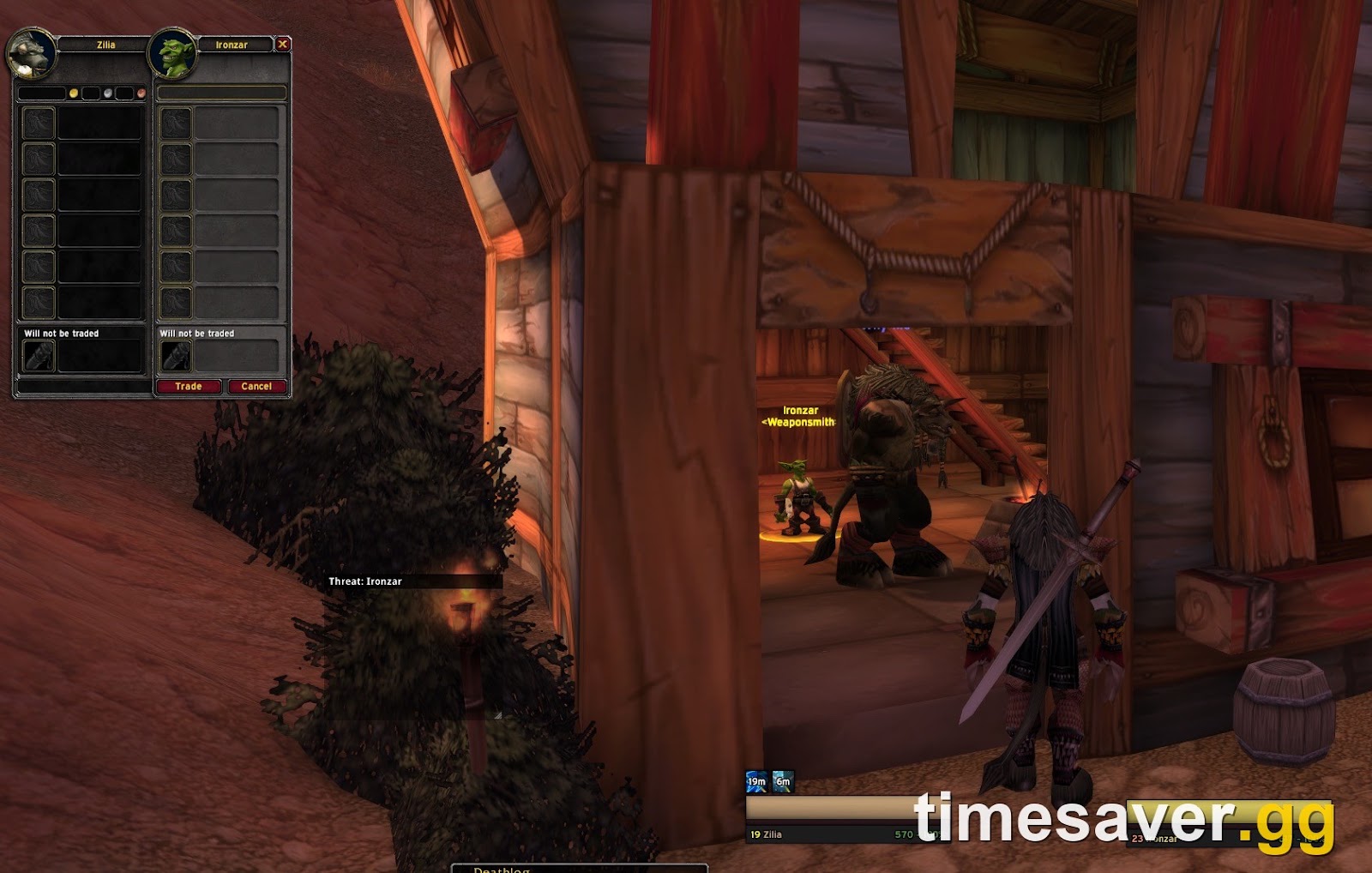
- Face-to-face trade, not mail. You meet the seller's character in-game and use the trade window. You see the gold before you confirm, and there's no third party to intercept it. (Mail works, but it's slower and blind; the mechanics and the "which method keeps you off Blizzard's radar" angle are in how Classic Era gold is delivered safely.)
- Split large orders. Taking 5,000g? Have it delivered in a few tranches, not one lump. If anything feels off after the first chunk, you stop — you're not all-in on a single handoff.
- Never hand over your account. No legitimate delivery ever requires your login or authenticator code. "I'll log in and mail it myself" is account theft with extra steps.
- Keep amounts sane. A brand-new level 1 suddenly holding thousands of gold is the pattern automated detection looks for. Take delivery at 60, in believable amounts, spaced out. (For context on how far your gold goes, a single character can hold a maximum of 214,748 gold — the game's hard currency cap — so there's no reason to over-buy.)
Do delivery this way and you remove the two levers a scammer has left after you've paid: intercepting the gold, and clawing it back.
Should you just farm it instead?
Farming is the zero-scam, zero-ban option — you simply can't be cheated by yourself. The catch is time: a practiced level 60 nets roughly 40–80 gold per hour on a solid Era farm, so a ~1,000g epic-mount goal is around 15–20 hours of grinding. If your time is worth more than that and you'd rather buy, the answer isn't "don't" — it's "buy safely, using the checklist above." We break down the best routes in best gold farms in WoW Classic Era and run the full trade-off in Classic Era gold: farm vs buy.
FAQ
Is it illegal to buy WoW Classic Era gold? It's not illegal in the criminal sense, but it violates Blizzard's End User License Agreement. Blizzard's own guidance calls buying gold from other players "risky and harmful," and the company can remove purchased gold or suspend the account. That's the account risk you accept — separate from the scam risk this guide is about.
Why is Classic Era gold so much more expensive than other WoW gold? Because the Era economy is permanently frozen. Realms have run on locked Vanilla content for years, the population skews toward veterans who already have gold, and steady gold sinks keep pulling currency out. Less new gold in, steady gold out — so Era gold trades at roughly 5–8x the price of gold on the newer progression realms.
Can I buy gold with the WoW Token in Classic Era? No. There is no WoW Token on Classic Era realms — that's a retail feature. Every gold purchase in Era is a third-party transaction, which is exactly why choosing a trustworthy seller matters so much here.
What's the single biggest red flag of a gold scam? Price that's dramatically below market, paired with a demand for an irreversible payment (crypto, gift cards, PayPal Friends & Family). Real gold costs real money to source; "cheapest gold, pay by crypto, instant" is the profile of a burner site or stolen gold, not a bargain.
Should I let a seller log into my account to deliver the gold faster? Never. No legitimate delivery requires your Battle.net login or authenticator code. A seller asking for account access isn't delivering gold — they're stealing the account.
How should the gold actually be delivered? Face-to-face in-game via the trade window, ideally split into a few tranches for a large order. You see the gold before you confirm, there's no interception risk, and you can stop after the first chunk if anything feels wrong.