Applies to: HUNGER, the first-person extraction RPG from GOOD FUN CORP on Steam, as described by the developer before the Open Beta of November 27 to 29, 2026 and the Early Access launch on December 3, 2026. It has nothing to do with The Hunger Games or Fear & Hunger. Everything here comes from the studio's Steam posts and store page, checked on November 20, 2026. Details can change in the beta.
Quick Answer / TLDR
- HUNGER is an RPG played through extraction runs. You leave a hub called the Chateau, go on an Expedition, loot and fight, then leave by balloon.
- You can lose gear, but you keep experience. The Steam page says "all experience contributes to progressing your Living and their level", and levels run from 1 to 100.
- There are no forced wipes once Early Access starts. Open Beta progress is the exception and won't carry over.
- To extract, stand in the zone for 30 seconds, then use the balloon yourself. It doesn't pull you out automatically.
- Builds come from six characters, five Mastery trees and a Profession. The trees hold more than 100 Masteries.
- Money is Copper, Silver and Gold, at 100 to 1 for each step.
What kind of game is HUNGER?
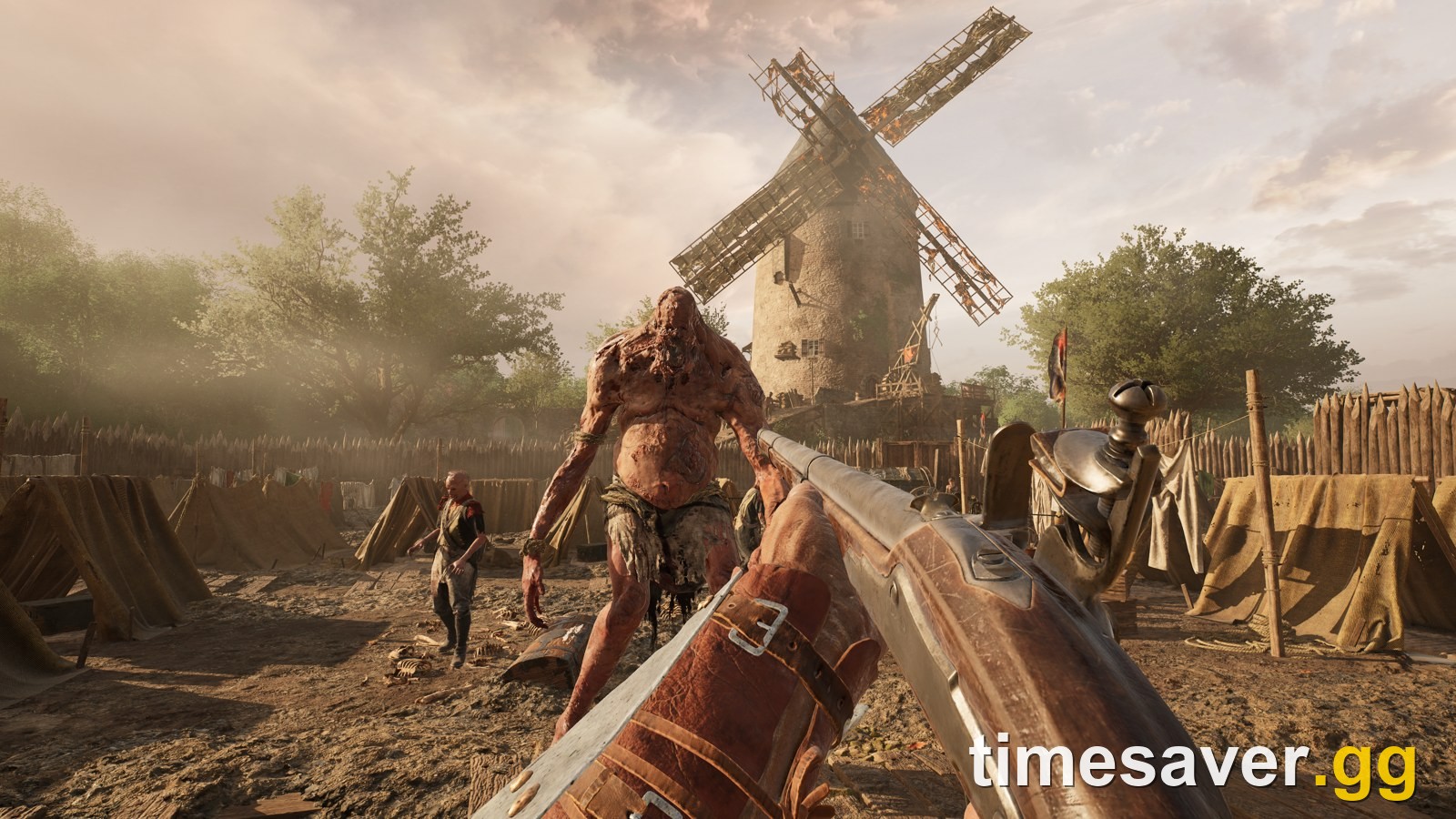
HUNGER is a multiplayer first-person game set in a Europe wrecked by war and by a plague the game calls the Bacterium. The infected are the Hunger. Player characters are the Living. You play solo, in a duo or in a trio, and other players in the same Expedition can help you or kill you.
The studio calls it an extraction RPG, and the order of those words matters. On the Steam store page Good Fun Corp writes: "At its core, this is a deep, first-person RPG - one where your story unfolds through the high-stakes loop of a multiplayer extraction shooter." Quests, levels, vendors, crafting and a persistent character come first, and the extraction run is how you earn them.
If you've played extraction shooters, the big difference is persistence. We compare the three games directly in HUNGER vs Hunt: Showdown and Tarkov. The Steam store page says: "The game features no wipe mechanics typical of the extraction shooter genre." If you come from MMOs, the difference is risk: what you carry into an Expedition can be lost there.
Good Fun Corp describes itself as "the original creators of Hell Let Loose". Combat mixes rifles, pistols and a hand mortar with melee weapons such as axes and maces, and the Steam page promises more than forty weapons at Early Access launch.
How does an Expedition work?
An Expedition is one run into the world outside the Chateau. Here's the flow, based on the developer's Missive XII:
- Open the Expedition Map. You reach it through an NPC called Reynauld in the Chateau.
- Pick a route. Available Expeditions rotate on 12-hour, 3-hour and 1-hour timers that refresh on the hour, so the list changes through the day.
- Queue. Matchmaking runs in the background while you keep using the Chateau.
- Depart. When a match is found, a ten-second countdown starts. In the studio's words, "there is no turning back - your party departs together."
- Loot, fight and complete quest steps. Conditions vary between runs, with different weather and times of day.
- Extract by balloon before the Expedition ends.
Looting takes time. In Missive V the studio explains: "Opening containers takes time. Your character must rummage through and identify what's inside." You're exposed while you search. Some containers are locked and need specific keys.

How do you extract in HUNGER?
You leave by balloon. The rules below are from Missive XIII, which the studio published after its third Tech Test.
- Balloons descend where everyone can see them. When an extraction opens, a balloon comes down toward its landing spot and is visible from far away. Other players see it too.
- Each region has more than 10 possible landing locations. Only a few are used in any one Expedition, so you can learn the sites but you can't know which will be live.
- A 30-second timer starts when you enter an active Extraction Zone. When it finishes, you're allowed to leave.
- You still have to reach the balloon and interact with it. The game never extracts you automatically.
- Leaving the zone runs the timer backwards. It doesn't reset at once. The studio's example: with five seconds left, five seconds outside the zone puts you at ten seconds when you return.
- Parties share the timer but extract one by one. The first member into the zone starts the countdown for the group. Then, in the studio's words, "Every member of the party must reach the balloon and interact with it themselves."
- The last balloon starts a 10-minute countdown. Reynauld broadcasts a warning, and when the timer hits zero "the Expedition ends and any player who has not extracted is lost."
For a first run, that last rule is the one to remember. When you hear the warning, stop looting and move.
What do you keep when you die?
The developer's short version is on the Steam page: "While much of your equipment and weaponry may be lost, all experience contributes to progressing your Living and their level." So a failed run still moves your character forward.
What's safe is whatever you left at home. The Stash is your storage in the Chateau, reached by talking to an NPC called Louis in the Outer Ramparts. According to Missive X it starts with "fifty item slots, ten weapon slots, and four expansion slots." Those are the Missive X figures, and the beta build may differ. Each character has their own Stash. When you return from an Expedition, your coins move into the Stash's currency slot automatically.
There's a trade-off in how the Stash grows. Expansion slots hold bags, and the studio points out that "every bag used to expand your stash is one less bag you can take with you on Expeditions." Later, higher-level characters get the Vault, which is shared across every character on your account.
The exact rules for what drops from your body when you die aren't spelled out in the posts we checked, so we won't state them. Assume anything you carry out of the gate is at risk.
What is the Chateau?
The Chateau is the shared hub where you see other players between runs. It's where you pick up quests, trade with vendors, manage your Stash and work on your Profession.
Three things about it are worth knowing early:
- Quests drive progression. Missive VIII calls quests "the core spine of progression in Hunger" and says early quests teach "looting, healing, combat, extraction, vendors, and how the Chateau itself is structured." Follow them.
- New districts unlock new systems. You start in the Outer Ramparts. The second district, the Cauldron, unlocks "the ability to form guilds and the ability to begin advancing your profession."
- Vendors remember you. Each one keeps a reputation ledger. Trading with a vendor and doing their quests improves prices and stock, according to Missive XI.
The same quest post puts the main story at "roughly sixty to seventy hours of content" at the start of Early Access. Higher reputation later opens daily, weekly and monthly quests.
How do characters and Masteries work?
Your build has three layers, as the studio describes them in Missive XVI: "Abilities provide your starting foundation, while Masteries let you specialise around your preferred playstyle."
Characters. The Open Beta announcement lists six playable characters, each with an unlockable Passive, Tactical and Ultimate ability. The studio calls them Living, where other games would say classes. More than six additional Living are planned during Early Access. The six are covered one by one in our HUNGER characters and classes guide.
Masteries. There are five Mastery trees with more than 100 Masteries between them. The studio split the old Martial tree in two during testing: "Martial now focuses on ranged combat, while the new Arms tree is dedicated entirely to melee progression." An official Steam screenshot shows another tree named Cunning. The Steam page gives examples of what trees do: quieter footsteps and lockpicking for stealth, faster reloads for ranged play, armour repair and healing for support.
Prestige. At the top end, Prestige "lets you begin a new Mastery journey while carrying abilities forward". It's the studio's answer to long-term play in a game that doesn't reset everyone.
We haven't listed individual Mastery nodes or character kits here. The trees were reworked several times during testing, and node-level details on fan sites may not match the beta build.

What are Professions in HUNGER?
Professions are the gathering and crafting side of your character. The Steam page says players "can also choose a unique crafting or gathering profession, allowing them to create valuable items - whether for personal use, to aid their friends, or to sell within the player-driven marketplace."
Official press art from Good Fun Corp shows nine Profession crests: Scavenger, Naturalist, Conservator, Metallurgist, Outfitter, Cook, Physician, Artificer and Gunsmith. Missive XVI gives the idea behind them: Professions "give your character a distinct role, whether you're making medicines, crafting firearms, or keeping your party supplied."
Skill tiers, recipes and costs aren't documented in official posts yet. Fan wikis list numbers from earlier tests, but the Tech Test 3 patch notes already changed Profession learning costs once, so check the values in the beta before relying on them.

How does money work in HUNGER?
Missive XI sets it out: "All trade in Hunger flows through three coins." Those are Copper, Silver and Gold, and "100 Copper equals 1 Silver, and 100 Silver equals 1 Gold." Conversion is automatic.
Two points for beginners:
- Vendor prices were high in testing, and the studio cut them. After Tech Test 3 it wrote: "We'll be reducing vendor pricing significantly so that purchasing equipment feels much more reasonable." Missive XII then reported: "Vendor profit margins have been reduced significantly."
- The Auction House wasn't in the tests. After Tech Test 3 the studio wrote that vendor prices felt punishing "without the Auction House in place yet". Its cosmetics post says the in-game Auction House "will be introduced during Early Access." Don't plan your beta weekend around player trading. Our HUNGER economy guide goes deeper on coins, Professions and the marketplace.
Cosmetics work differently from gear. You craft them from Schemas, and the studio says "Once crafted, they are bound to your account forever and will never be wiped."

Does HUNGER have wipes?
The studio says no forced wipes. "No forced wipes" is on the Steam feature list, and Missive XX, titled "Endgame Without Wipes", describes a game built around "long-term persistence, where the characters you develop and the equipment you acquire have a history."
Three things follow from that:
- Matchmaking looks at progression. Missive XX says matchmaking "considers character progression". The studio hasn't published the exact rules.
- Veterans get new goals. You can Prestige or build another character. Dungeons, PvE Trials and PvP Battlegrounds are planned and will be "built out progressively during Early Access."
- The Open Beta is the exception. Its progress won't carry over to Early Access, as we explain in does HUNGER have wipes. Dates and sign-up steps are in our HUNGER release date and Open Beta guide.
What should you do first in the Open Beta?
These tips follow from the rules above. They aren't a tested meta, because the beta build isn't out yet.
- Play the tutorial and the first quests. The studio added a full tutorial during testing, and early quests teach the loop.
- Bank before you risk. Put anything you care about in the Stash before you queue.
- Learn balloon sites. Each region has more than 10 possible landing spots. Knowing them is worth more than any single piece of loot.
- Enter the zone early, then fight from inside it. Your 30 seconds only count while you're in the zone.
- Try more than one character. Nothing carries over from the beta, so three days of sampling costs you nothing.
- Use food and drink. The studio's post on consumables says "Food supports endurance. Drink supports bursts of performance."
- Check your frame rate on day one. The official specs are in our HUNGER system requirements article.
FAQ
What is HUNGER? HUNGER is a multiplayer first-person extraction RPG from GOOD FUN CORP, set in a plague-ravaged Europe. It enters Steam Early Access on December 3, 2026.
Is HUNGER related to The Hunger Games? No. It's an original game from the original creators of Hell Let Loose and has no connection to the books or films.
Does HUNGER have wipes? The developer lists "No forced wipes" as a feature. Open Beta progress is the exception and won't carry over to Early Access.
Do you lose your gear when you die in HUNGER? The Steam page says much of your equipment and weaponry may be lost, while all experience still counts toward your character's level.
How do you extract in HUNGER? Stand in an active Extraction Zone until the 30-second timer finishes, then reach the balloon and interact with it. Each party member has to interact on their own.
How many characters are in HUNGER? The Open Beta has six playable characters, each with a Passive, a Tactical and an Ultimate ability. More than six additional characters are planned during Early Access.
What is the max level in HUNGER? The Steam page describes progression from level 1 to 100.
Can you play HUNGER solo? Yes. Expeditions support solo players, duos and trios.