Updated August 2026 (Runes of Aldur / 0.5.5 window): Corruption mechanics are unchanged entering 0.5.5. The Architect's Orb 50/50 and Orb of Sacrifice behaviour documented below reflect Path of Exile 2 patch 0.5.4 and are expected to carry through the 0.5.5 event league. We'll update the moment patch notes confirm any changes.
Quick answer: In Path of Exile 2 you cannot Vaal the same item twice — a standard Vaal Orb only works on a non-corrupted item, and once an item is Corrupted, normal currency can no longer touch it. Double (twice) corruption is done with one specific currency, the Architect's Orb, which corrupts an already-corrupted item and is a flat 50/50 gamble: half the time it adds a second corruption enchantment, half the time it destroys the item outright. So the real skill isn't "how do I corrupt" — it's knowing what is worth that risk. This guide covers exactly that.
- Single corrupt = Vaal Orb, 4 outcome buckets, ~25% each on gear.
- Double corrupt = Architect's Orb, 50% second enchant / 50% item destroyed.
- Best targets: high-tier Waystones, key skill gems (+1 level / +1 socket), and finished rares/uniques you can afford to lose.
- Golden rule: never corrupt anything you can't comfortably rebuy.
Corruption is the closest thing PoE2 has to a slot machine. Reddit is full of "I corrupted this — now what do I do with it?" posts every single day, and the honest answer is that most of those gambles were taken on the wrong item. Below is the full breakdown: how single and double corruption actually work in 0.5.4, where the Architect's Orb comes from, the exact outcome tables, a ranked list of what's genuinely worth the dice roll, and the new Orb of Sacrifice mechanic added in 0.5.4. If you just want the basics of a single Vaal, read the PoE2 Vaal Orb guide first — this is the advanced, twice-corrupted layer.

PoE2 - Divine & Exalted Orbs
Skip the grind — get Divine & Exalted Orbs
What is double corruption in PoE2?
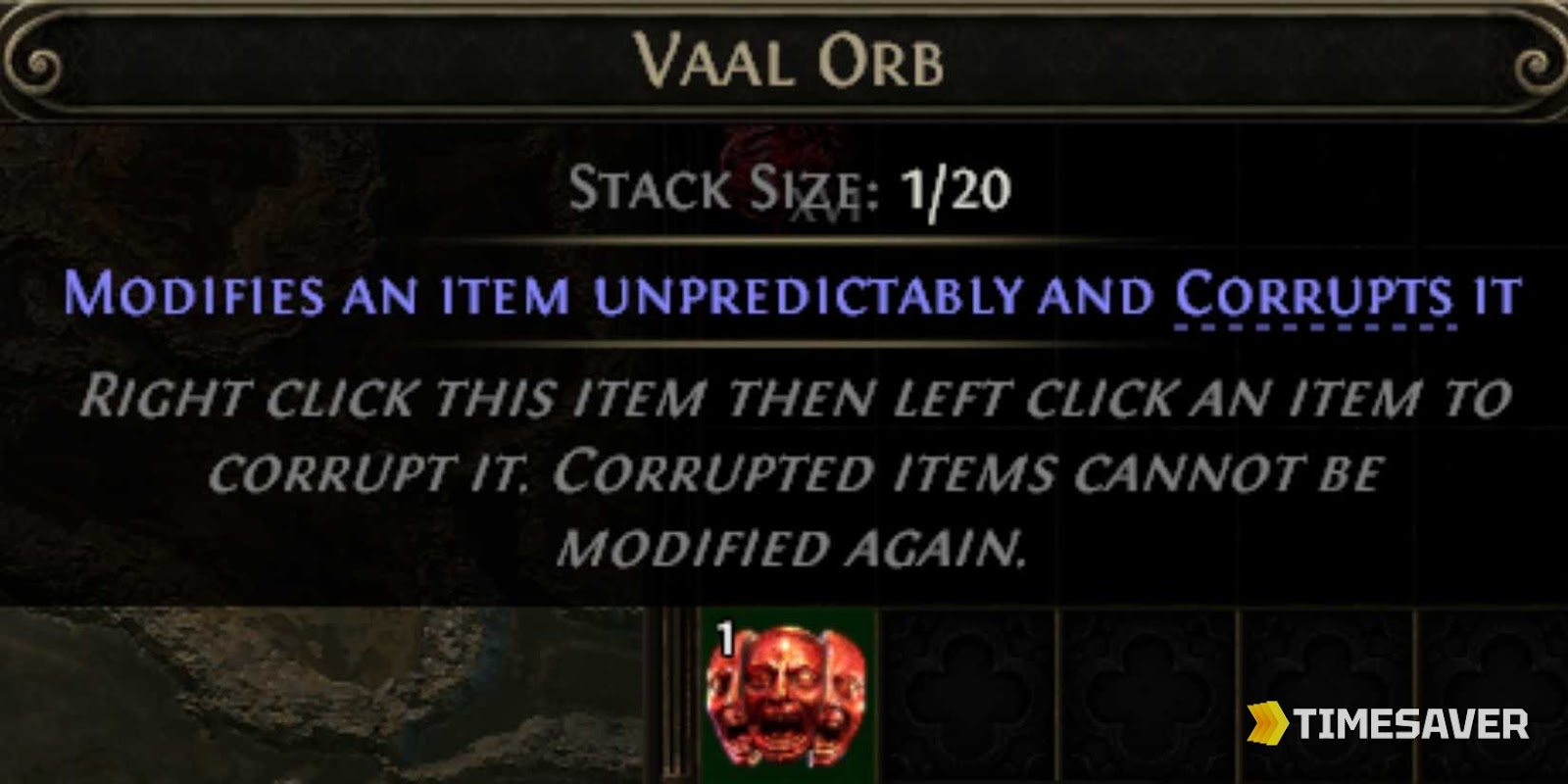
"Double corruption" (also called twice-corrupted) means putting a second corruption outcome on an item that is already Corrupted. You can't do that with a Vaal Orb — a Vaal Orb refuses to target a Corrupted item. The only tool that can is the Architect's Orb.
Per the official item description, an Architect's Orb "corrupts an already corrupted item, causing it to become Twice-Corrupted and gain an additional corruption enchantment, or be destroyed." The chance of each outcome is 50%. There is no middle ground: you either walk away with a second enchantment stacked on top of the first, or the item is gone.
Two rules make it more predictable than a raw Vaal Orb:
- Enchantments only. An Architect's Orb can only roll an additional corruption enchantment — it will never randomize affixes, change sockets, or apply the other Vaal outcomes. If it succeeds, you know it's adding an enchant.
- No duplicate mod groups. It cannot roll an enchantment from the same mod group the item already has, so you won't waste a success on a copy of what's already there.
That makes the Architect's Orb a focused tool: stack a second powerful enchant on an already-enchanted corrupted item, accepting a coin-flip that you lose the whole thing.
How do you get an Architect's Orb in 0.5.4?
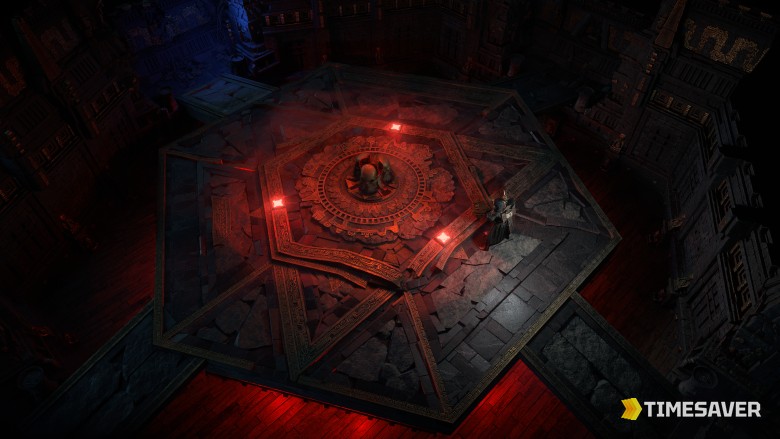
The Architect's Orb is not a generic drop you'll find while mapping. It comes from PoE2's corruption endgame — Atziri's Vaal Temple (the Locus of Corruption content that became core after the Fate of the Vaal league). There are two routes:
- Corruption Chamber reward: when you reach a Tier 3 Corruption Chamber (Locus of Corruption) room inside Atziri's Temple, you can take an Architect's Orb instead of using that room's crafting bench. You're trading the bench craft for the orb.
- Royal Trove drop: it can also drop from the Royal Trove in Atziri's Temple after you defeat Atziri, the Red Queen.
Because the supply is gated behind temple content and a boss kill, Architect's Orbs are far scarcer than Vaal Orbs — which is exactly why you don't burn them on junk. You can also simply buy them from other players via trade if you'd rather farm currency and skip the temple grind. (Always price-check live on poe.ninja or poe2scout before buying — corruption-currency rates move daily.)
The 50/50 gamble: what actually happens?
When you use an Architect's Orb on a corrupted item, one of two things happens, each at 50%:
| Outcome | Chance | Result |
|---|---|---|
| Second enchantment | 50% | Item becomes Twice-Corrupted with a new corruption enchant (different mod group from the first) |
| Destroyed | 50% | The item is consumed and gone forever |
There is no "nothing happens" safety net like a Vaal Orb has. A failed Vaal Orb just leaves you a corrupted-but-unchanged item; a failed Architect's Orb leaves you with nothing. That single difference is why double-corrupting is an endgame, high-roller play — you only do it when the upside of a second god-tier enchant is worth a literal coin flip on the item's existence.
Single corruption recap: every Vaal Orb outcome
Before you double-corrupt, you have to single-corrupt with a Vaal Orb — and the outcome pool depends entirely on the item type. Here's the full table (verified against poe2db and the PoE2 Wiki):
| Item type | Possible Vaal Orb outcomes |
|---|---|
| Equipment (armour/weapons, ~25% each) | (1) Nothing changes but it becomes Corrupted · (2) Gains a corruption enchantment · (3) Chaos-Orb-style reforge applied 1–3 times (works even on magic items) · (4) Extra rune socket ignoring the normal limit (or quality up to 23% on wands/staves) |
| Skill / Spirit gems | Nothing · +1 level · −1 level · +1 support socket · −1 support socket · −7% to +3% quality (gem can't be modified further afterward) |
| Waystones | Nothing · ±1 tier · convert all affixes to all-prefix or all-suffix · add random affixes (a rare Waystone can end up with up to 6 prefixes / 6 suffixes) |
| Unique items | Affix values are divined to 0.78×–1.22× of their current roll (a corruption-flavored reroll, similar to Sanctifying) |
Three of those — the extra rune socket on gear, +1 level on a key gem, and a high-prefix Waystone — are the outcomes that make corruption profitable rather than just chaotic.
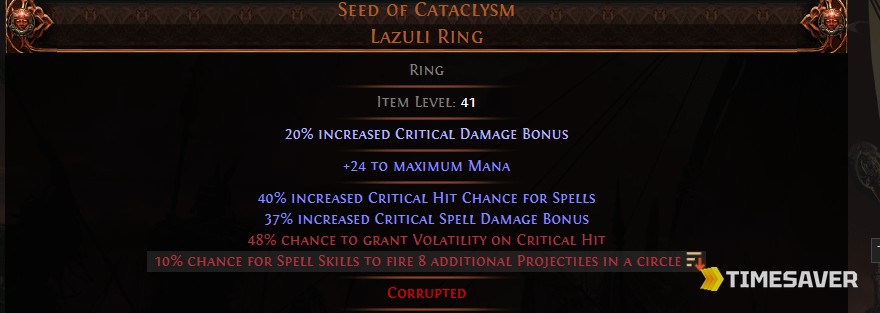
What's actually worth corrupting?
This is where most currency gets wasted. You should only Vaal (and only ever double-corrupt) when the expected payoff clears the risk. Ranked from safest-value to high-roller:
- High-tier Waystones (best EV for most players). Vaaling Waystones is cheap and lopsided in your favor — a 6-prefix Waystone gives you all the reward modifiers with none of the difficulty-increasing suffixes, and high-tier corrupted Waystones are reliably sellable. This is the one corruption almost everyone should be doing once they can clear corrupted maps.
- Key skill gems for a level/socket breakpoint. A +1 level corrupt can push your main skill over a damage or support breakpoint, and a +1 support socket can be build-defining. Only Vaal a gem you have a spare of, because the gem can also lose a level/socket and can't be reworked afterward.
- Finished rares with an open rune socket. If a rare is otherwise complete, the extra rune socket outcome is a straight upgrade. Corrupt it after it's finished — never mid-craft, because corruption locks the item.
- Cheap unique bases hunting a corrupted implicit / better roll. Buy a stack of low-cost copies, Vaal them, and the winners (a strong corrupted implicit, or a high divine reroll) can sell for many times the input cost. This is the classic "corruption gamble."
- Double-corrupt: only a high-value, already-enchanted corrupted item. Reserve the Architect's Orb for an item where a second enchant genuinely doubles its market value — and where you've accepted you might lose it. If you'd be sick to lose it, don't.
A good rule of thumb: the value of the jackpot outcome, times its odds, should beat the cost of the item. If a 25%-or-better outcome roughly doubles a cheap item's price, Vaal away. If you're risking a 50-divine item on a 50% destroy for a marginal upgrade, walk away.

PoE2 - Items
Skip the grind — get Items
When should you NOT corrupt?
- Anything you can't comfortably rebuy. The single most common mistake is corrupting a hard-won or mirror-tier item "for the chance." A coin flip is not worth your best piece.
- Unfinished gear. Corruption locks the item — you can't craft on it afterward. Finish all your crafting first, then Vaal.
- An item that's already perfect for your build. A neutral or negative outcome can only make it worse or destroy it. There's no upside.
- Borrowed expectations from PoE1. PoE2 corruption is its own system — don't assume a mechanic carries over (see the FAQ).
Need the currency to fund the gamble — or to skip it entirely? Stock up before you roll the dice:
- PoE2 Divine Orbs — instant delivery, best rate, for buying corrupted chase items outright
- PoE2 Exalted Orbs — fast & secure, fuel your crafting before the final Vaal
- PoE2 Currency (all orbs) — divine · chaos · exalted · more, topped up in minutes
Orb of Sacrifice — the 0.5.4 corruption upgrade (new)
Patch 0.5.4 (June 24, 2026) added a new currency that works specifically on already-corrupted items: the Orb of Sacrifice. Unlike the Architect's Orb (which adds a second enchantment at 50% destroy risk), an Orb of Sacrifice does two things deterministically: it removes one random explicit modifier from the item and upgrades its corruption enchantment to a higher tier. There is no destroy risk — the item survives every time.
Four variants exist, each restricted to one item class: one for weapons/quivers, one for jewels, one for armour, and one for jewellery. You get them by running Atziri's Vaal Temple — they drop from the Royal Trove (Atziri the Red Queen's vault chest). For more on this, check out the Voices Jewel guide.
The key use case: a twice-corrupted item from the Architect's Orb has two corruption enchantments, meaning it can accept two Orbs of Sacrifice — one per enchantment — each one upgrading an enchant tier while removing a random explicit. This makes Orbs of Sacrifice the "finisher" tool for already-corrupted items when you want a higher enchant tier but can't or won't risk another Architect's Orb gamble. Good targets: a twice-corrupted rare or unique with a powerful enchant combination, where one explicit is replaceable and the enchant tier upgrade is significant.
Note: the explicit removal is random — you can't choose which one goes. And an Orb of Sacrifice can only upgrade an enchant to the next tier, not leap multiple tiers. Plan accordingly. Source: Path of Exile 2 0.5.4 patch notes; poe2wiki Orb of Sacrifice; poe2wiki Atziri, the Red Queen.
If you're stacking corrupts on powerful chase items like the Grip of Kulemak (the unique Abyssal Signet ring rolled from the Vessel of Kulemak), the Orb of Sacrifice gives you another lever to optimize the enchant tiers after you've landed a double-corruption with the Architect's Orb.
Corruption strategy in the 0.5.5 event economy
If you plan to play the incoming 0.5.5 temporary event league, the corruption calculus shifts compared to a mature Runes of Aldur economy:
- Architect's Orb prices start high, then crash. In the first week of any fresh economy, Architect's Orbs typically trade at 5–10 Divines due to scarcity from Vaal Temple runs. By week two, as more players clear the Atziri-tier content, prices normalize to the 1–3 Divine range. If you're planning to double-corrupt mid-event, wait for that price drop rather than paying day-1 premium.
- Only corrupt what you cannot easily rebuy. In a one-month event economy, trade liquidity is thin — if your Architect's Orb destroys a key item, finding a replacement at a reasonable price may not be possible. The "never corrupt anything you can't comfortably rebuy" rule applies more strictly in short economies.
- Waystones are still the safest +EV corrupt. A fresh-economy Waystone corruption costs almost nothing and can drop a 6-prefix stone — the single biggest efficiency lever in early-event mapping. Breach-juiced maps multiplied by corrupted Waystones are a strong early-event strategy regardless of build.
Key stats on corruption outcomes
Understanding the outcome distribution helps calibrate when to gamble. On gear with a Vaal Orb, the four buckets are roughly ~25% each: add corruption enchantment, reroll magic affixes, add/change sockets, or no effect. On skill gems, the four outcomes (no effect, ±quality shift, ±1 level, +1 socket) have equal probability per GGG's stated design. The Architect's Orb is a flat 50/50 — the only meaningful variable is whether your item is worth risking. For a best-in-slot piece with ideal affixes already on it, the threshold is simple: if a replacement would cost more than twice the Architect's Orb price, skip the gamble until prices drop.
Is corruption gambling actually worth it?
Statistically, corruption is +EV on cheap items and −EV on expensive ones. On a Waystone or a stack of low-cost unique bases, the math is in your favor: small input, lopsided reward table, and the losses are trivial. On a high-end item — especially with a 50% Architect's Orb — you're paying a heavy "destroy tax," and only the genuinely build-defining or top-of-market second enchant justifies it.
The players who profit from corruption treat it like a business: they Vaal in volume on cheap inputs (belts, low uniques, Waystones), bank the winners, and shrug off the bricks. Building that currency pool first is key — see the Abyss farming guide and best farming strategies tier list for the fastest methods to stock up before you start gambling. The players who post "why did I corrupt this" took a single emotional gamble on their best item. Be the first kind.
Frequently Asked Questions
Can you double corrupt an item in PoE2? Yes — but only with an Architect's Orb, not a Vaal Orb. The Architect's Orb targets an already-corrupted item and has a 50% chance to add a second corruption enchantment and a 50% chance to destroy the item. A standard Vaal Orb cannot be used on a corrupted item at all.
Can you Vaal an item that's already corrupted? No. A Vaal Orb only works on items that are not Corrupted, and once an item is Corrupted no normal currency (including another Vaal Orb) can modify it. The Architect's Orb is the only currency that can act on a corrupted item.
Where do you get an Architect's Orb? From Atziri's Vaal Temple content: take it instead of the crafting bench in a Tier 3 Corruption Chamber (Locus of Corruption) room, or as a drop from the Royal Trove after defeating Atziri, the Red Queen. You can also buy them from other players via trade.
What's the best thing to corrupt for profit? High-tier Waystones are the safest +EV corrupt (a 6-prefix Waystone is a jackpot with cheap input), followed by key skill gems chasing a +1 level or +1 support socket, and cheap unique bases Vaaled in bulk for a corrupted implicit or a good divine reroll.
Does Vaaling a skill gem give it more sockets or levels? It can. A Vaal Orb on a skill or spirit gem can roll +1 level, +1 support socket, a quality shift (−7% to +3%), or the negative versions — and the gem can't be modified further afterward, so only Vaal a spare you can afford to lose.
Will the Architect's Orb and Orb of Sacrifice work the same way in the 0.5.5 event? Yes — GGG confirmed that 0.5.5 is a balance and economy pass, not a mechanics overhaul. Both currencies work the same in the event as in Runes of Aldur. The difference is simply that you're starting with no currency stockpile, so the cost of the gamble is felt more acutely.
What is the fastest way to get Architect's Orbs for double corruption? Run Atziri's Vaal Temple — Architect's Orbs drop directly from the Royal Trove chest after defeating Atziri the Red Queen. The Locus of Corruption rooms in Vaal Temple maps also guarantee one per run if you choose the Architect's Orb instead of the crafting bench. For currency to buy them on trade, Abyss stacking at juiced maps is currently the most consistent Divines-per-hour method.
Can you uncorrupt an item in PoE2? No. Corruption is permanent — there is no way to remove the Corrupted state or undo a corruption outcome. Decide before you click, not after.