The Bitcoin Farm is the closest thing Escape from Tarkov has to passive income — a hideout station that quietly mints Physical Bitcoin while you're in raids or logged off entirely. For years the catch was the wipe: spend weeks paying off a rack of graphics cards, then watch it reset to zero. Tarkov 1.0 changed that math. With a permanent character that no longer wipes, a farm that pays for itself keeps printing forever. This guide covers exactly how the farm works in the current patch, the real production numbers (which got nerfed and which guides still quote wrong), and whether it's actually worth your roubles in 2026. For more, see our Tarkov Hideout guide. For more, see our tarcoins guide. See also our Tarkov TarCoins Guide (Season 1) guide.
Quick answer (TLDR): Yes — the Bitcoin Farm is worth it in 1.0, if you're building it on your permanent (non-seasonal) character and you commit to stacking graphics cards. At max level it holds 50 GPUs and produces roughly one Physical Bitcoin every ~27.6 hours (~0.87/day). A single GPU is slow — 83 hours 20 minutes per coin — so the farm only shines once you scale it. Because the permanent character never wipes, a fully-stocked farm now pays back its GPU cost in ~6–8 weeks of uptime and then runs as pure profit. Read on for the current formula, the ROI math, and the build order. See our full Tarkov PvE prestige for more details.

Escape from Tarkov - Roubles
Get millions of Roubles in 10 minutes
Why the Bitcoin Farm matters more in 1.0
Here's the thing that flips the whole calculation: since the 1.0 release (November 2025), your permanent character no longer wipes. Tarkov now runs a seasonal model — a permanent character that keeps your long-term progression, plus a separate seasonal character that resets roughly every six months (two seasons a year) for the fresh-start crowd.
Under the old wipe cycle, the Bitcoin Farm was a gamble against the clock. If a wipe was rumored in three weeks, sinking 15+ million roubles into graphics cards was a coin flip. Players on r/EscapefromTarkov summed it up bluntly: under wipes, "sometimes it didn't make sense to build the farm depending on how far along you were." On the permanent character, that risk is gone — as one popular thread put it, "after some time, the BTC farm pays for itself and then continues making money for free."
That's the real story of the farm in 2026: it went from a high-variance flex to a genuine long-term investment. The trade-off moved from "will it survive the wipe?" to "how fast can I afford the GPUs?"
How does the Bitcoin Farm work?
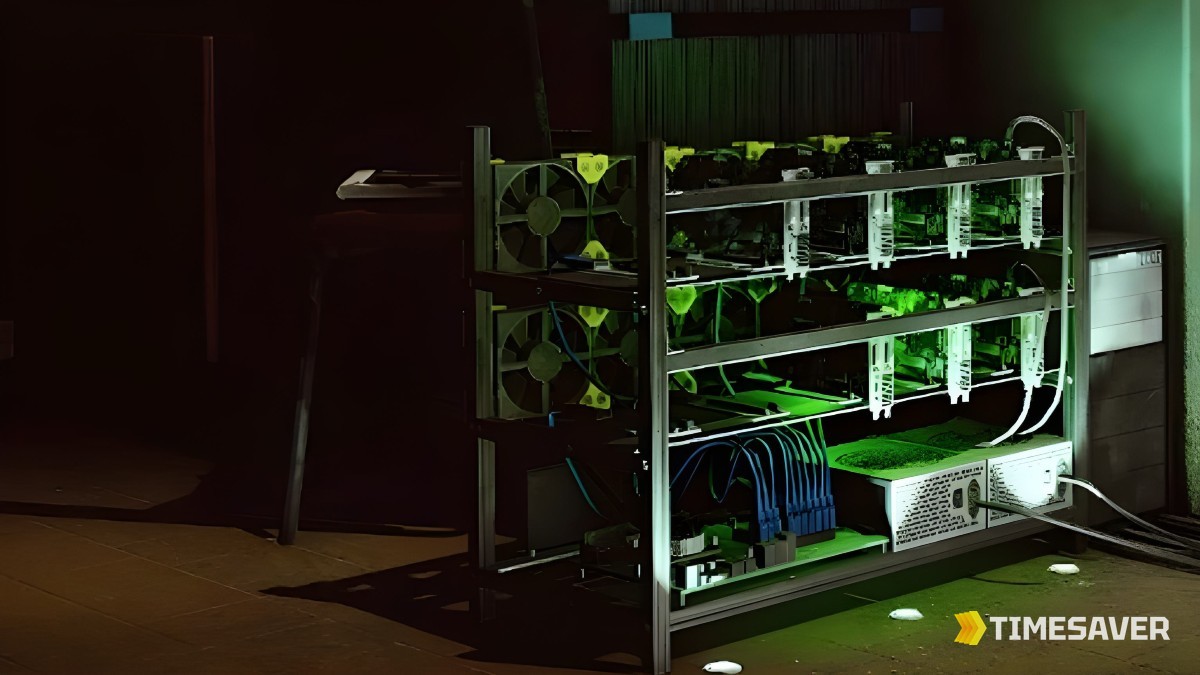
The Bitcoin Farm is a hideout station that converts installed Graphics cards (GPUs) into Physical Bitcoin over time. It has three levels, and each level raises the GPU capacity:, including a full Tarkov bitcoin farm guide
| Farm level | GPU slots | Build time |
|---|---|---|
| Level 1 | 10 graphics cards | ~34 hours |
| Level 2 | 25 graphics cards | ~50 hours |
| Level 3 | 50 graphics cards | ~106 hours |
The farm only runs when three conditions are met, so memorize these — they're the most common "why isn't my farm producing?" culprits:
- At least one GPU is installed (zero cards = zero output).
- The Generator is on and fueled. Unlike the Lavatory, the Bitcoin Farm needs hideout power — an empty fuel tank means an idle farm.
- Fewer than 3 uncollected bitcoins are waiting. Production caps at 3 Physical Bitcoin sitting in the output. Hit the cap and the farm stalls until you collect — so a farm you never check is leaving money on the table.
The current production formula (this is where old guides lie to you)
This is the part most articles get wrong, so verify it against a live source like the tarkov.dev Bitcoin farm calculator. The current time to produce one Physical Bitcoin is:
Time (seconds) = 300,000 ÷ (1 + (GC − 1) × 0.041225), where GC = number of installed graphics cards.
Run that out and you get the real, current production table:
| Graphics cards | Time per Bitcoin | Bitcoin / day |
|---|---|---|
| 1 GPU | ~83h 20m | ~0.29 |
| 10 GPUs | ~60.8 hours | ~0.39 |
| 25 GPUs | ~41.9 hours | ~0.57 |
| 50 GPUs | ~27.6 hours | ~0.87 |
Two things to notice. First, a single GPU is genuinely slow — over three and a half days per coin. Second, the scaling has diminishing returns: going from 1 to 50 cards (50× the hardware) only triples your daily output, because each extra card adds a flat 0.041225 multiplier, not a doubling.
⚠️ Freshness warning: a lot of older guides (and AI answers) still quote "40 hours for a single GPU" and "13.33 hours at 50 GPUs." Those are pre-nerf numbers from an earlier patch when the formula's base was ~145,000 instead of the current 300,000. The single-GPU time today is 83h20m, full stop — confirmed by the official EFT Wiki and the live calculator. If a number assumes a 13-hour 50-GPU farm, it's stale.
How the Physical Bitcoin value works
A Physical Bitcoin isn't a fixed-value item, and this trips up new players constantly. Per the official Escape from Tarkov Wiki, the Physical Bitcoin's value "is linked to the real-world Bitcoin price and is refreshed each day at midnight" (GMT+4). Two practical consequences:
- You cannot sell Physical Bitcoin on the Flea Market. It's a vendor-only sale — you offload it to traders (typically Therapist), not to other players. Anyone telling you to "list BTC on flea" is wrong.
- The price swings hard. Historically it has spiked above 800,000 roubles and crashed below 200,000, tracking real-world Bitcoin sentiment. The live r/EscapefromTarkov thread that prompted this guide was players watching the in-game value slide and debating whether BSG will re-peg it (they've manually adjusted it before to keep coins feeling valuable).
The takeaway for ROI: don't model the farm on a single day's price. Use a conservative working value and let upside be a bonus. For the math below we'll assume ~400,000 roubles per coin — adjust to whatever the live value is when you read this.
Is the Bitcoin Farm worth it? The real ROI math
Let's do the numbers on a full Level 3 farm (50 GPUs) at a ~400k coin value:
- Output: ~0.87 Bitcoin/day → ~348,000 roubles/day gross (minus a small fuel cost).
- GPU cost: graphics cards run roughly 300,000–500,000 roubles each on the Flea (they're also a quest and crafting item, so demand keeps them pricey). Fully stocking 50 slots is a ~17–20 million rouble outlay.
- Payback: ~18M ÷ ~348k/day ≈ ~50–55 days of continuous uptime to break even on a full farm.
That's the headline: on your permanent character, ~6–8 weeks of real uptime and the farm is paid off — then it's pure passive profit indefinitely, because there's no wipe to reset it. Over a year, a maxed farm clears well over 100M roubles in gross output. That is why it's worth it now in a way it often wasn't under wipes.
Two honest caveats:
- You rarely buy all 50 at once. Most players scale in — build Level 1, drop in 5–10 cards, and let early profits (plus raid-found GPUs) fund the next batch. That stretches payback but avoids a 18M-rouble hole in your stash.
- On a seasonal character, think twice. A season lasts ~6 months. Build the farm early in the season and you'll clear payback with months to spare; start it late and you may not. The permanent character is where the farm is a no-brainer.
If you'd rather skip the multi-week grind to afford a rack of GPUs, that's exactly what a Tarkov hideout upgrade boost or a direct roubles top-up is for — fund the farm, then let it print.
Build requirements and setup order
The Bitcoin Farm is a mid-to-late hideout station, not an early unlock. You'll need a broadly developed hideout — multiple stations upgraded and, critically, the Generator — before Level 1 is even available. (BSG tweaks exact prerequisites across patches, so confirm the current list on the official Hideout wiki before you commit materials.)
The efficient build order:
- Generator first — and prioritize Generator Level 2. The farm runs on power, and a higher Generator level improves your fuel-to-output ratio. Cheap fuel is the difference between a profitable farm and one that eats its own margins.
- Bitcoin Farm Level 1, then start dropping in GPUs immediately — even 5 cards is income while you save.
- Scale GPUs before rushing Levels 2/3. A Level 3 farm with only 10 cards is pointless; the level upgrades only matter once you have the cards to fill the new slots.
- Collect on a schedule. Remember the 3-coin cap — check the farm at least every couple of days so it never stalls.
Power-leveling the hideout and traders to reach the farm faster is its own grind; a Tarkov leveling boost gets you to the station threshold without the slog. And if you're chasing the full endgame, the farm pairs naturally with the long quest grind — see our Tarkov Kappa container guide for the other half of the progression marathon.
Escape from Tarkov - Leveling
Get leveled up in 10 minutes
Tips to maximize Bitcoin Farm profit
- Don't sleep on raid-found GPUs. Every graphics card you extract instead of buy is ~300–500k roubles you didn't spend — they spawn around tech/office areas and as loose loot. Free cards are the fastest way to fill slots.
- Fuel efficiency matters at scale. Expeditionary and Metal fuel tanks both run the generator; manage them so the farm never goes dark overnight. An unfueled farm is a 0-rouble farm.
- Sell when the value is high. Since the coin value refreshes daily, glance at it before you bulk-sell. Holding a few coins through a dip costs nothing and can pay off when it spikes.
- Treat it as background income, not your main earner. ~350k/day is excellent passive value, but it won't out-earn active raiding or quest rewards. The farm's whole appeal is that it works while you don't.
Check out our Escape from Tarkov services
Want the farm paying off without the multi-week GPU grind? We can fast-track it:
- Tarkov Hideout Upgrade Boost — get the Bitcoin Farm and your whole hideout maxed. Skip the grind · pro players.
- Tarkov Roubles — instant delivery — fund a full rack of graphics cards now. Safe · best rate · fast.
- Tarkov Leveling Boost — power-level to the station and trader thresholds. Power-level fast · secure.
- All Escape from Tarkov services — boosts, currency, quests and more.
FAQ
Is the Bitcoin Farm worth it in Tarkov 1.0? Yes, especially on your permanent character. With no more wipes on the permanent track, a fully-stocked 50-GPU farm pays back its cost in roughly 6–8 weeks of uptime and then produces passive roubles indefinitely. On a seasonal (resetting) character, only build it early in the season.
How long does it take to make one Bitcoin? With the current formula, a single graphics card produces one Physical Bitcoin every 83 hours 20 minutes. A full 50-GPU farm makes one roughly every 27.6 hours (~0.87 per day). Note: older guides citing "40 hours" or "13 hours at 50 GPUs" are using outdated pre-nerf numbers.
How many graphics cards can the Bitcoin Farm hold? Level 1 holds 10, Level 2 holds 25, and Level 3 holds 50 graphics cards. Output scales with cards installed but has diminishing returns.
Can I sell Physical Bitcoin on the Flea Market? No. Physical Bitcoin cannot be listed on the Flea — you sell it to a trader (usually Therapist). Its value is tied to the real-world Bitcoin price and refreshes daily at midnight (GMT+4), so it swings between roughly 200k and 800k+ roubles.
Why isn't my Bitcoin Farm producing? Three usual causes: no graphics cards installed, the Generator is off or out of fuel, or you've hit the 3-coin cap with uncollected bitcoins. Collect your coins and keep the generator fueled.
Should I build the Generator before the Bitcoin Farm? Yes. The farm needs hideout power to run, and a higher Generator level improves your fuel-to-profit ratio. Get Generator Level 2 before you scale up your GPU count.
Related Guides
- More Escape from Tarkov
- Escape from Tarkov Labyrinth Guide
- Tarkov Hideout Upgrade Order
- How to Level Up Fast in Escape from Tarkov 1.0 (Fastest XP & Elite
- Escape from Tarkov Kappa Container Guide (1.0)
- How to Make Money Fast in Escape from Tarkov 1.0 (Fastest Roubles
- How to Get GP Coins in Escape from Tarkov 1.0 (Arena, Quests & the