Quick answer: how does combat work in The Blood of Dawnwalker?
The Blood of Dawnwalker uses a directional combat system: you aim your attacks in one of four directions (up, down, left, right) and enemies telegraph their swings the same way. The single most important skill is the directional parry — when an enemy attack is flagged, match your block to the incoming direction at the moment of impact and you deflect it cleanly without draining stamina, unlike holding block, which burns it fast. Combat also changes with the sun: by day Coen fights as a human with a sword and blood-magic Hexes, and by night he becomes a vampire with faster, more aggressive claws while his Hexes lock until sunrise. If the directional reads feel like too much, an accessibility toggle called Omni Combat automates swing and block direction — at the cost of higher stamina use. Everything is tunable: you can switch combat styles and difficulty at any time. How well each style performs depends heavily on which skill tree you've invested in — for the full breakdown see The Blood of Dawnwalker best build guide.
This guide was written on September 3, 2026, the day The Blood of Dawnwalker launches on PS5, Xbox Series X/S and PC. Every mechanic below is attributed to developer Rebel Wolves or to named launch outlets that played the finished game — nothing here is pre-launch guesswork.
The Blood of Dawnwalker is the debut RPG from Rebel Wolves, a Warsaw studio founded by veterans of The Witcher 3 and Cyberpunk 2077 (including Witcher 3 game director Konrad Tomaszkiewicz), published by Bandai Namco Entertainment. It reviewed well — as verified live on August 31, 2026 it sits around 84 on OpenCritic ("Mighty") and roughly 83 on Metacritic — but the near-universal caveat from critics was that the combat is where the game asks the most of you. Game Informer's review (70/100) called it "conceptually novel combat that falls short in practice," describing the directional read as close to a "Simon Says" rhythm. That is exactly why it pays to understand the system before your first real duel. Here is how it all works.
How does directional combat work?
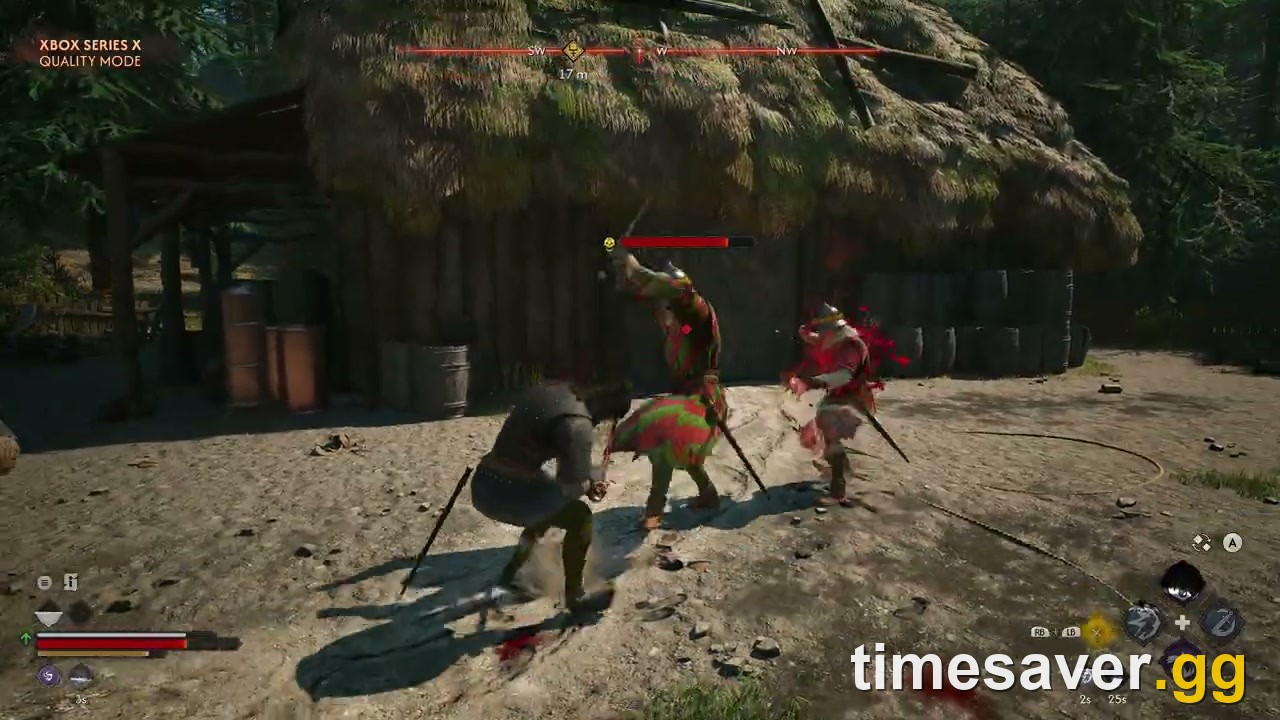
The default style is directional combat, comparable to what you've seen in Kingdom Come: Deliverance 2 or Chivalry 2. You pick a direction to strike — up, down, left or right — by flicking the right stick (or moving the mouse) rather than mashing a single attack button. Defense works the same way: enemies you target attack from one of those four directions, your targeting reticule shows a shield icon when a strike is incoming, and your job is to read the line and respond.
Three rules matter from the first fight:
- Attacks and blocks both cost stamina. Attacking depletes stamina, and holding block to eat a hit chews through it fast. You cannot simply mash attacks and guards.
- Don't repeat yourself. Keep hammering the same attack direction and enemies start to read you and punish it, so you have to vary your angles.
- Some attacks are unblockable. These are flagged on screen — you cannot parry or block them, you have to dodge.
As AltChar put it in their launch combat breakdown: "Attacks come from four directions — left, right, up and down — and each one costs Stamina." Treat stamina as your real health bar in a duel: run dry and you're wide open.
How do you parry in The Blood of Dawnwalker?
Parrying is the highest-value skill in the game, because it is the only defense that doesn't cost stamina. To parry:
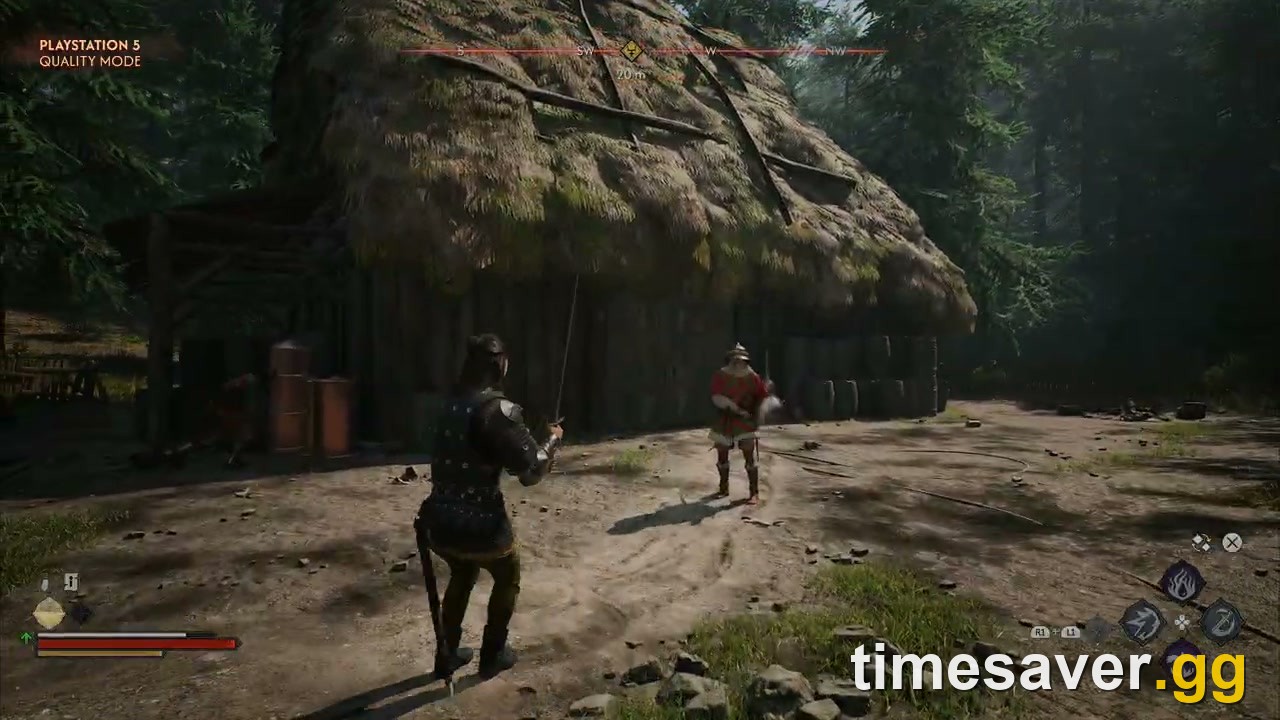
- Watch the enemy, not your health bar. The directional shield indicator appears over your targeting reticule, at the enemy's center of the screen.
- Read the direction. The shield shows a direction (and turns orange/yellow) to flag where the strike is coming from.
- Match and time it. Set your block to the same direction as the shield turns orange, right before impact. Do it cleanly and you parry — the blow is deflected with no stamina lost.
VGC's combat tips describe the timing precisely: "if you tap the block button as the shield turns orange, you'll parry the strike." Sportskeeda confirms the payoff bluntly — "directional blocks and parries do not consume stamina." Method's guide frames the mindset as "precision over panic": a held block is a stamina leak, a timed directional parry is free. The same directional icon that flags an incoming attack is also how you spot a parry window, which is why keeping your eyes on the enemy is the whole game.
What is Omni Combat and should you use it?
If the four-direction reads feel like too much to track — especially with multiple enemies — the game ships an accessibility alternative called Omni Combat (Omniattack and Omniblock). It replaces manual directional swings and guards with automated ones: Omniattack fires in a direction the game picks for you, and Omniblock handles guard direction so you can focus on spacing and timing instead of stick flicks.
The trade-off is real and worth weighing:
- Pro: you no longer have to manually match directions, which lowers the mechanical load.
- Con: Omni Combat uses more stamina than manual directional play, so you fatigue faster and have less margin for error in long fights.
- Note: even in Omni Combat, unblockable attacks still require a dodge — the automation doesn't cover those.
Neither style is locked in. You can switch between directional and Omni Combat freely — for example, going manual against a single tough duelist and switching to Omni when a fight gets crowded. Try both in the opening hours and settle on what your reflexes prefer.
Daytime combat: sword and Hexes (human Coen)
While the sun is up, Coen is fully human, which means disciplined swordplay plus witchcraft. That witchcraft is blood magic — "Hexes" — fueled by Coen's own blood, and Rebel Wolves lean it toward grubby, grounded sorcery rather than clean fantasy spellcasting. Hexes are your ranged and utility layer during the day.
Two daytime specifics to know:
- Weapon Arts are special moves attached to certain weapons. Not every sword has one — the item description tells you — and when equipped they run on their own cooldown and cost both Activation Charges and Stamina (AltChar). Chasing a weapon with a strong Art is a real progression goal.
- Swordmastery is where you invest to make daytime combat hit harder. If you plan to fight a lot in human form, points here pay off directly.
The day/night split is not cosmetic — as covered in our Blood of Dawnwalker time-system explainer, the daylight period is divided into eight parts, and your human toolkit (sword + Hexes) is what you bring to any fight you pick before nightfall.
Nighttime combat: claws and Vampirism (vampire Coen)
After dark, Coen is a vampire: faster, meaner and far more aggressive. He swaps disciplined swordplay for claws — though you can still draw your sword if you prefer — and the trade-off is that his Hexes are off the table until sunrise, replaced by the Vampirism skill set. For a full breakdown, see our Blood of Dawnwalker vampirism abilities guide. As Method's launch guide describes it, "Vampire Coen is faster, meaner, and a whole lot more aggressive."
The key progression nuance for night fighting:
- Early on, the sword is still stronger than claws. For the first several hours, if you invested in Swordmastery, keep using the blade even at night.
- Later, claws overtake the sword — if you invest. Vampirism has skills that raise claw damage by a flat percentage; once you sink points into them, claws outperform swords after dark.
- Vampirism abilities are gated behind feeding. Your night powers are unlocked and fueled by feeding on the blood of enemies — biting is a resource, not just a finisher.
Does difficulty change how combat works?
Yes — and in a way that matters for combat specifically. The Blood of Dawnwalker has four difficulty presets — Story, Fair, Challenging and Duelist — and harder modes don't just inflate enemy health. As launch guides noted, difficulty also shortens how long you have to read and react to an incoming attack: easier settings run enemy attack animations with a longer visual window, preserving the directional-read system, while higher settings tighten that window.
The headline setting is Duelist, which removes the directional attack indicators entirely — you read the animation, not the UI — and cranks enemy aggression while cutting Coen's stamina. It's the "learn the fight, not the prompt" mode. You can change difficulty at any time, so a common approach is to start on Fair, learn to parry by direction, then step up. For the full breakdown, see our Blood of Dawnwalker difficulty settings guide.
Combat tips to survive your first hours
- Parry, don't hold block. A timed directional parry costs no stamina; a held block bleeds it. Make the parry your default defense.
- Manage stamina like a health bar. Attacking, dodging and holding block all drain it. Don't open with a flurry you can't back up.
- Vary your attack directions. Repeating the same angle lets enemies read and punish you.
- Dodge the flagged unblockables. If an attack is marked unblockable, there is no parry — sidestep it.
- Match your weapon to the clock. Sword and Hexes by day; claws (once leveled) and Vampirism by night. Early game, the sword carries both.
- Feed to fight at night. Vampirism powers come from feeding on enemy blood — bank it.
- Lower the difficulty if a fight stops being fun. It's changeable any time, and starting on Fair to learn the reads is not a failure.
FAQ
How do you parry in The Blood of Dawnwalker? Watch the shield indicator over your targeting reticule. When an enemy attack is flagged, it shows a direction and turns orange right before impact — match your block to that same direction at that moment and you parry, deflecting the blow without spending stamina. A held block, by contrast, drains stamina quickly.
Do parries and blocks cost stamina? A correctly timed directional parry does not cost stamina — that's why it's the best defense. Holding block to absorb a hit does drain stamina, and so does attacking, so managing your stamina bar is central to every fight.
What is Omni Combat in The Blood of Dawnwalker? Omni Combat (Omniattack/Omniblock) is an accessibility option that automates the direction of your swings and guards so you don't have to flick the stick to each of the four directions. It's easier to run, but it uses more stamina than manual directional combat, and you still have to dodge unblockable attacks manually. You can switch between styles at any time.
How is combat different at night? By night Coen becomes a vampire — faster and more aggressive, fighting mainly with claws (you can still use a sword). His daytime blood-magic Hexes lock until sunrise and are replaced by the Vampirism skill tree, whose abilities are unlocked and fueled by feeding on enemies. Early on the sword still out-damages claws; once you invest in Vampirism, claws overtake it after dark.
Can you change the combat style and difficulty during a playthrough? Yes. You can switch between directional and Omni Combat whenever you like, and you can change the difficulty preset (Story, Fair, Challenging, Duelist) at any point — nothing about your combat setup is locked at the start of a save.
Is The Blood of Dawnwalker's combat hard? Reviews were mixed on the combat despite the game's strong overall reception (~84 OpenCritic, ~83 Metacritic on August 31, 2026). Game Informer called it "conceptually novel combat that falls short in practice." The directional/parry system takes a few hours to internalize, which is why most launch guides recommend starting on Fair to learn the reads before turning the difficulty up.
More Blood of Dawnwalker guides
Keep exploring Vale Sangora with our other launch-week guides: