Quick answer (as of September 15, 2026): Onimusha: Way of the Sword has one ending — no branching path, no choice that changes the finale, and, despite what several AI-written guides claim, no hidden "true ending" you unlock by clearing side quests, collecting every Oni Armament or beating the top difficulty. The story ends with a three-phase duel against Minamoto no Yoshitsune (the "Man in White" who gave Musashi his Oni Gauntlet) in the final mission, The Clash at Rendaino. Musashi wins, Musashi does not die, and there is one post-credits scene worth staying for. Everything below is spoiler-flagged and cross-checked against launch guides from onimushagame.wiki, TechWiser and Sportskeeda (Sept 2026), corroborated by the game's 52-trophy list.
| Capcom's first mainline Onimusha in over 20 years launched on September 4, 2026 (PS5, Xbox Series X | S, Nintendo Switch 2, PC), and the finale is already the most-searched part of the game. On r/Onimusha this week players are asking the same two questions: "Why did Yoshitsune revive Musashi?" and "Does Musashi die at the end?" This guide answers both, walks the final boss phase by phase, explains the post-credits stinger, and — importantly — debunks the fake "true ending" pages currently polluting search results. |
|---|
Full spoiler warning: this article names the final boss, describes the ending cutscenes and covers the post-credits scene. If you want to go in blind, bookmark it and come back when the credits roll.
Key takeaways
- One ending, no branches. There is no secret or "true" ending. The strongest proof is structural: the complete 52-trophy list has zero missable trophies and no ending-variant trophies — effectively impossible if a second ending existed.
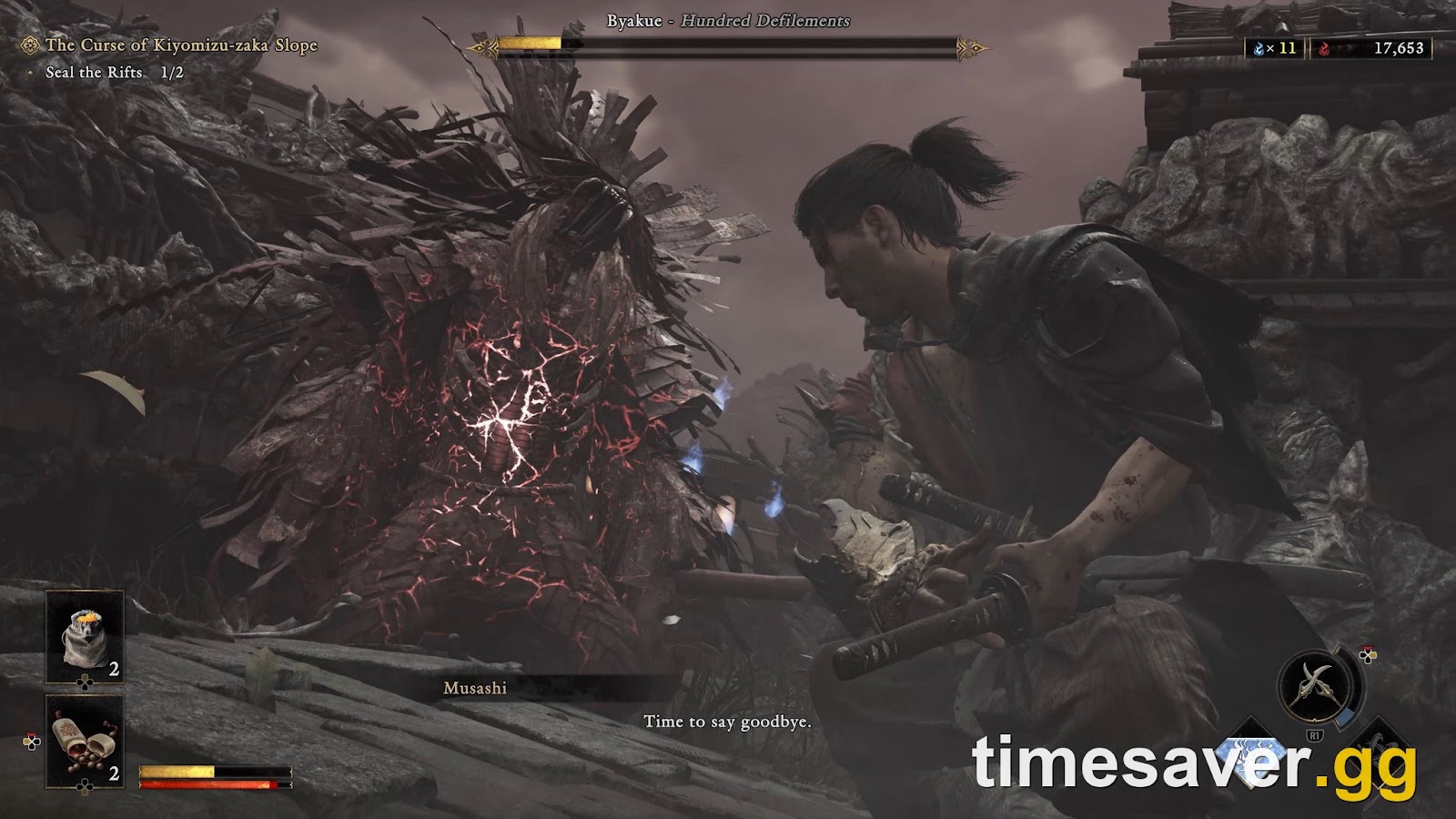
- Final boss = Minamoto no Yoshitsune, the Man in White who handed Musashi the Oni Gauntlet at the start. He fights in three phases; phase three takes no normal damage, so you must trigger Oni Awakening to hurt him.
- Musashi survives and wins. Yoshitsune, having removed himself from the natural cycle, simply dissolves — "the fight he wanted all along."
- The twist: the villain Dokyo escapes with a revived Sasaki Ganryu, seeding a future rival. The game does not officially confirm a sequel.
- Post-credits scene: Okuni fights Genma, Musashi joins her — still wearing the Oni Gauntlet, signalling he's made peace with its power. Do not skip the credits.
Does Onimusha: Way of the Sword have multiple endings?
No. There is a single ending and a single post-credits scene. No dialogue choice, difficulty tier or collectible target changes how the story concludes.
This matters because the top of Google is currently littered with pages promising a "true ending" you unlock by 100%-ing the game. They're fabricated. Here's the cross-check that settles it, from three independent angles:
- Structural (the decisive one). PowerPyx's trophy guide, built from a finished playthrough, records a 52-trophy list with zero missable trophies and no ending-variant trophies (as documented by onimushagame.wiki's ending explainer, Sept 8, 2026). A branching finale almost always leaves a fingerprint on the trophy list — an "alternate ending" or "both endings" trophy. There isn't one.
- Narrative. The two independent plot write-ups in print — Sportskeeda's ending explainer and Wikipedia's plot section — describe the same ending beat for beat, with no variant noted.
- Mechanical. Destructoid's New Game Plus explainer documents exactly what finishing the game unlocks — NG+ and the Carnage difficulty — and no second-ending condition appears anywhere in it.
Three angles, one answer: one ending. If credible footage of a second ending ever surfaces, this page updates the same day — but as of September 15, 2026, none exists.
Onimusha: Way of the Sword final boss — Minamoto no Yoshitsune
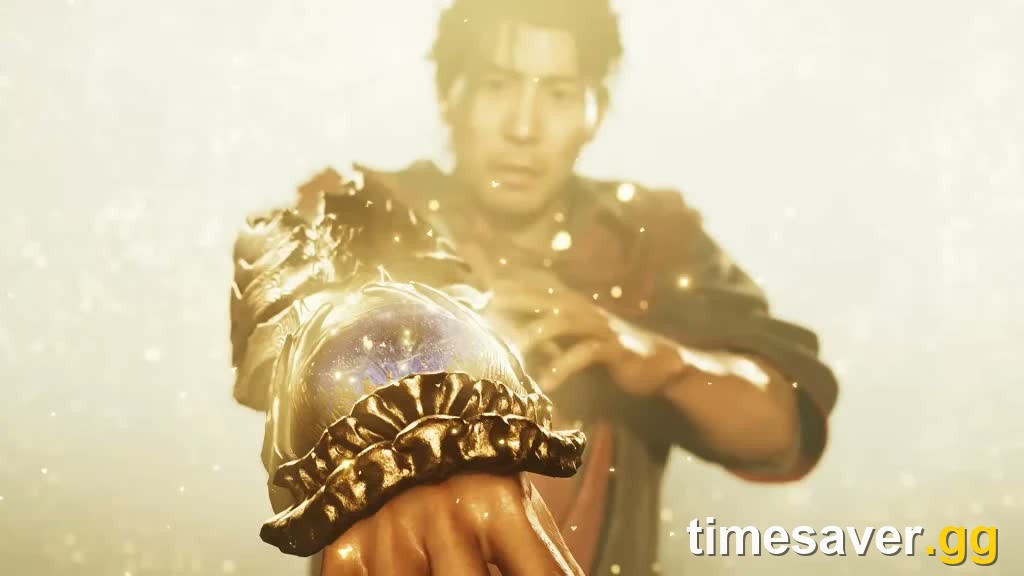
The finale plays out in the mission The Clash at Rendaino, the game's marked point of no return. Musashi fights through Shanaoh Castle to reach Minamoto no Yoshitsune — revealed to be the true identity of the mysterious Man in White who forced the Oni Gauntlet (with the Oni soul Shizuka Gozen sealed inside it) onto Musashi's arm in the prologue, and handed a matching gauntlet to his rival Sasaki Ganryu.
Yoshitsune's goal, revealed here, answers the biggest lore question players have: he has spent the entire story trying to gather the power of humans, Oni and Genma to forge the "ultimate being." Giving Musashi the gauntlet was part of that plan — Musashi was cultivating and storing souls Yoshitsune intended to harvest. In the final battle, Yoshitsune tries to steal the souls held inside Musashi's Oni Gauntlet to complete the transformation himself.
The three phases
The fight escalates across three distinct phases:
| Phase | What changes | How to handle it |
|---|---|---|
| Phase 1 | Baseline Yoshitsune — a clean swordsman duel. | Learn his attack strings, respect his strongest swings, and Issen the telegraphed openings. |
| Phase 2 | He steals souls from your gauntlet and transforms — faster, far more aggressive. | Stay patient, don't over-commit, and hold your healing items for when he chains pressure. |
| Phase 3 | He takes no normal damage. | Build the Blazing Gauge through combat and successful Issen counters, trigger Oni Awakening, and burst him while the transformation is active. |
That phase-three gate is deliberate. The whole game has shown Musashi wrestling with the gauntlet's power; the final phase forces you to finally embrace it and use Oni Awakening as your only damage window. If you're shaky on that gauge, our combat guide breaks down Issen, parries and soul absorption, and the souls & upgrades guide covers which soul colors feed Awakening fastest.
Does Musashi die? What happens to Yoshitsune
Musashi does not die. After the final phase, he cuts Yoshitsune down in a violent cutscene. But Yoshitsune's defeat isn't a normal death: Shizuka explains that he removed himself from the natural cycle, so there is nowhere left for him to go. Rather than dying, he simply disappears — his ambition to surpass the limits of human, Oni and Genma is exactly what unmakes him.
Shizuka then parts ways with Musashi. She has to return to Hell to restore its order, but promises to keep watching over him on his path. It's a quiet, melancholy beat — Musashi walking on alone.
The ending twist: Dokyo and a revived Ganryu
Just as Musashi appears to have won, the "mad scientist" Genma-maker Dokyo returns — with Sasaki Ganryu revived at his side. The remaining souls scattered around the collapsing castle are released, and Musashi absorbs them into his gauntlet, finally recovering enough power to steady himself.
The message is unmistakable: Yoshitsune was not Dokyo's only plan. Ganryu — Musashi's demo-stage rival and a swordsman whose hunger for power mirrors his own — is alive and loose, a ready-made antagonist for a follow-up. The ending stops short of announcing a sequel, but it deliberately leaves Musashi with unfinished business.
Onimusha: Way of the Sword post-credits scene
Do not skip the credits. After they roll, the ending's lonely note is undone: Okuni is fighting off a Genma attack, and Musashi shows up to fight beside her. The two fall straight back into their playful bickering — a small scene that shows how much Musashi has softened since the start.
The detail that matters: Musashi is wearing the Oni Gauntlet again. He didn't cast the power aside after Yoshitsune. He's accepted that the gauntlet is part of who he is — while learning that it doesn't have to control him. Paired with Dokyo and the revived Ganryu still at large, it reads like sequel scaffolding, though that's interpretation on our part, not an announcement from Capcom.
What finishing the game actually unlocks
If you're chasing the misinformation about a "true ending reward," here's what beating the story really gives you — double-sourced and spoiler-light:
- New Game Plus with the Carnage difficulty tier (Carnage is locked until your first clear; it's effectively a harder NG+). See the difficulty settings guide for how it works.
- Post-game Rift encounters and a Boss Rematch menu to refight the roster — handy for the full boss list.
- A pair of celebratory post-game costumes, including the much-memed panda-head suit.
Cleaning up everything after the credits is roughly a 60–70 hour platinum, and crucially none of it is missable — so there's no need to replay a chapter for fear of locking yourself out. The one thing the post-game does not contain is a different ending. For total playtime, see our how long to beat breakdown.
Beware the fake "true ending" guides
Several AI-generated guide sites currently claim a "True Ending" unlocked by finishing all side quests, collecting every Oni Armament and clearing the top difficulty — one even promises a platinum trophy as the "reward." Every part of that falls apart on inspection:
- A platinum is earned by collecting other trophies, never handed out by an ending.
- The real 52-trophy list contains no such trophy and no branch trophies at all.
- No footage of a second ending exists anywhere online.
- One of these guides tells you to defeat Fortinbras — the final boss of the 2001 Onimusha: Warlords — a copy-paste tell that the writer never played Way of the Sword at all.
When you see a "secret ending" claim, check it against the trophy list and look for video. For this game, both come up empty.
FAQ
Does Onimusha: Way of the Sword have multiple endings? No — there is one ending and no branching. The clearest evidence is structural: the complete 52-trophy list has no ending-variant or "both endings" trophies and zero missable trophies, which is nearly impossible if a second ending existed. Sportskeeda's and Wikipedia's plot summaries also describe the same single finale.
Is there a true ending or secret ending in Onimusha: Way of the Sword? No. The pages claiming a "true ending" unlocked by 100%-ing the game cite no footage and no sources, contradict the trophy list, and in one case tell you to beat Fortinbras — a boss from the 2001 original. It's fabricated AI content.
Who is the final boss? Minamoto no Yoshitsune, the Man in White who gave Musashi the Oni Gauntlet. He fights in three phases; in phase three he takes no normal damage, so you must trigger Oni Awakening (built via the Blazing Gauge and Issen counters) to deal damage.
Does Musashi die at the end? No. Musashi defeats Yoshitsune and survives. Yoshitsune, having removed himself from the natural cycle, disappears rather than dying a normal death.
Is there a post-credits scene? Yes — one scene. Okuni is fighting Genma and Musashi joins her, still wearing the Oni Gauntlet, before the two resume their usual banter. Stay through the credits to see it.
Does the ending set up a sequel? It strongly hints at one — Dokyo escapes with a revived Sasaki Ganryu, and Musashi keeps the gauntlet — but Capcom has not officially announced a sequel. Treat the setup as story scaffolding, not confirmation.
The bottom line
Onimusha: Way of the Sword ends the way a focused, 20-years-in-the-making samurai action game should: one clean, decisive ending, a demanding three-phase duel with Yoshitsune that finally makes you master the Oni Gauntlet, and a warm post-credits reunion with Okuni that leaves the door open without begging for a sequel. Ignore the "true ending" noise — there's one ending, and it's a good one. Your real post-game goal is NG+, Carnage and the Boss Rematch menu, not a hidden cutscene that doesn't exist.