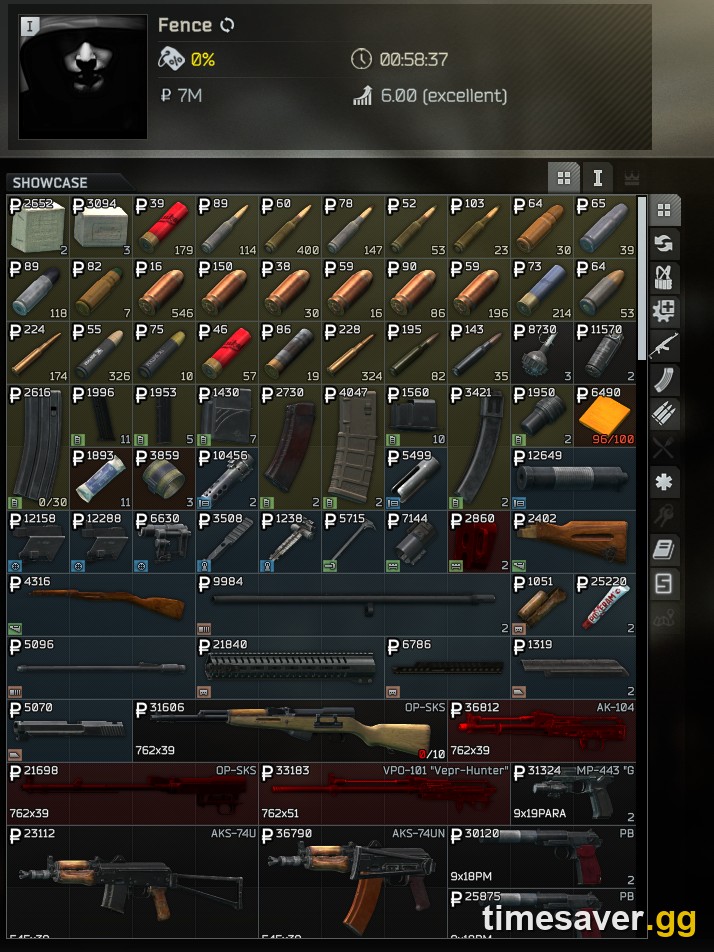
Barter trades are the most overlooked money lever in Escape from Tarkov Season 1. Everyone chases roubles per raid; almost nobody stops to check whether the case, rig, or weapon they just bought for cash could have been bartered for junk they already had in the stash. Done right, a few barters per trader reset quietly save you hundreds of thousands of roubles — one longtime player on r/EscapefromTarkov runs about ten barters every reset for roughly ₽300k of profit in under three minutes.
But barters are also a trap. Half the ones in the trader menus are worse than just buying the item, and one Season 1 quirk catches new players out constantly: bartered items are not Found-in-Raid, so they're useless for quest hand-ins and hideout upgrades that demand FiR. This guide separates the barters worth doing from the ones wasting your stash space, on the current Season 1 (Kord Breach) 1.1.5.x patch.
Escape from Tarkov - Roubles
Get millions of Roubles in 10 minutes
Quick Answer: The Best Barter Trades in Tarkov Season 1
The barters worth building your stash around are the high-value cases and containers — the Therapist Medicine Case, item cases, and weapon/THICC cases — plus any barter that turns cheap, common loot into an item you'd otherwise pay six figures for in roubles. Skip barters that ask for hard-to-find or expensive inputs to save a trivial amount, and never barter an item you actually need Found-in-Raid for a quest or hideout module. Since Season 1 removed the old "money spent" thresholds for trader loyalty, barters no longer help you level traders — you do them purely for value now, which makes picking the profitable ones matter more, not less.
- Best category: storage cases (Medicine Case, item cases, weapon cases) — massive rouble savings vs. buying them.
- Best profit play: cheap-item-in, expensive-item-out barters you flip or use.
- Biggest mistake: bartering for an item you needed as FiR — bartered goods are not Found-in-Raid.
How Barter Trades Work in Tarkov
A barter is exactly what it sounds like: you bring a specific set of items from your stash to a trader, and you get a specific item in return — no roubles change hands (or only a small amount does, in mixed barters). The official wiki puts it plainly: these trades "often allow the player to obtain higher-level gear at lower loyalty levels, or to trade a number of cheap items for a more valuable item to be used or sold at a profit."
Two things make barters powerful:
- They dodge the flea market entirely. Many valuable items are flea-restricted or wildly overpriced by other players. A barter locks in a fixed cost in items, insulated from flea inflation.
- They turn trash into treasure. Common raid loot — bolts, screws, wires, duct tape, tools — is barter fuel. That same junk most players vendor for pocket change can be the input to a case worth several hundred thousand roubles.
Each barter is gated behind a trader loyalty level (LL1–LL4), same as regular purchases. Higher-value barters live at LL2–LL4, so your barter economy scales as you push loyalty.
The Season 1 change every barter guide has to mention
Here's the current-patch wrinkle. As of the Season 1 (Kord Breach) rework, reaching transaction/"money spent" thresholds is no longer required for trader loyalty levels — loyalty now moves on quests, standing, and player level instead. In older wipes, some players spammed cheap barters partly to push spend toward the next loyalty tier. That reason is gone. On 1.1.5.x you barter for one reason only: because the item you get is worth more than the items you put in. That actually simplifies the decision — evaluate every barter as a pure value trade, nothing else.
The FiR Trap: Bartered Items Are Not Found-in-Raid
This is the single most expensive mistake with barters, and it burns experienced players too. Anything you get from a barter is not marked Found-in-Raid. As one long-running r/EscapefromTarkov thread ("Bartered items should 100% count as FIR") makes clear, the community has argued about this for years — but the rule stands.
What that means in practice:
- Quest hand-ins that require FiR items cannot use bartered ones. If a task says "hand over 2 LEDX (Found in raid)," a bartered LEDX won't qualify.
- Hideout modules that still require FiR items reject bartered inputs the same way. (Note: the Season 1 economy pass lifted the FiR requirement from some hideout materials, so always read the module's item list — but where it does demand FiR, a barter won't count.)
- Selling on the flea: bartered items you flip on the flea sell fine, but the FiR flag affects insurance and some trader sell values.
So the rule of thumb: barter for things you'll use, sell, or store — never for the specific FiR items a quest or hideout upgrade is asking for. For those, you still have to loot them in-raid.
Best Barter Trades by Category
Rather than list every barter (they shift patch-to-patch and the full table lives on the in-game trader screen and the official wiki), here's how to spot the winners by category. These categories have paid off wipe after wipe.
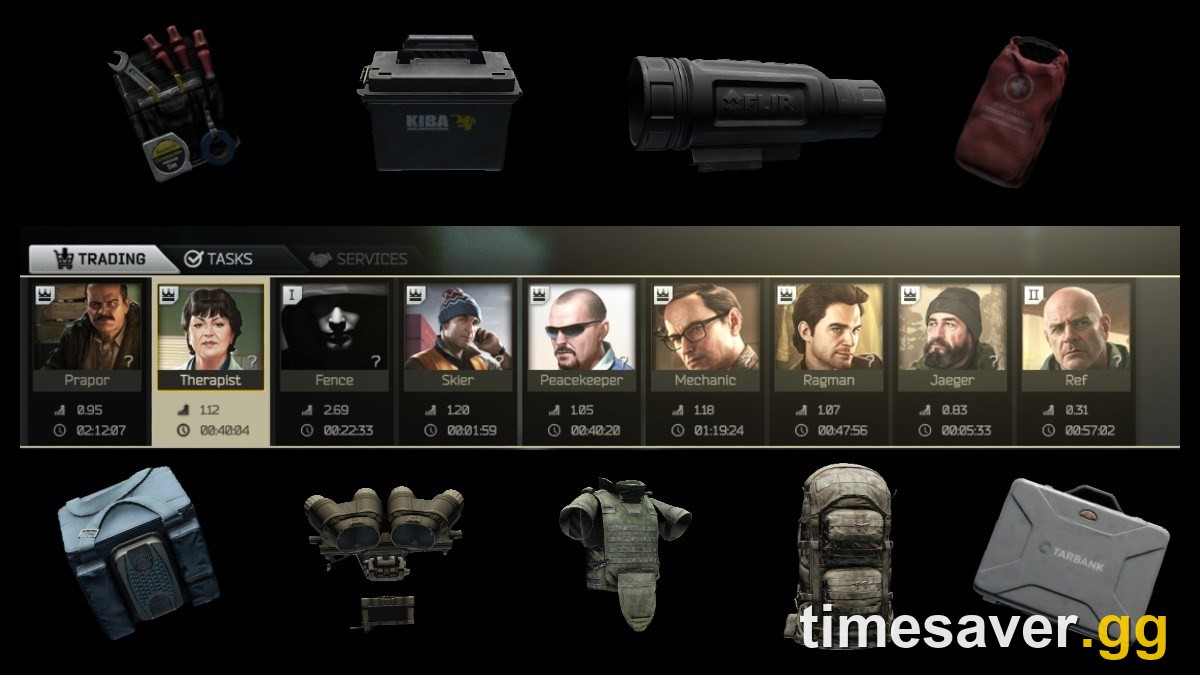
1. Storage Cases — the highest-value barters in the game
Cases are where barters earn their keep. Buying an item case, weapon case, or the Therapist Medicine Case in pure roubles is brutally expensive; bartering them with common loot is a fraction of the cost.
- Medicine Case (Therapist) — the classic. Prima Games rightly flags it as "extremely useful as you progress." It organizes your meds and keeps them out of your grid; the barter is far cheaper than the rouble price.
- Item cases / THICC item case — massive grid space. If you can barter one with tools and electronics instead of paying cash, do it every time.
- Weapon cases / THICC weapon case — same logic for gun hoarders.
Cases are permanent stash infrastructure. Even a barter that looks "expensive" in inputs usually beats the rouble price and pays you back in organization and flea-slot savings for the rest of the wipe.
2. Profit Flips — cheap in, expensive out
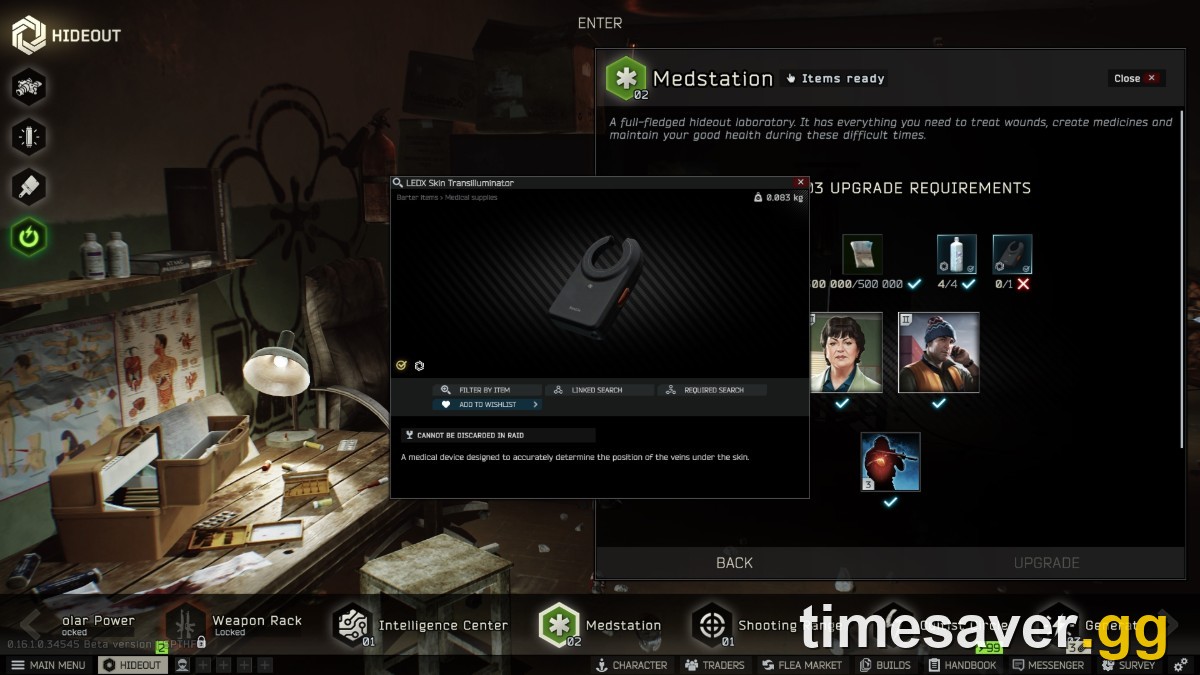
The pure money play: barters where the combined value of your input items is well below the output item's sell or use value. Electronics and medical items are the usual winners because traders buy them back high — for reference, our own Season 1 money guide notes a LEDX sells to Therapist for roughly ₽611k and a GPU for around ₽125k. If a barter lets you assemble one of those from cheaper components, the margin is enormous.
The community math backs this up: the r/EscapefromTarkov barter-profit threads describe running a fixed rotation of ~10 barters per reset for ~₽300k profit in about three minutes of clicking. That's passive income you collect from your hideout screen, no raid risk involved.
3. Gear Access — high-tier kit at a low loyalty level
Some barters let you access higher-tier armor, rigs, or weapons than your loyalty level would normally sell you, or at a better effective cost. These aren't always pure profit, but if a barter gets you a rig or plate carrier you'd otherwise be locked out of, the raid-survival value is worth it. Evaluate these case-by-case: if buying the equivalent in roubles is more expensive or impossible at your LL, the barter wins.
Escape from Tarkov - Leveling
Get leveled up in 10 minutes
Barters to Skip
Not every barter in the menu is a deal. Avoid these:
- Barters asking for expensive or flea-restricted inputs to save a trivial amount. If the items you give up are worth more than the item you get, it's a loss — check both sides before clicking.
- One-time low-value barters you'll never repeat. The Medicine Case barter is a "do it once and you're set" — that's fine. But menu-clutter barters that give a single cheap consumable aren't worth hoarding materials for.
- Anything you need as FiR. (See above — it bears repeating because it's the most common misplay.)
- Live flea-price arbitrage lists. Barter input values move with the flea daily; don't build your whole economy on a snapshot. Judge barters by the item categories above, then confirm the current inputs in-game.
How to Build a Barter Routine
The players making real money from barters treat it like a hideout craft — a fixed rotation run every trader reset:
- Loot the fuel. Every raid, pocket the common barter materials: bolts, screws, wires, capacitors, duct tape, tools, gunpowder, medical basics. Most players vendor these; you're stockpiling them.
- Stash a barter bin. Keep one container just for barter inputs so you're never short when a reset hits.
- Run the rotation on reset. Every ~3–4 hours when traders refresh, click through your known-good barters (cases first, then profit flips). Two to three minutes, done.
- Reinvest. Sell the flip outputs, keep the cases, and funnel roubles back into your hideout and kit.
The whole point is that it's low-effort, zero-raid-risk income stacked on top of whatever you make in raids. It won't replace a good Streets or Labs run, but it compounds while you sleep on your stash.
Which barter materials should you never vendor?
The players who profit from barters are the ones who stopped auto-selling junk. These common items are the fuel most barters ask for — pocket them every raid and stash them in your barter bin instead of vendoring:
- Tools & hardware: bolts, screws, nuts, wrenches, pliers, hand drills, duct tape, insulating tape.
- Electronics: wires, capacitors, PC components, phase-control relays, electric drills, power cords.
- Household/industrial: gunpowder, fuel conditioner, corrugated hoses, printer paper, light bulbs.
- Medical basics: analgin painkillers, aseptic bandages, medical bloodsets — cheap inputs that feed medical-item barters.
None of these are worth much sold individually, which is exactly why they're barter currency: the trader values the combination far higher than the vendor value of the parts.
A worked example: the Medicine Case math
Take the evergreen Therapist Medicine Case barter. Buying the case outright in roubles is one of the more painful early-game cash sinks, and the flea price is inflated by demand. Bartering it with a stack of common tools and a couple of medical items costs you a fraction of that in vendor value — items you looted for free and would otherwise have sold for pocket change. You do it once, you keep the case for the entire wipe, and every med you find from then on gets organized out of your grid. That's the template for a great barter: a permanent asset, funded with trash, for a rouble-equivalent cost far below the market price.
Barters vs. Just Buying Roubles
Barters are a grind-optimizer, not a shortcut. Even a tight rotation nets a few hundred thousand roubles per reset — useful, but it's still hours of looting fuel and clicking menus to fund a decent kit or a big hideout module. If your goal is to skip straight to the roubles and spend your play time in raids instead of managing a barter bin, that's exactly what our services are for. (One heads-up on Season 1: the PvP, PvE, and Season 1 (Kord Breach) profiles each have their own separate economy and flea market, so make sure any top-up matches the zone you actually play.)
Want the roubles without the grind? Fund your kit, hideout, and Kappa run instantly with a trusted pro service:
- Tarkov Roubles — instant delivery — safe, best rate, fast top-up so you can buy the cases and gear outright.
- Tarkov Hideout Upgrade Boost — skip the barter-and-FiR grind and get your stations built.
- Tarkov Quest & Kappa Boost — hand off the FiR item hunts and quest chains to pro players.
FAQ
Are barter trades worth it in Tarkov Season 1? Yes, but selectively. The high-value cases (Medicine Case, item cases, weapon cases) and cheap-in/expensive-out profit flips are absolutely worth it — a tight rotation nets roughly ₽300k per reset for a few minutes of clicking. Low-value one-off barters and any barter that costs more in inputs than the output is worth are not.
Are bartered items Found-in-Raid in Tarkov? No. Items obtained from a barter are never marked Found-in-Raid. This means you cannot use bartered items for quest hand-ins or hideout upgrades that require FiR items — you still have to loot those in a raid yourself.
Did Season 1 change how barters work? The barter mechanic itself is unchanged, but Season 1 (Kord Breach) removed the old "money spent" transaction thresholds for trader loyalty. Barters no longer count toward leveling your traders, so you now do them purely for the value of the item you receive, not to grind loyalty.
What is the best barter trade in Tarkov? The Therapist Medicine Case barter is the standout evergreen pick — it's far cheaper than buying the case in roubles and pays back for the whole wipe in stash organization. Item cases and weapon cases bartered with common tools and electronics are close behind.
Do barters help level up traders in Tarkov Season 1? No longer. In older wipes, spending via barters could push you toward the next loyalty tier. On the current Season 1 patch, loyalty levels come from quests, standing, and player level instead — so barters have zero impact on trader leveling.
Where can I see the current barter trades? The full, up-to-date list is on each trader's Barter tab in-game and on the official Escape from Tarkov wiki's Barter trades page. Input items shift between patches, so always confirm the current cost in-game before you commit your materials.