Quick answer: what is Runeforging in PoE2 and how does it work?
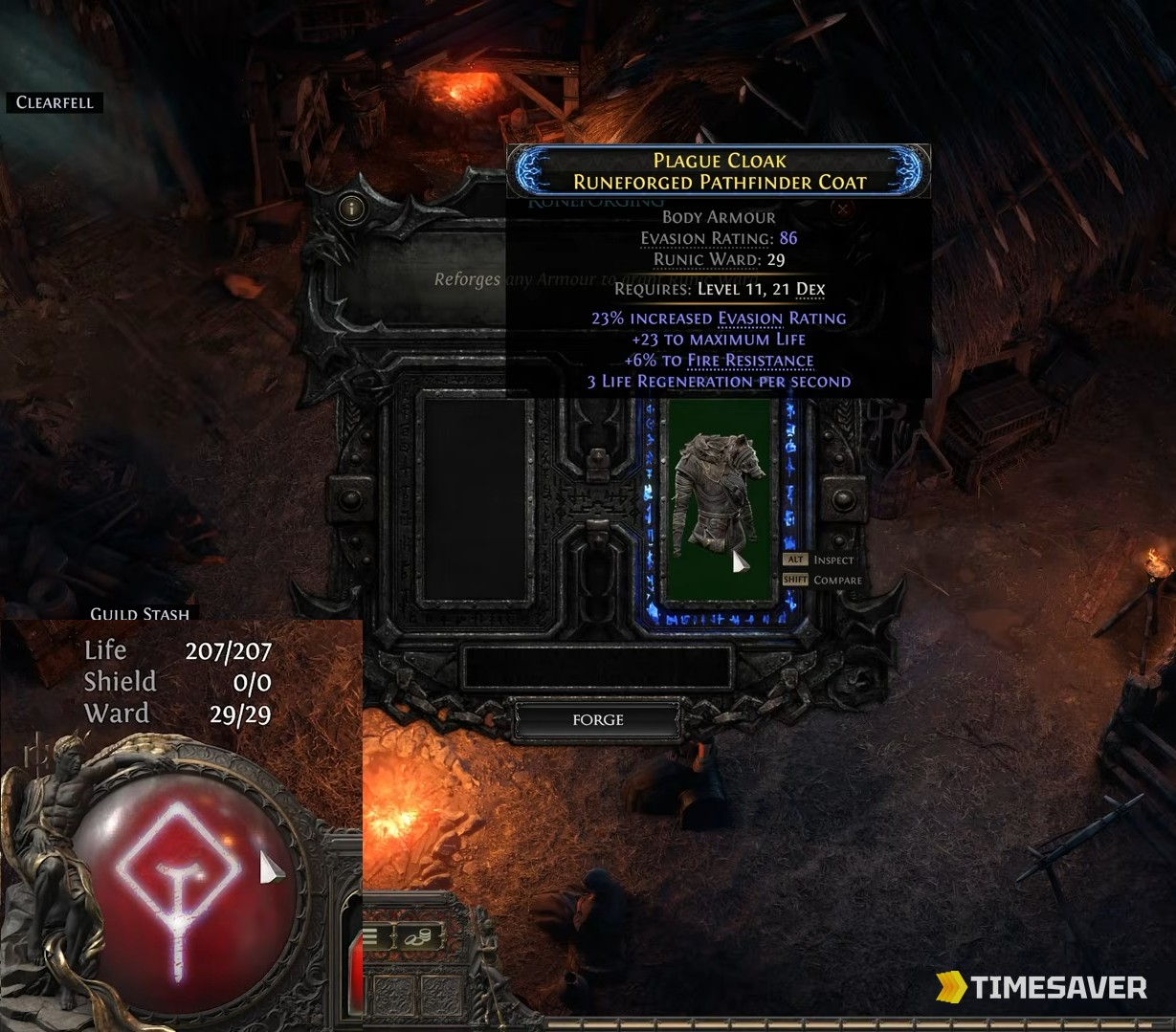
Runeforging is the new crafting system in the live 0.5 "Return of the Ancients" patch (Runes of Aldur league). You take a metal called Verisium to the Verisium Anvil — a bench in town run by the NPC Farrow, unlocked early in Act 1 — and spend it to add Runic Ward to a piece of armour, or to upgrade the base of low-level weapons and uniques. Runic Ward is a second health bar that kicks in the moment your Life hits 1, soaks up the killing blow, and regenerates on its own at a default 5% per second. The same Ward pool also fuels the new Kalguuran skills, which spend Runic Ward instead of mana. You farm Verisium by clearing Ezomyte Remnants, the league's roaming Expedition-style encounters that appear in every area. Below: exactly how to runeforge, the level-55 rule that decides whether it's free or costs you stats, how to farm Verisium fast, and the two big myths to ignore.
This guide is built for the live 0.5 economy and verified against the official wiki (PoE2 Wiki Runeforging, Runes of Aldur) and the current 0.5 patch notes. If you'd rather skip the Remnant grind, timesaver.gg PoE2 currency and boost services get you gear-ready instantly. For more, see our guide on PoE2 Runeforging Guide.

PoE2 - Divine & Exalted Orbs
Skip the grind — get Divine & Exalted Orbs
What is Verisium Metal in PoE2 0.5?
Verisium is the currency that powers the entire Runes of Aldur league. It's not an orb you slam onto an item from your inventory — you spend it at a dedicated bench, the Verisium Anvil. There are two grades:
| Item | Stack size | Use |
|---|---|---|
| Verisium | up to 1,000 | Standard runeforging fuel — Runic Ward and base upgrades |
| Exceptional Verisium | up to 50 | Rarer, higher-grade variant for stronger results |
The huge 1,000 stack size is a signal: GGG expects you to spend Verisium in bulk. Adding meaningful Runic Ward to an endgame chest isn't a one-click action — you feed the Anvil a pile of Verisium and the result scales with how much you commit.
You get Verisium two ways: as a guaranteed reward from Farrow's seasonal questline across Acts 1–4, and — for the real volume — by clearing Ezomyte Remnants out in the world. More on farming below.
What does Runic Ward actually do?
Runic Ward is the headline reward of runeforging, and it's a genuinely new defensive layer. Here's the exact behaviour, straight from the wiki:
"Runic Ward constantly regenerates at a default rate of 5% per second." (PoE2 Wiki)
The mechanics that matter:
- It activates at the last second. Runic Ward only starts absorbing damage once your Life drops to 1 — after every other defensive layer (Armour, Evasion, Energy Shield, block) has already failed. It's a death-prevention buffer, not a front-line shield.
- It refills itself. At 5% per second by default, a Ward pool recovers between hits without you spending mana, flasks, or a recovery skill — so it shines against repeated chip damage and one-shot-adjacent spikes.
- It is not invincibility. Per the wiki, "your character can still die if both Health and Runic Ward pools reach zero." A big enough hit that blows through both still kills you.
In short: Runic Ward buys you a fraction of a second and a self-healing cushion at the exact moment you'd otherwise be dead. On a squishy build, that's the difference between a portal-saving recovery and a corpse.
How to runeforge armour (and the level-55 rule)
The process at the Verisium Anvil is simple — the wiki describes it as: "Pick an armour you want to apply Runic Ward to, then add the number of Verisium Runes that you want to spend on this armour." The catch is the item level of the piece you're forging, and this is the single most important rule in the whole system:
| Item level of armour | What you get | Tradeoff |
|---|---|---|
| 55 and below | Runic Ward | None — pure upside |
| 56 and above | Runic Ward | Converts part of your Armour, Evasion, or Energy Shield into Ward |
The wiki and league guides are blunt about it: "On low-level gear this is pure upside… once an armour piece climbs past item level 55, it starts converting part of its base armour, evasion, or energy shield into Ward." (Runes of Aldur guide)
The takeaway for your build:
- Levelling gear (ilvl ≤55): runeforge freely. You're adding a defensive layer at zero cost — there's no reason not to.
- Endgame gear (ilvl ≥56): treat it as a conversion, not a freebie. You're trading raw mitigation (armour/evasion/ES) for a self-regenerating buffer. That's a great trade for a build that already caps its defences and just needs a panic cushion — and a bad one for a build leaning hard on a single defensive stat. Decide per item.
Upgrading uniques and weapons with Verisium
Runeforging isn't only about Runic Ward. Once you progress into Act 3, the Anvil unlocks the ability to upgrade low-level items:
- Unique Weapons at level 55 and below get increased base damage and base defence — a way to drag an early-acquired unique up to endgame relevance instead of binning it.
- Unique Armour at level 55 and below gets Runic Ward without any trade-off, same as normal low-level gear.
- Kalguuran uniques gain additional properties when runeforged, again without tradeoffs — these league-specific uniques are built around the system.
This is the part that quietly affects the economy: a unique that used to be vendor trash because its base was too low can now be runeforged into a usable item, which changes what's worth picking up and trading.
Kalguuran skills: the Ward pool that fuels your gems
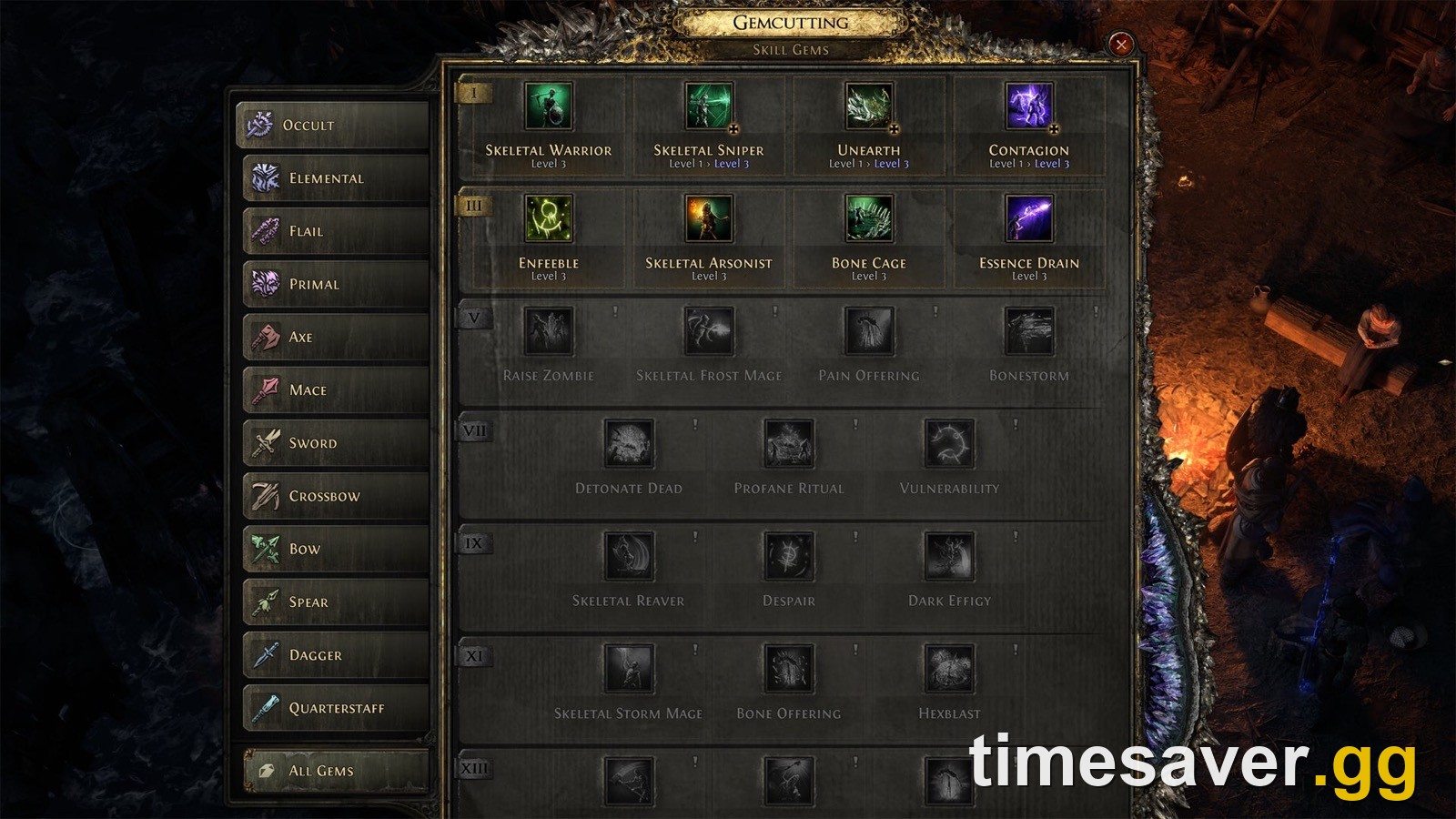
Here's the mechanic most new-league players miss. The 0.5 patch added a brand-new gem category — Kalguuran Skill and Support Gems — and they're tied directly to Runic Ward:
- 23 Kalguuran Skill Gems and 7 Kalguuran Support Gems shipped with the patch.
- They have no attribute, weapon, or gem-colour requirements — every class can slot every one of them.
- Critically, they cost Runic Ward instead of mana. As the league guides put it: "Kalguuran skills and supports spend Runic Ward instead of mana, so the same pool that eats hits also fuels your new gems."
- They're crafted from Remnants, not bought from a vendor.
That means Runic Ward isn't purely defensive on a Kalguuran build — it's your action resource. Forge enough Ward and you're simultaneously buying a survival buffer and the fuel for your skills. That dual role is why runeforging is close to mandatory if you're playing into the new gems this league.

PoE2 - Power Leveling
Skip the grind — get Power Leveling
How to farm Verisium fast (Ezomyte Remnants)
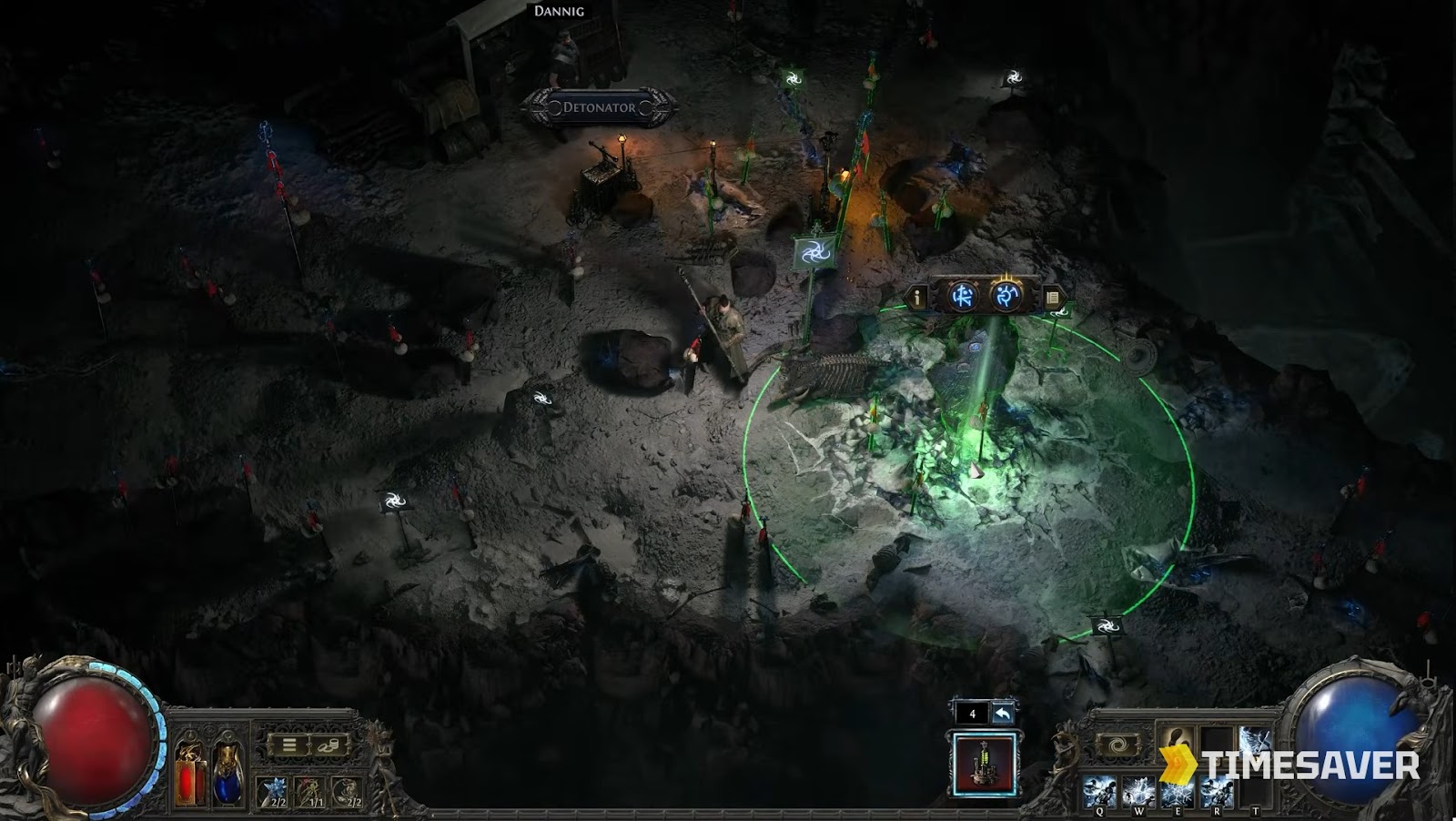
Verisium comes overwhelmingly from Ezomyte Remnants — the league's signature encounter. They appear in every area in Runes of Aldur, and also spawn inside League Expeditions, so you can farm them while you map. Each Remnant is an empowered pack you fight for Verisium, Runes, currency (Transmutes, Uncut Skill Gems), and Alloys. Efficient routine:
1. Clear every Remnant on your maps
They're free currency layered on top of normal map clearing. Don't skip them — each one is Verisium plus a chance at runes and Alloys.
2. Push area level and density
Higher-area-level maps roll bigger Remnant rewards. Stack pack-size and density mechanics so each Remnant pull is fatter — the same density that fuels other farms (Breach, Ritual) compounds here.
3. Use the Remnant slot recipes for Alloys
Alloys (Runic, Adaptive, Cyclonic, Celestial) are crafted through Ezomyte Remnant recipes, each consuming 2–7 specific runes from your inventory. Bank your runes and turn them into the Alloy your build wants rather than selling them raw.
4. Don't ignore Farrow's questline
Clearing Farrow's seasonal questline across Acts 1–4 hands you guaranteed Verisium — free fuel to start runeforging before your map farm ramps.
5. Grand Expeditions for bulk
Focusing Grand Expedition maps with Remnants targeted is the most efficient way to stockpile runeforging materials, because you're hitting Remnant encounters and Expedition rewards in the same run.
Two myths to ignore (don't get scammed)
The new system has spawned two bad takes making the rounds. Both are wrong:
- "Runeforging bypasses level requirements." The claim that you can insert a high-level rune so an item "reverts to base level but keeps the high-level effects" to skip level reqs is false — no primary source confirms it, and the one forum thread that seemed to show it was retracted by its own author as a misread Exalted-Orb mod. Don't buy "pre-hotfix exploit" items off the back of it.
- "Runeforging levels my weapon's skill gem." It doesn't. Runeforging adds Runic Ward and upgrades item bases — it does not raise the level of a skill granted by your weapon. That's handled by separate currency entirely; players regularly confuse the two.
Should you grind Verisium or just buy your power spike?
Be honest about where you are. Runeforging your whole kit and farming enough Verisium to matter is map-time intensive — it rewards a character that already clears fast and survives Remnant packs. If you're still gearing up, the loop is slow.
Where farming makes sense:
- You have a fast mapper and you're running Remnant-dense maps anyway.
- You're playing a Kalguuran build that needs Runic Ward as its resource.
- You enjoy the self-sufficient craft-as-you-go loop.
Where buying is smarter:
- You need crafting currency now to finish an upgrade — Divine, Exalted and Chaos Orbs outright beat farming Verisium, then Alloys, then converting.
- You want to skip straight to the gear check — a boss or endgame carry gets you the loot without grinding the prerequisite.
Skip the grind — get PoE2 currency and carries instantly:
- PoE2 Currency Store — Divine, Exalted, Chaos & more, bulk rates, instant delivery
- PoE2 Divine Orbs — the high-end crafting & trade currency
- PoE2 Exalted Orbs — the everyday crafting staple
- PoE2 Boss & Endgame Carries — skip straight to the gear-dense content
For where Verisium fits in the wider crafting picture, see our PoE2 0.5 crafting guide, and for the Expedition layer that feeds your Remnants, the PoE2 Expedition farming guide.
FAQ
What is Runeforging in Path of Exile 2? Runeforging is the 0.5 Runes of Aldur crafting system. You spend a metal called Verisium at the Verisium Anvil (run by the NPC Farrow, unlocked early in Act 1) to add Runic Ward to armour or upgrade the bases of low-level weapons and uniques.
What does Runic Ward do? It's a self-regenerating buffer that activates the moment your Life drops to 1 and absorbs the damage that would otherwise kill you. It regenerates at a default 5% per second, but you still die if both your Life and Runic Ward hit zero.
Where do I get Verisium in PoE2? Primarily from clearing Ezomyte Remnants, which spawn in every area and inside League Expeditions. You also get a guaranteed amount from Farrow's seasonal questline across Acts 1–4.
Is runeforging always a good idea? On gear at item level 55 and below, yes — you gain Runic Ward with no downside. On gear at item level 56 and above, runeforging converts part of your Armour, Evasion, or Energy Shield into Ward, so it's a trade-off you should weigh per item.
Why do Kalguuran skills use Runic Ward? The 23 Kalguuran skill gems and 7 support gems added in 0.5 cost Runic Ward instead of mana and have no attribute or weapon requirements. On a Kalguuran build, your runeforged Ward pool is both your survival cushion and your skill resource.
Does runeforging let me skip level requirements? No. The "insert a high-level rune to bypass level requirements" claim is unconfirmed and was retracted at its source — treat it as a myth, not a mechanic.
Can I runeforge unique items? Yes, after Act 3. Unique weapons at level 55 and below gain increased base damage and defence, unique armour at level 55 and below gains Runic Ward with no trade-off, and Kalguuran uniques gain extra properties when forged.