Quick answer: In Mobile Legends: Bang Bang, emblems are your out-of-match progression layer. Since the 2023 revamp there is no single universal emblem — you level six role sets (Tank, Assassin, Mage, Fighter, Support, Marksman) plus a Common set, each up to Level 60, and inside each you build a three-tier talent tree: you equip one talent from each tier, so three talents per build. Tier 1 gives raw attributes, Tier 2 gives triggered effects, and Tier 3 is the keystone that defines the build (Killing Spree for assassins, Weakness Finder for marksmen, and so on). This guide, current for Season 42 "Starward Decade" (Patch 2.2.16, September 2026), walks the whole system and the standard role setups. Emblems were not changed by Season 42 or the 09/28 map update, so everything here is stable.
Key takeaways
- Emblems are permanent, account-wide, and separate from items. You set them before a match; items are bought during a match. Getting emblems right is free power you carry into every game.
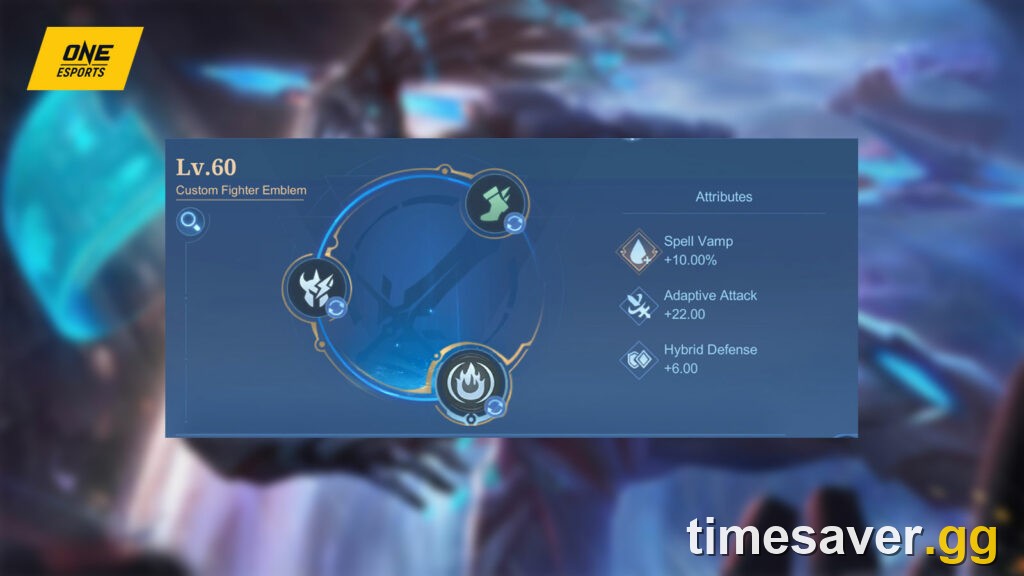
- Six role sets + a Common set, each maxing at Level 60. Higher levels add small attribute boosts and unlock the talent branch.
- Three tiers, one talent each — three talents total. Tier 1 = attributes, Tier 2 = triggered effects, Tier 3 = keystone.
- The Tier 3 keystone is the decision that matters most. It's what makes a Mage emblem play like a burst mage and a Fighter emblem play like a bruiser.
- You no longer spend Battle Points to level emblems. The current currency is Emblem Fragments and Magic Dust.

What is an emblem in Mobile Legends?
An emblem is a loadout of passive bonuses you attach to a hero before the match starts. Where items give you power inside a game (and reset every match), emblems are a permanent account-wide layer that applies automatically the moment the match loads. That is why experienced players treat emblems as non-negotiable homework: a correctly built emblem is roughly free stats and one meaningful passive on top of everything you buy in-game.
Emblems live under Preparation → Emblem in the main menu. Each emblem set levels independently, and levelling a set does two things: it raises the small flat attribute bonuses that set provides, and it unlocks talent slots so you can actually customise it.
Two rules that trip up new players:
- Emblems are role sets, not per-hero. You do not build a "Lancelot emblem"; you build an Assassin emblem (or a Common one) and assign it to Lancelot. Any hero can use any set — the sets are just tuned toward a role's stat profile.
- You choose the emblem per hero in that hero's preparation screen. Two assassins can run two different setups; the system remembers your choice per hero.
How the emblem system is structured
Since Moonton reworked emblems in 2023, the system is a customisable talent tree rather than a shelf of fixed emblems. Here is the shape of it.
Role sets and the Common set
There are six role-flavoured sets — Tank, Assassin, Mage, Fighter, Support, Marksman — plus a Common set. (Sources differ slightly on how they count the total; the safe way to describe it is "six role sets and a Common set," with Marksman included among the roles.) Each set has its own stat lean — the Mage set tilts toward magic power and cooldown reduction, the Tank set toward HP and defence, the Marksman set toward attack and attack speed — but because you can equip talents freely, the set matters less than the talents you slot into it.
Levels: 1 to 60
Every set levels from 1 to a maximum of Level 60. Climbing levels grants incremental attribute boosts to that set and, crucially, opens up the talent branch. You do not need every set at 60 — prioritise the two or three sets for the roles you actually play, and take those to max first.
The exact per-level attribute values and the talent-point unlock cadence are shown on the in-game emblem screen. We're describing the mechanic, not printing numbers Moonton reprices — check the values live before you rely on a specific figure.
The three talent tiers
Inside a set, talents are organised into three tiers, and you equip one talent from each tier — so an active build is three talents:
- Tier 1 — Attributes. Flat stat bonuses. You're choosing which stat to lean into: adaptive attack, attack speed, max HP, adaptive penetration, cooldown reduction, movement speed, or defence. Named talents here include Thrill, Swift, Vitality, Rupture, Inspire, Firmness, Agility and Fatal.
- Tier 2 — Triggered effects. Conditional bonuses that fire in combat — things like Wilderness Blessing, Master Assassin, Bargain Hunter, Festival of Blood, Weapon Master, Tenacity, Seasoned Hunter and Pull Yourself Together. These reward a playstyle: jungling, ganking, first-blood aggression, or shopping tempo.
- Tier 3 — Keystone. The single most important pick. This is the talent that defines the build.

The Tier 3 keystones — the choice that defines your build
Tier 3 talents are the payoff of the whole system. Each is built around a role's win condition. The community keystones and the roles they anchor:
Impure Rage — Common. Your skill damage deals extra adaptive damage scaled to the target's maximum HP. The go-to shredder keystone for burst and poke mages.
Quantum Charge — Common. Basic attacks grant movement speed and a small heal. Favoured by attack-speed and on-hit heroes who want to kite while they DPS.
War Cry — Common. Damage ramps up as you land consecutive hits — a sustained-damage keystone.
Temporal Reign — Common. Casting your ultimate reduces your other skills' cooldowns. Built for combo mages and heroes who live and die by ability uptime.
Killing Spree — Assassin. After a kill you recover HP and gain movement speed, so you can snowball straight into the next fight. The default assassin/jungle keystone.
Weakness Finder — Marksman. Your basic attacks slow the target and cut their attack speed. Standard for marksmen who want to peel and win extended trades.
Lethal Ignition — Mage. Landing several high-damage hits in a short window triggers a burst of extra damage — a spike keystone for burst mages.
Brave Smite — Fighter. Dealing skill damage to enemies heals you, giving fighters the sustain to brawl in the EXP lane.
Concussive Blast — Tank. After a basic attack you deal bonus magic damage scaled off your max HP, turning tank stats into a little chip damage.
Focusing Mark — Support. Increases the damage allies deal to enemies you mark — pure enabler value for a support.
Keystone effect wording is paraphrased from community references; the precise numbers appear on the in-game talent tooltip. Match the keystone to the hero's job, not to the emblem set's name.
Best emblem setups by role
These are the standard, widely used pairings — a sensible default you can equip today and refine per hero. Treat the Tier 1/Tier 2 picks as the common choice rather than a hard rule; specific heroes deviate.
Assassin / jungle — Keystone Killing Spree for the snowball. Lean Tier 1 into adaptive attack or movement speed, and take a jungle/aggression Tier 2 talent (Wilderness Blessing suits early jungle clears). This is your Ling, Hayabusa, Lancelot template.
Marksman — Keystone Weakness Finder to win drawn-out trades. Tier 1 toward attack speed or adaptive attack, Tier 2 toward the trigger that fits your hero's damage pattern. Fits Melissa, Beatrix, Bruno and the rest of the Gold Lane.
Mage — Keystone Lethal Ignition for spike burst, or Impure Rage when you want percent-HP shredding against tanky lineups. Tier 1 into adaptive attack or cooldown reduction. Works for Kagura, Lylia, Yve.
Fighter / EXP lane — Keystone Brave Smite for the sustain to brawl. Tier 1 toward adaptive attack or HP, a durability or damage Tier 2 talent. The Paquito, Yu Zhong, Chou template.
Tank / roam — Keystone Concussive Blast for chip damage, or a Common utility keystone if you want more mobility. Tier 1 into HP or defence, Tier 2 toward tenacity/utility. Fits Tigreal, Khufra, Atlas.
Support — Keystone Focusing Mark to amplify your carry's damage. Tier 1 toward cooldown reduction or movement speed so you're always in position to enable. Rafaela, Angela, Estes.
Two full builds, end to end
To make the three-tier picture concrete, here are two complete setups you could equip right now. Read them top-to-bottom: pick the set, then one talent per tier.
Ling (assassin / jungle). Run the Assassin set. Tier 1: an adaptive-attack or movement-speed talent so your early ganks hit and your rotations are fast. Tier 2: Wilderness Blessing, which rewards clearing jungle camps — exactly what Ling does in the first few minutes. Tier 3: Killing Spree, so the moment you pick off a hero you heal and gain a burst of movement speed and can immediately dive the next target. The whole build is tuned around snowballing off a single kill.
Melissa (marksman / gold lane). Run the Marksman set. Tier 1: an attack-speed talent so her Muddle Doll and basic attacks stack faster. Tier 2: a trigger that fits sustained DPS — a first-blood or on-hit talent depending on your lane matchup. Tier 3: Weakness Finder, so every basic attack slows the enemy and cuts their attack speed, letting you win the drawn-out trades marksmen are built for. Against dive comps this keystone is what keeps you alive long enough to output damage.
Notice the pattern: the set picks the stat lean, Tier 1 sharpens one attribute, Tier 2 rewards how the hero actually plays, and the Tier 3 keystone is the identity of the build. Swap the keystone and the same hero plays completely differently — which is exactly why you should reset and experiment rather than copy one setup onto every hero.
How to level and upgrade emblems
You upgrade emblems with Emblem Fragments and Magic Dust — not Battle Points, which is the single biggest change most returning players miss. Fragments and dust come from the emblem chests and roll events in the Preparation shop, plus various in-game reward tracks. Because the currency is limited, the practical advice is:
- Focus, don't spread. Take the one or two sets for the roles you main to Level 60 before touching anything else. A maxed Assassin set beats six half-levelled sets.
- Unlock the talent branch first. The attributes are nice, but the build only comes alive once you can equip a Tier 3 keystone.
- You can reset your talent points. Experiment freely — respeccing a build is not a permanent commitment.
We're deliberately not printing fragment or dust costs here: those quantities are set by Moonton, change with events, and the numbers floating around third-party sites disagree with each other. The in-game shop shows the current cost.
Where emblems sit in your climb
Emblems are the cheapest power spike in Mobile Legends because they're free and permanent — but they're one lever among several. If you're pushing ranked, the bigger levers are hero mastery, draft discipline, and knowing the current meta. A correct emblem on a hero you don't understand still loses. Pair this with our other Season 42 guides:
- The full Mobile Legends tier list for Season 42 to pick heroes that are actually strong on Patch 2.2.16.
- The Mobile Legends rank system explained — all 29 ranks in order — if you're mapping out the climb.
- Hero-specific emblem picks in our build guides for Aulus, Argus and Paquito.
- How to reach Mythical Glory once your setups are dialled in.
Want the climb without the grind? Emblems are the free part — the time sink is the ranked ladder itself. timesaver.gg handles that for Mobile Legends.
- Mobile Legends Accounts — ranked-ready MLBB accounts with hero and skin collections and instant handover.
- Mobile Legends Rank Boost — Warrior to Mythical Immortal, piloted or self-play, pick your target.
- All Mobile Legends services — the full catalogue in one place.
FAQ
How many emblems can you equip on a hero in Mobile Legends? One emblem set per hero, and within that set you equip one talent from each of the three tiers — so three talents active at once. You pick the set and the talents in the hero's own preparation screen, and the game remembers it per hero.
What is the max emblem level in Mobile Legends? Each emblem set maxes at Level 60. Levels are tracked per set, so you can have a Level 60 Assassin set and a Level 20 Support set at the same time. Check the current level values on the in-game emblem screen.
What is the best emblem in Mobile Legends? There isn't one universal "best" emblem — the right set and keystone depend on the hero's role. Assassins run Killing Spree, marksmen run Weakness Finder, burst mages run Lethal Ignition or Impure Rage, fighters run Brave Smite, tanks run Concussive Blast, and supports run Focusing Mark. Match the Tier 3 keystone to the job the hero does.
Do you still use Battle Points to upgrade emblems? No. Since the 2023 emblem revamp you level emblems with Emblem Fragments and Magic Dust, earned from emblem chests, roll events and reward tracks — not Battle Points.
Did Season 42 change the emblem system? No. Patch 2.2.16 (the Season 42 "Starward Decade" update, September 2026) and the 28 September Annual Map Change adjusted heroes and the battlefield, but left the emblem and talent system unchanged. Everything in this guide is current for Season 42.
Can you reset your emblem talents? Yes — talent points can be reset, so you can experiment with different Tier 1/Tier 2/Tier 3 combinations without permanently committing. Try a keystone, and if it doesn't suit the hero, respec.
Accurate as of Season 42 "Starward Decade" (Patch 2.2.16), September 2026. Emblem talent numbers and upgrade costs are set by Moonton and change over time — confirm current values on the in-game emblem screen.